
 Afríka
 Asía
Asía Evrópa
 Suður-Ameríka
 Ástralía og Eyjaálfa
 Suðurskautslandið
 Kyrrahaf
 Atlantshaf
 Indlandshaf
 Norður-Íshaf
 Miðjarðarhaf
 Rauðahaf
 Karíbahaf
 Kóralhaf
 Suður-Kínahaf
 Filippseyjahaf
 Andamanhaf
 Norðursjór
 Tímorhaf og Arafúrahaf
 Bengalflói
 Kaliforníuflói
Noble false widow
 Bit
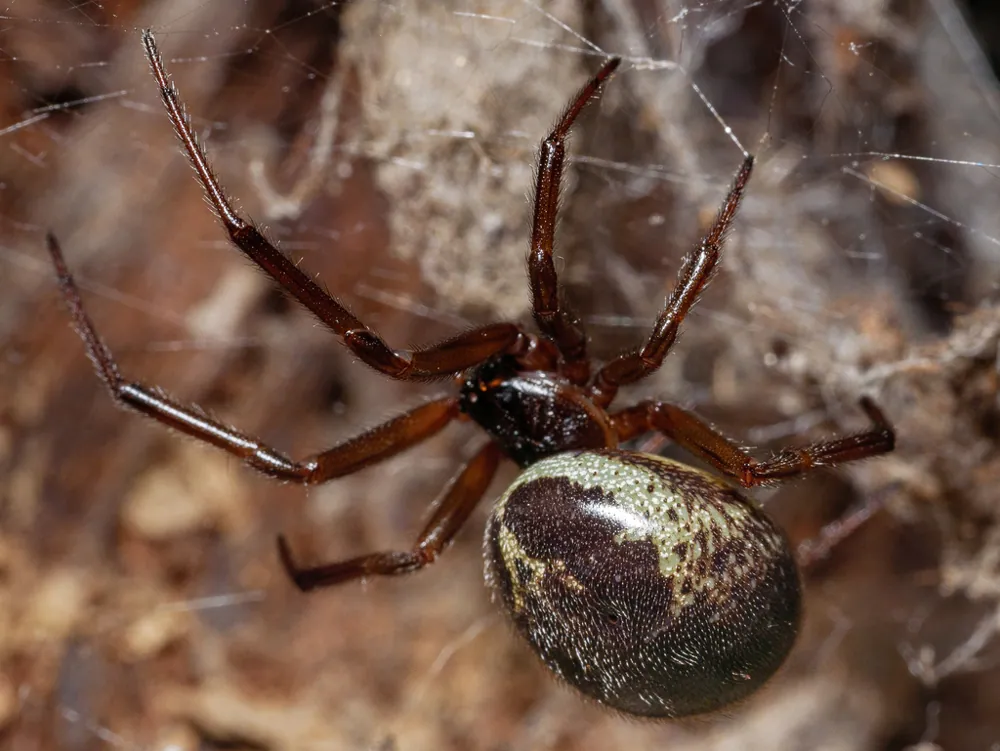
BitThe noble false widow is a spider that looks a lot like the black widow, which is why it has its name. It is now found in many parts of the world, including Europe, the United States and New Zealand, and it is one of the world's most invasive spiders. Its bite can be painful, so it is worth knowing what it looks like.1


 Svona þekkir þú það
- The abdomen (rear body) is brown and rounded, with cream markings that are often said to look like a skull.1
- The legs are reddish-orange.1
- Adult females are about 9.5 to 14 mm in size, and males are about 7 to 11 mm.1
- It is larger than other spiders in its genus, Steatoda, and has a typical colour pattern.1
Oft ruglað saman við: It is often mistaken for the black widow (Latrodectus) and other false widow species. It can be told apart from the black widow by its larger size within its genus and its typical colouring, though many spiders in this group look similar.1
Eiturkraftur
Eitrið kemur út um eiturtennurnar eða tennurnar þegar það bítur.
Hvað gerir eitrið þegar það bítur eða stingur?
Most of its venom is made of toxins similar to those of the widow spiders, mainly alpha-latrotoxin. This toxin makes holes in nerve cells, which releases chemical messengers and blocks the signals between nerves and muscles, causing paralysis. In people, the venom is most noticeable as pain at the bite site, along with swelling, redness and fever.1
Hversu hættulegt er það fólki?
Hætta fyrir fólk: SársaukafulltÞað getur verið mjög sárt, en það er nánast aldrei alvarlegt.It is considered moderately medically significant. Most bites cause symptoms similar to a bee or wasp sting, but some can be more serious, partly because of bacteria. It is considered one of the most dangerous spiders in western Europe. Bites from males are less severe than bites from females, and the bite itself is usually painless, with pain coming from the venom.1
 Ef það bítur
- Without proper treatment, a bite wound can become infected and develop into gangrene or sepsis, so medical care should be sought.1
- Þvoðu bitið og settu kælipoka á það við verknum. Fáðu læknishjálp ef verkurinn er mikill, breiðist út eða manneskjunni líður illa.
Hringdu alltaf fyrst í neyðarnúmerið (112, 000, 911). Þetta eru almennar leiðbeiningar um skyndihjálp, ekki læknisráð. Grunnatriði skyndihjálpar
 Farðu varlega
- Aldrei snerta, ná í eða stríða villtu dýri, ekki einu sinni litlu, og ekki einu sinni ef það virðist sofa eða vera dautt.
- Gefðu því pláss. Ef þú hittir eitt, haltu ró þinni, bakkaðu hægt og leyfðu því að fara sína leið.
- Ef eitt slíkt bítur þig: haltu ró þinni, vertu kyrr, hringdu í neyðarnúmerið (112, 000, 911) eða komdu þér fljótt á sjúkrahús. Mundu hvernig það leit út, mynd hjálpar.
Það er ekki á eftir þér. Það notar eitrið til að veiða sér til matar eða verja sig, og það vill miklu frekar fela sig. Meira um að fara varlega
Hvar í heiminum?
Hversu stórt er það?
Hversu langt er það?
 svo lítið að það kemst fyrir á nöglinni þinni
Hversu stórt er Noble false widow miðað við ÞIG?
Bara reikningur í vafranum þínum. Ekkert er vistað eða sent neitt.
Hversu hratt er það?


Staðreyndir
The spider often catches prey much larger than itself, including bats, because its venom works quickly.1
It can survive without drinking water, getting all its liquid from its prey.1
Males court females by tapping the web and vibrating their bodies, and they can make scraping sounds with their abdomens.1
It has poor eyesight and relies mainly on vibrations travelling through its web.1
It produces three-dimensional cobwebs, and its silk is unusually strong for its genus.1
One adult female lived almost five and a half years in captivity, and adult females are long-lived.1
Goðsagnabani
Goðsögn: It is the same spider as the black widow.
Sannleikur: It only looks similar to the black widow. It belongs to the genus Steatoda, while the black widow belongs to the genus Latrodectus.1
Fyrir eitursérfræðinga
- Fræðiheiti
- Steatoda nobilis
- Flokkur
- Köngulær
- Fjölskylda
- Theridiidae2
- Röð
- Araneae
- Heimsálfur
- Evrópa, Afríka
- Smábörn
- Females make egg sacs containing an average of 94 eggs, with a range of 34 to 208 eggs. The young hatch inside the egg sac about 18 days after the eggs are laid.1
- Lífslengd
- um 5 ár1
- Hætta fyrir fólk
- 2 / 5: Sársaukafullt3
Hvaðan staðreyndirnar koma
- Steatoda nobilis (Wikipedia (CC BY-SA 4.0))
- Steatoda nobilis (iNaturalist): nöfn og flokkun.
- Venom Wiki: hættustigið, dæmigerða stærðin og ágiskaði hraðinn eru okkar eigið mat. Sjáðu hvernig við finnum það út: Svona metum við hættuna.
Hver staðreynd á þessari síðu hefur númer sem vísar á heimildina. Ef við höfum rangt fyrir okkur, fyrirgefðu, við erum dýraaðdáendur, ekki vísindatímarit. Láttu okkur vita á [email protected] og við lögum það.
 Sporðdrekinn er svangur! Venom Wiki er eins manns verkefni: ókeypis, án auglýsinga og án rakningar. Smá þjórfé hjálpar til við að halda því á netinu.Gefðu sporðdrekanum að borða
Meira úr sama flokki: Köngulær
 Mediterranean black widow
 Six-eyed sand spider
 Brown widow
 Diving bell spider
 European yellow sac spider
 Tarantula wolf spider
Lifir líka í: Evrópa
 Common European adderNöðrur og höggormarÞarf lækni
 Spanish flyÖnnur eitruð dýr (snerting eða át)Þarf lækniEkki snerta
 Common waspBýflugur, geitungar og risageitungarEr bara sárt
 European hornetBýflugur, geitungar og risageitungarEr bara sárt
 Fire salamanderEiturfroskar, körtur og salamöndrurEr bara sártEkki snerta
 Western honey beeBýflugur, geitungar og risageitungarEr bara sárt