
 Africa
 Asia
Asia Europa
 Sud America
 Australia e Oceania
 Antartide
 Oceano Pacifico
 Oceano Atlantico
 Oceano Indiano
 Oceano Artico
 Mar Mediterraneo
 Mar Rosso
 Mar dei Caraibi
 Mar dei Coralli
 Mar Cinese Meridionale
 Mar delle Filippine
 Mare delle Andamane
 Mare del Nord
 Mar di Timor e Mar degli Arafura
 Golfo del Bengala
 Golfo di California
Clinging jellyfish
 Tentacoli urticanti
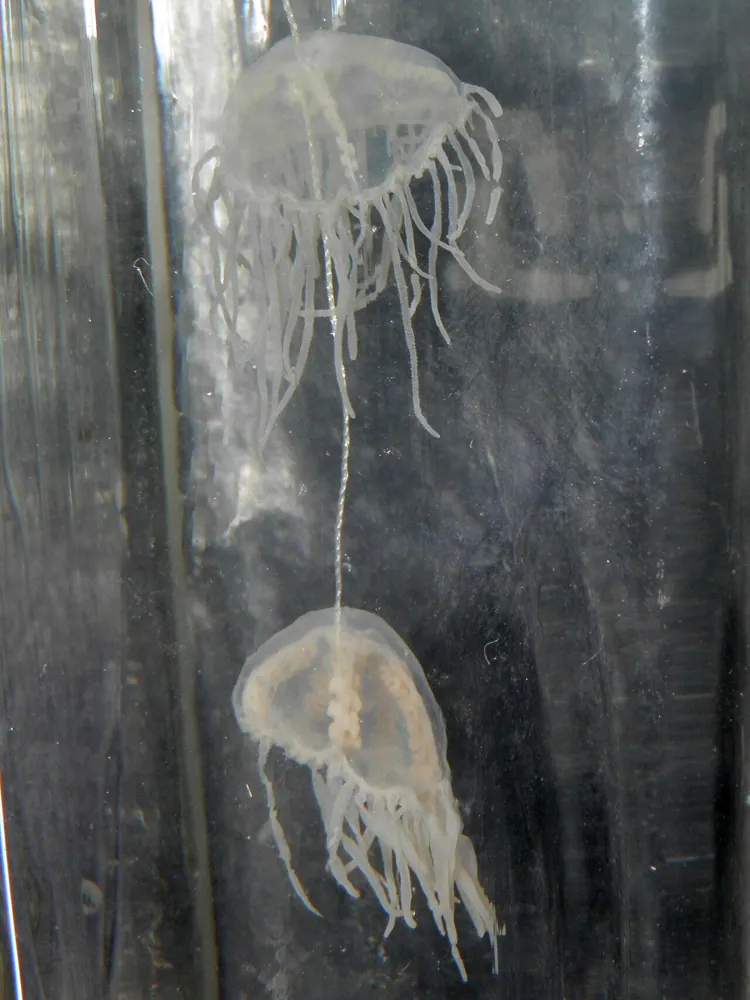
The clinging jellyfish is a small jellyfish, with a bell only 1 to 3 cm across. It lives in shallow coastal waters across much of the Northern Hemisphere. Its sting can be strong in some areas, so it is worth knowing what it looks like.1



 Come riconoscerlo
- Has a transparent bell lined with about 60 to 80 tentacles1
- Gonads are orange, red or violet in females and yellow-brown in males1
- The tan manubrium (mouth structure) hangs down in the middle of the bell1
- Bell is usually 1 to 3 cm across; a tentacle can be twice the bell's diameter when fully extended1
Potere del veleno
Migliaia di minuscole cellule urticanti scattano quando qualcosa le tocca.
Cosa fa il suo veleno?
Its sting can cause pain, a swollen throat, chest tightness, muscle cramps, neuropsychiatric changes (effects on mood, thinking or behaviour) and anaphylactic shock, a severe allergic reaction.1
Quanto è pericoloso per le persone?
Pericolo per le persone: GraveUna puntura richiede un medico. Le morti sono molto rare.In much of its range the sting is strong enough to cause serious symptoms. Stinging incidents have been reported from East Asia, Europe and the Atlantic coast of the United States. Off North America's northeast Pacific coast, its sting cannot be felt and it is considered harmless to people.1
 Se punge
- Esci dall'acqua e togli i tentacoli rimasti (con i guanti o un panno).
- Per le cubomeduse tropicali: versa aceto sulle punture per almeno 30 secondi, chiama aiuto e preparati a fare la RCP. Per le caravelle portoghesi e la maggior parte delle altre: sciacqua con acqua di mare, poi acqua calda per il dolore.
Chiama sempre prima il numero di emergenza (112, 000, 911). Queste sono indicazioni generali di primo soccorso, non consigli medici. Primo soccorso di base
 Stai al sicuro
- Non toccare, catturare o stuzzicare mai un animale selvatico, anche se è piccolo e anche se sembra addormentato o morto.
- Lasciagli spazio. Se ne incontri uno, resta calmo, indietreggia piano e lascialo andare per la sua strada.
- Se uno ti punge: resta calmo, stai fermo, chiama il numero di emergenza (112, 000, 911) o vai subito in ospedale. Ricorda com'era, una foto aiuta.
Non ce l'ha con te. Usa il veleno per procurarsi il cibo o per difendersi, e preferisce di gran lunga nascondersi. Altro su come stare al sicuro
Dove nel mondo?
Quanto è grande?
Quanto è lungo?
 lungo più o meno come una graffetta
Quanto è grande Clinging jellyfish rispetto a TE?
Solo calcoli nel tuo browser. Niente viene salvato o inviato da nessuna parte.
Quanto è veloce?


Informazioni
Some scientists think the clinging jellyfish may be a group of closely related species, because its sting and body shape vary from place to place.1
The jellyfish appear once the water warms to about 17 to 18 °C, so they follow a yearly pattern and sometimes appear in large numbers at once.1
The medusa (jellyfish) stage usually lasts no more than three months, but the polyp stage can last for years.1
Polyps can split into several new polyps by budding.1
In Europe, the species is non-native and has been found in the Mediterranean and along the Atlantic coast from Portugal to Norway and Sweden.1
Sfatiamo i miti
Mito: The clinging jellyfish is harmless everywhere.
Verità: Its sting is harmless off the northeast Pacific coast of North America, but it can be strong and dangerous in East Asia, Europe and the Atlantic coast of the United States.1
Per gli esperti di veleni
- Nome scientifico
- Gonionemus vertens
- Gruppo
- Meduse e altri urticanti marini
- Famiglia
- Olindiidae2
- Ordine
- Limnomedusae
- Continenti
- Oceano Pacifico, Oceano Atlantico, Gli oceani
- Cuccioli
- Medusae release tens of thousands of eggs and sperm into the sea. The fertilised young become planula larvae, which settle on the seabed as tiny polyps.1
- Pericolo per le persone
- 3 / 5: Grave3
Da dove vengono le informazioni
- Gonionemus vertens (Wikipedia (CC BY-SA 4.0))
- Gonionemus vertens (iNaturalist): nomi e classificazione.
- Venom Wiki: il livello di pericolo, la taglia tipica e la stima della velocità sono nostri. Guarda come li calcoliamo: Come valutiamo il pericolo.
Ogni informazione in questa pagina ha un numero che rimanda alla sua fonte. Se abbiamo sbagliato qualcosa, scusa, siamo appassionati di animali, non una rivista scientifica. Scrivici a [email protected] e lo correggeremo.
 Lo scorpione ha fame! Venom Wiki è un progetto di una sola persona: gratis, senza pubblicità e senza tracker. Una piccola mancia aiuta a tenerlo online.Dai da mangiare allo scorpione
Altri dello stesso gruppo: Meduse e altri urticanti marini
 Vespa di mareMeduse e altri urticanti mariniMortaleNon toccare
 Irukandji jellyfishMeduse e altri urticanti mariniPuò uccidereNon toccare
 Portuguese man o' warMeduse e altri urticanti mariniServe un medicoNon toccare
 Lion's mane jellyfishMeduse e altri urticanti mariniFa solo maleNon toccare
 Moon jellyfishMeduse e altri urticanti mariniInnocuo
 Common kingslayerMeduse e altri urticanti mariniPuò uccidereNon toccare
Vive anche in: Oceano Pacifico
 Cono geografoMolluschi cono e polpiMortale
 Polpo dagli anelli blu maggioreMolluschi cono e polpiMortale
 Pesce palla giapponeseAltri animali tossiciMortale
 Polpo dagli anelli blu meridionaleMolluschi cono e polpiMortale
 Hawksbill sea turtleAltri animali tossiciPuò uccidere
 Reef stonefishPesci velenosiPuò uccidereNon toccare