
 Africa
 Asia
Asia Europa
 Sud America
 Australia e Oceania
 Antartide
 Oceano Pacifico
 Oceano Atlantico
 Oceano Indiano
 Oceano Artico
 Mar Mediterraneo
 Mar Rosso
 Mar dei Caraibi
 Mar dei Coralli
 Mar Cinese Meridionale
 Mar delle Filippine
 Mare delle Andamane
 Mare del Nord
 Mar di Timor e Mar degli Arafura
 Golfo del Bengala
 Golfo di California
Common European adder
 Morsi
MorsiThe common European adder is a venomous snake that lives across much of Europe and as far east as East Asia. In several European countries it is the only native venomous snake. It is not aggressive and usually bites only when it is cornered, stepped on or picked up.1



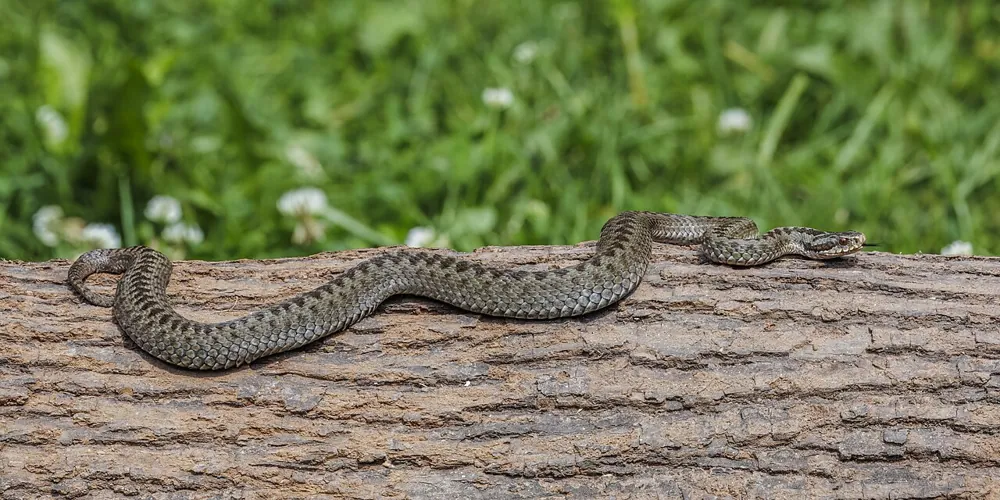
 Come riconoscerlo
- Relatively thick body. Adults are usually about 60 cm long, including the tail.1
- Most have a dark zigzag pattern running along the back and tail.1
- A dark V or X marking is usually present on top of the head.1
- A dark streak runs from the eye to the neck, then continues as spots along the sides.1
- Females are usually brown with dark brown markings. Males are a uniform grey with black markings.1
Potere del veleno
Il veleno esce dalle zanne o dai denti quando morde.
Cosa fa il suo veleno?
Bites can be very painful, but they are rarely fatal.1
Quanto è pericoloso per le persone?
Pericolo per le persone: GraveUn morso richiede un medico. Le morti sono molto rare.The adder is not regarded as especially dangerous. It is not aggressive and usually bites only when really provoked, stepped on or picked up. Bites are rarely fatal.1
Cosa fa quando ha paura?
When it feels threatened, it usually slips away into the undergrowth. Some snakes, often pregnant females, hiss loudly to warn off danger, and the front of the body is drawn into an S-shape before a strike.1
 Se morde
- Tieni la persona ferma e calma, tieni l'arto morso all'altezza del cuore, togli anelli e cose strette e portala subito in ospedale.
Chiama sempre prima il numero di emergenza (112, 000, 911). Queste sono indicazioni generali di primo soccorso, non consigli medici. Primo soccorso di base
 Stai al sicuro
- Non toccare, catturare o stuzzicare mai un animale selvatico, anche se è piccolo e anche se sembra addormentato o morto.
- Lasciagli spazio. Se ne incontri uno, resta calmo, indietreggia piano e lascialo andare per la sua strada.
- Se uno ti morde: resta calmo, stai fermo, chiama il numero di emergenza (112, 000, 911) o vai subito in ospedale. Ricorda com'era, una foto aiuta.
Non ce l'ha con te. Usa il veleno per procurarsi il cibo o per difendersi, e preferisce di gran lunga nascondersi. Altro su come stare al sicuro
Dove nel mondo?
Quanto è grande?
Quanto è lungo?
Quanto pesa?
 lungo come 2 gatti di casa dal naso alla coda
 lungo come 5 banane in fila
 potrebbe percorrere 100 metri in 110 secondi (l'uomo più veloce ci mette 9,6)
Quanto è grande Common European adder rispetto a TE?
Solo calcoli nel tuo browser. Niente viene salvato o inviato da nessuna parte.
Quanto è veloce?


Informazioni
It hibernates in winter. In northern Sweden, hibernation lasts 8 to 9 months, and it may come out to bask on mild days, sometimes crossing snow to do so.1
Around 15% of adults and 30 to 40% of juveniles die during hibernation.1
Males and females can often be told apart by colour, which is unusual for snakes.1
In several European countries it is the only native venomous snake.1
It is found farther north than any other snake species.1
Sfatiamo i miti
Mito: Adders are aggressive snakes that attack people.
Verità: Adders are timid. They usually disappear at the slightest hint of danger and bite only when cornered, alarmed, stepped on or picked up.1
Per gli esperti di veleni
- Nome scientifico
- Vipera berus
- Gruppo
- Vipere e marassi
- Famiglia
- Viperidae2
- Ordine
- Squamata
- Continenti
- Europa, Asia
- Cuccioli
- It gives birth to live young rather than laying eggs. Females breed once every two or three years, and litters range from three to 20 young.1
- Come se la passa in natura
- Least concern (IUCN Red List), although its population is decreasing. It is protected in many countries, and it is listed as endangered in Switzerland.1
- Pericolo per le persone
- 3 / 5: Grave3
Da dove vengono le informazioni
- Adder (Wikipedia (CC BY-SA 4.0))
- Vipera berus (iNaturalist): nomi e classificazione.
- Venom Wiki: il livello di pericolo, la taglia tipica e la stima della velocità sono nostri. Guarda come li calcoliamo: Come valutiamo il pericolo.
Ogni informazione in questa pagina ha un numero che rimanda alla sua fonte. Se abbiamo sbagliato qualcosa, scusa, siamo appassionati di animali, non una rivista scientifica. Scrivici a [email protected] e lo correggeremo.
 Lo scorpione ha fame! Venom Wiki è un progetto di una sola persona: gratis, senza pubblicità e senza tracker. Una piccola mancia aiuta a tenerlo online.Dai da mangiare allo scorpione
Altri dello stesso gruppo: Vipere e marassi
 Echide carenata
 Vipera soffiante
 Vipera di Russell
 Eastern Russell's viper
 Northeast African carpet viper
 Armenian viper
_female_Pieniny.jpg)
Vive anche in: Europa
 Spanish flyAltri animali tossiciServe un medicoNon toccare
 Common waspApi, vespe e calabroniFa solo male
 European hornetApi, vespe e calabroniFa solo male
 Fire salamanderRane dardo, rospi e tritoniFa solo maleNon toccare
 Western honey beeApi, vespe e calabroniFa solo male
 Mediterranean black widowRagniServe un medico