
 Africa
 Asia
Asia Europa
 Sud America
 Australia e Oceania
 Antartide
 Oceano Pacifico
 Oceano Atlantico
 Oceano Indiano
 Oceano Artico
 Mar Mediterraneo
 Mar Rosso
 Mar dei Caraibi
 Mar dei Coralli
 Mar Cinese Meridionale
 Mar delle Filippine
 Mare delle Andamane
 Mare del Nord
 Mar di Timor e Mar degli Arafura
 Golfo del Bengala
 Golfo di California
Compass jellyfish
 Tentacoli urticanti
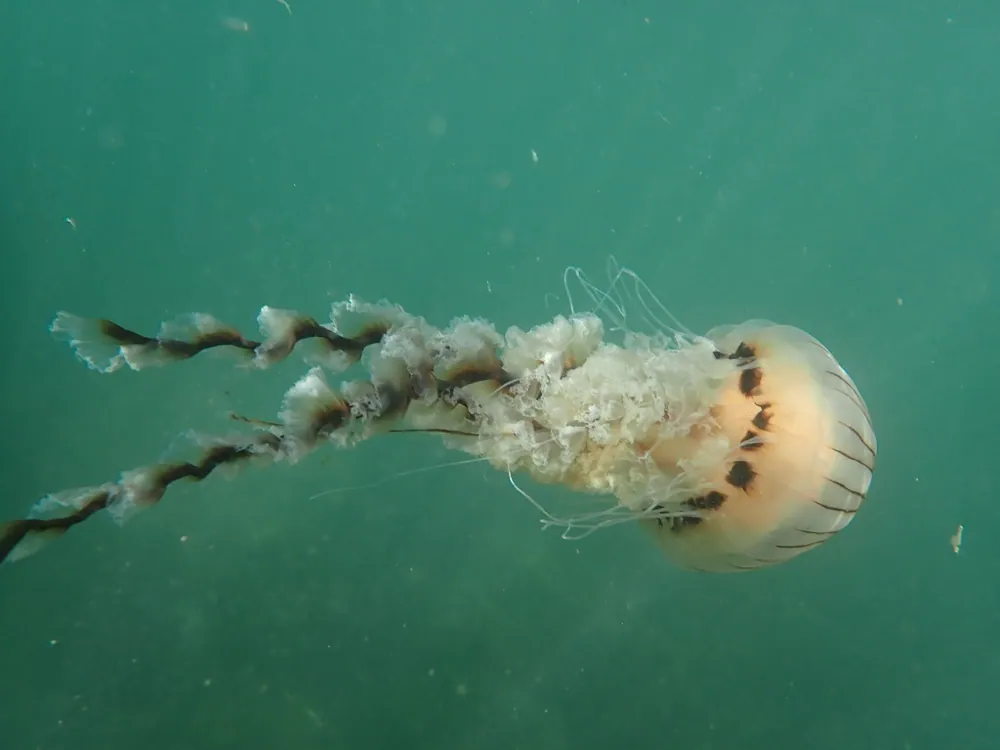
The compass jellyfish is a common jellyfish that lives in cool coastal seas of the northeast Atlantic, including the North Sea and the Mediterranean. Its bell has a pattern that looks like the face of a compass, which gives it its name. Its tentacles carry stinging cells, so it is best left alone.1



 Come riconoscerlo
- Adults have a bell 15 to 25 cm across, usually yellowish white with some brown.1
- The bell has 16 brown, elongated V-shaped markings around a central brown spot.1
- It has 24 tentacles arranged in eight groups of three.1
- It has four oral arms that are noticeably longer than the tentacles and look folded and frilly.1
- Juveniles lack the compass pattern. They look white and polka-dotted, with a reddish fringe on the bell edge.1
Spesso confuso con: Records of this species from the southeastern Atlantic, including South Africa, were caused by confusion with close relatives: C. africana, C. fulgida and an undescribed species tentatively called "C. agulhensis".1
Potere del veleno
Migliaia di minuscole cellule urticanti scattano quando qualcosa le tocca.
Cosa fa il suo veleno?
Each tentacle has stinging cells used to capture prey and to defend against predators. Jellyfish stings are painful and can be deadly to humans.1
Quanto è pericoloso per le persone?
Pericolo per le persone: DolorosoPuò fare davvero male, ma non è quasi mai grave.Jellyfish stings are painful and sometimes deadly to humans.1
Cosa fa quando ha paura?
Stinging cells on its tentacles are used to defend it from predators.1
 Se punge
- Esci dall'acqua e togli i tentacoli rimasti (con i guanti o un panno).
- Per le cubomeduse tropicali: versa aceto sulle punture per almeno 30 secondi, chiama aiuto e preparati a fare la RCP. Per le caravelle portoghesi e la maggior parte delle altre: sciacqua con acqua di mare, poi acqua calda per il dolore.
Chiama sempre prima il numero di emergenza (112, 000, 911). Queste sono indicazioni generali di primo soccorso, non consigli medici. Primo soccorso di base
 Stai al sicuro
- Non toccare, catturare o stuzzicare mai un animale selvatico, anche se è piccolo e anche se sembra addormentato o morto.
- Lasciagli spazio. Se ne incontri uno, resta calmo, indietreggia piano e lascialo andare per la sua strada.
- Se uno ti punge: resta calmo, stai fermo, chiama il numero di emergenza (112, 000, 911) o vai subito in ospedale. Ricorda com'era, una foto aiuta.
Non ce l'ha con te. Usa il veleno per procurarsi il cibo o per difendersi, e preferisce di gran lunga nascondersi. Altro su come stare al sicuro
Dove nel mondo?
Quanto è grande?
Quanto è lungo?
 lungo come 8 mattoncini da costruzione in fila
Quanto è grande Compass jellyfish rispetto a TE?
Solo calcoli nel tuo browser. Niente viene salvato o inviato da nessuna parte.
Quanto è veloce?


Informazioni
Males release sperm from their mouths into the water, and females can fertilise sperm from several males.1
Adults often carry a parasite called Hyperia medusarum, which settles inside the body, especially the gonads.1
Compass jellyfish have very few predators. Leatherback sea turtles and ocean sunfish are known to eat them.1
Warmer winters allow longer release periods for young, and the species is predicted to move further north as the seas warm.1
Sfatiamo i miti
Mito: Compass jellyfish live in the southeastern Atlantic, including South Africa.
Verità: Earlier records from there were due to confusion with close relatives. The species lives in the northeast Atlantic.1
Per gli esperti di veleni
- Nome scientifico
- Chrysaora hysoscella
- Gruppo
- Meduse e altri urticanti marini
- Famiglia
- Pelagiidae2
- Ordine
- Semaeostomeae
- Continenti
- Oceano Atlantico, Mar Mediterraneo, Mare del Nord, Gli oceani
- Cuccioli
- Females release planular larvae, which settle on the seabed and grow into polyps. The polyps then release young medusae.1
- Pericolo per le persone
- 2 / 5: Doloroso3
Da dove vengono le informazioni
- Chrysaora hysoscella (Wikipedia (CC BY-SA 4.0))
- Chrysaora hysoscella (iNaturalist): nomi e classificazione.
- Venom Wiki: il livello di pericolo, la taglia tipica e la stima della velocità sono nostri. Guarda come li calcoliamo: Come valutiamo il pericolo.
Ogni informazione in questa pagina ha un numero che rimanda alla sua fonte. Se abbiamo sbagliato qualcosa, scusa, siamo appassionati di animali, non una rivista scientifica. Scrivici a [email protected] e lo correggeremo.
 Lo scorpione ha fame! Venom Wiki è un progetto di una sola persona: gratis, senza pubblicità e senza tracker. Una piccola mancia aiuta a tenerlo online.Dai da mangiare allo scorpione
Altri dello stesso gruppo: Meduse e altri urticanti marini
 Australian box jellyfishMeduse e altri urticanti mariniMortaleNon toccare
 Irukandji jellyfishMeduse e altri urticanti mariniPuò uccidereNon toccare
 Portuguese man o' warMeduse e altri urticanti mariniServe un medicoNon toccare
 Lion's mane jellyfishMeduse e altri urticanti mariniFa solo maleNon toccare
 Moon jellyfishMeduse e altri urticanti mariniInnocuo
 Common kingslayerMeduse e altri urticanti mariniPuò uccidereNon toccare
 Hawksbill sea turtle
 Blue sea dragon
 Greenland shark
 Common octopus
 Common stingray
 Greater weever