
 Africa
 Asia
Asia Europa
 Sud America
 Australia e Oceania
 Antartide
 Oceano Pacifico
 Oceano Atlantico
 Oceano Indiano
 Oceano Artico
 Mar Mediterraneo
 Mar Rosso
 Mar dei Caraibi
 Mar dei Coralli
 Mar Cinese Meridionale
 Mar delle Filippine
 Mare delle Andamane
 Mare del Nord
 Mar di Timor e Mar degli Arafura
 Golfo del Bengala
 Golfo di California
Estuarine stonefish
 Spine velenose
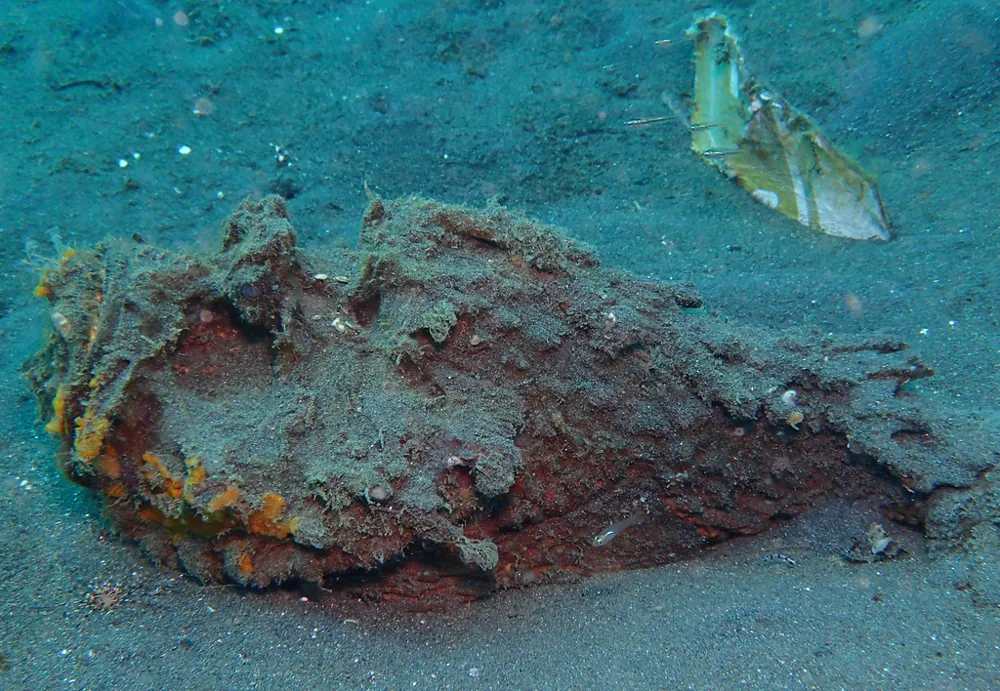
The estuarine stonefish is a fish that looks like a stone lying on the seabed. It lives in shallow reefs and estuaries across the Indo-Pacific, including northern Australia. It is considered one of the most dangerous venomous fish in the world, so it is important to know what it looks like.1



 Come riconoscerlo
- Drab brownish-grey, reddish or greenish-brown colour1
- Skin has no scales and is covered in warts, often with filamentous algae growing on it1
- Head is flattened, with small eyes set high and pointing upwards, and a deep pit behind and under each eye1
- Large, almost vertical mouth with fringing cirri on the lips1
- Camouflaged to look like a stone resting on the bottom; it has no bright warning colours1
- Grows to a maximum of 60 cm1
Potere del veleno
Spine aguzze portano il veleno. Calpestarlo o afferrarlo fa male.
Cosa fa il suo veleno?
Each fin spine has two venom-producing glands. The venom affects the cardiovascular and neuromuscular systems. The sting is extremely painful and has been known to be lethal.1
Quanto è pericoloso per le persone?
Pericolo per le persone: Molto pericolosoPuò uccidere una persona che non riceve cure.It is considered one of the most dangerous venomous fishes. Stings are extremely painful and have been known to be fatal. Since European settlement, there have been no recorded deaths in Australia from stonefish venom, but deaths have been recorded elsewhere in its range.1
 Buone notizie: i medici hanno una medicina (il siero antiveleno) o una cura per questo.1
Cosa fa quando ha paura?
When disturbed, it erects its venomous spines, which inject venom if the fish is stepped on.1
 Se le sue spine ti trafiggono
- Antivenom can be given after envenomation. Immersing the sting wound in hot water can be used to denature the venom.1
- Metti la ferita in acqua calda, calda quanto la persona riesce a sopportare senza scottarsi (provala con la tua mano), da 30 a 90 minuti. Cerca aiuto medico, soprattutto per pesci pietra e pastinache.
Chiama sempre prima il numero di emergenza (112, 000, 911). Queste sono indicazioni generali di primo soccorso, non consigli medici. Primo soccorso di base
 Stai al sicuro
- Non toccare, catturare o stuzzicare mai un animale selvatico, anche se è piccolo e anche se sembra addormentato o morto.
- Lasciagli spazio. Se ne incontri uno, resta calmo, indietreggia piano e lascialo andare per la sua strada.
- Se le sue spine ti trafiggono: resta calmo, stai fermo, chiama il numero di emergenza (112, 000, 911) o vai subito in ospedale. Ricorda com'era, una foto aiuta.
Non ce l'ha con te. Usa il veleno per procurarsi il cibo o per difendersi, e preferisce di gran lunga nascondersi. Altro su come stare al sicuro
Dove nel mondo?
Quanto è grande?
Quanto è lungo?
 lungo come 3 banane in fila
 potrebbe nuotare per tutta la lunghezza di una grande piscina (50 m) in 90 secondi
Quanto è grande Estuarine stonefish rispetto a TE?
Solo calcoli nel tuo browser. Niente viene salvato o inviato da nessuna parte.
Quanto è veloce?


Informazioni
It can tolerate being out of the water for up to 24 hours.1
It scoops out a shallow hollow in the seabed with its large pectoral fins and curls its tail around its body to hide.1
It is camouflaged to look like a stone, unlike many venomous animals that use bright warning colours.1
Females are larger than males.1
Sfatiamo i miti
Mito: The species name horrida refers to its dangerous spines.
Verità: The name means "dreadful" or "frightful" and alludes to its appearance, not its venomous spines.1
Per gli esperti di veleni
Da dove vengono le informazioni
- Synanceia horrida (Wikipedia (CC BY-SA 4.0))
- Synanceia horrida (iNaturalist): nomi e classificazione.
- Venom Wiki: il livello di pericolo, la taglia tipica e la stima della velocità sono nostri. Guarda come li calcoliamo: Come valutiamo il pericolo.
Ogni informazione in questa pagina ha un numero che rimanda alla sua fonte. Se abbiamo sbagliato qualcosa, scusa, siamo appassionati di animali, non una rivista scientifica. Scrivici a [email protected] e lo correggeremo.
 Lo scorpione ha fame! Venom Wiki è un progetto di una sola persona: gratis, senza pubblicità e senza tracker. Una piccola mancia aiuta a tenerlo online.Dai da mangiare allo scorpione
Altri dello stesso gruppo: Pesci velenosi
 Reef stonefishPesci velenosiPuò uccidereNon toccare
 Red lionfishPesci velenosiServe un medicoNon toccare
 Short-tail stingrayPesci velenosiPuò uccidere
 Striped eel catfishPesci velenosiPuò uccidereNon toccare
 Bluespotted ribbontail rayPesci velenosiServe un medico
 Common stingrayPesci velenosiServe un medico
Vive anche in: Oceano Indiano
 Vespa di mareMeduse e altri urticanti mariniMortaleNon toccare
 Cono geografoMolluschi cono e polpiMortale
 Polpo dagli anelli blu maggioreMolluschi cono e polpiMortale
 Polpo dagli anelli blu meridionaleMolluschi cono e polpiMortale
 Hawksbill sea turtleAltri animali tossiciPuò uccidere
 Irukandji jellyfishMeduse e altri urticanti mariniPuò uccidereNon toccare