
 Africa
 Asia
Asia Europa
 Sud America
 Australia e Oceania
 Antartide
 Oceano Pacifico
 Oceano Atlantico
 Oceano Indiano
 Oceano Artico
 Mar Mediterraneo
 Mar Rosso
 Mar dei Caraibi
 Mar dei Coralli
 Mar Cinese Meridionale
 Mar delle Filippine
 Mare delle Andamane
 Mare del Nord
 Mar di Timor e Mar degli Arafura
 Golfo del Bengala
 Golfo di California
White-tailed spider
 Morsi
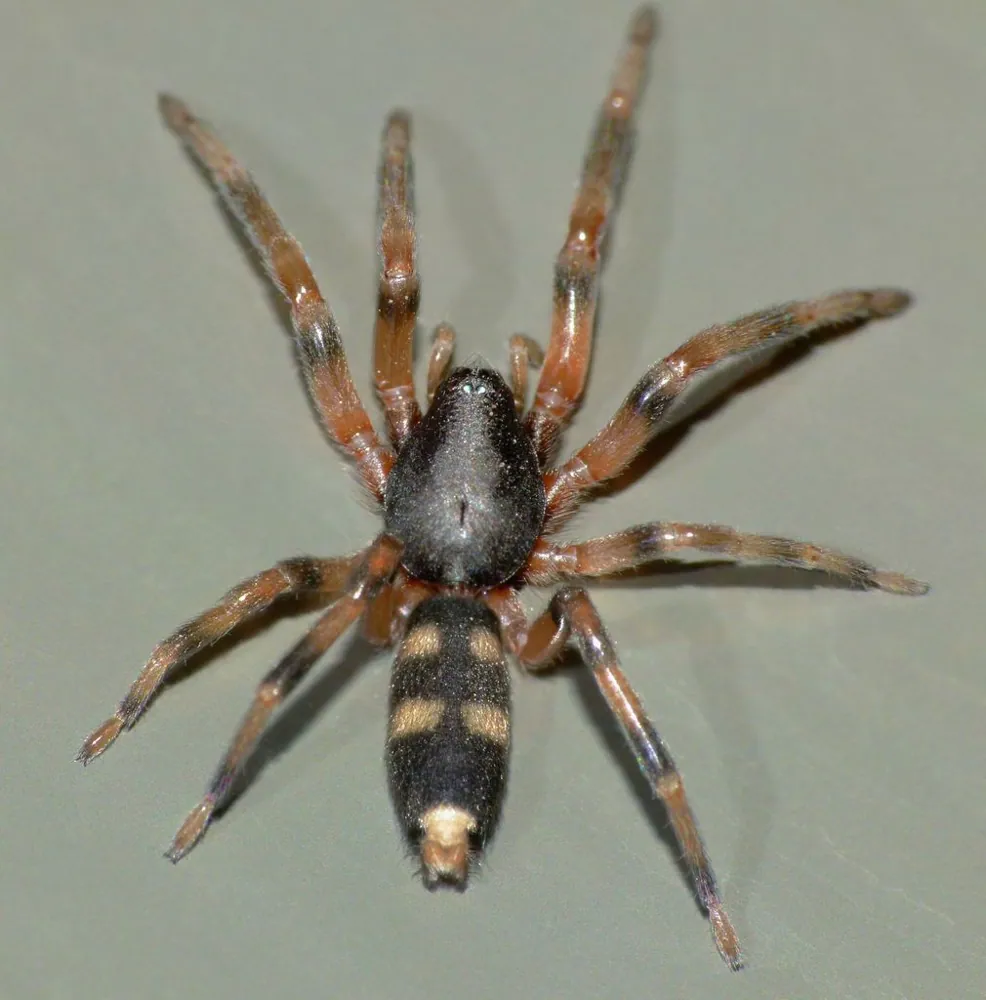
MorsiThe white-tailed spider is a slim, long-legged spider that lives in southern and eastern Australia. It gets its name from the whitish tip at the end of its abdomen. It hunts other spiders at night rather than spinning a web, and it can bite people.1

 Come riconoscerlo
- Slender spider with a dark reddish to grey, cigar-shaped body1
- Dark orange-brown legs with bands1
- Grey abdomen with two pairs of faint white spots1
- Usually a distinct white spot at the tip of the abdomen, just above the spinnerets (the silk-producing organs)1
- Does not build a web1
Spesso confuso con: Lampona murina is very similar to Lampona cylindrata. The two are not easily told apart without microscopic examination. Several other spider species also have a white mark at the end of the abdomen and are called white-tails.1
Potere del veleno
Il veleno esce dalle zanne o dai denti quando morde.
Cosa fa il suo veleno?
The bite injects venom. Typical effects are a small red or discoloured bump that burns or itches, along with local pain and swelling. Rarely, the bite causes nausea, vomiting, malaise (a general feeling of being unwell) or headache. These symptoms are generally mild and go away over time.1
Quanto è pericoloso per le persone?
Pericolo per le persone: DolorosoPuò fare davvero male, ma non è quasi mai grave.Bites are generally mild. In a study of 130 confirmed white-tailed spider bites, there were no necrotic ulcers (areas of dead tissue) and no confirmed infections. The effects were mainly local, such as pain, a red mark, swelling and itching.1
 Se morde
- Lava il morso e mettici una borsa del ghiaccio per il dolore. Cerca aiuto medico se il dolore è forte, si diffonde o la persona si sente male.
Chiama sempre prima il numero di emergenza (112, 000, 911). Queste sono indicazioni generali di primo soccorso, non consigli medici. Primo soccorso di base
 Stai al sicuro
- Non toccare, catturare o stuzzicare mai un animale selvatico, anche se è piccolo e anche se sembra addormentato o morto.
- Lasciagli spazio. Se ne incontri uno, resta calmo, indietreggia piano e lascialo andare per la sua strada.
- Se uno ti morde: resta calmo, stai fermo, chiama il numero di emergenza (112, 000, 911) o vai subito in ospedale. Ricorda com'era, una foto aiuta.
Non ce l'ha con te. Usa il veleno per procurarsi il cibo o per difendersi, e preferisce di gran lunga nascondersi. Altro su come stare al sicuro
Dove nel mondo?
Quanto è grande?
Quanto è lungo?
 più corto del tuo dito mignolo
Quanto è grande White-tailed spider rispetto a TE?
Solo calcoli nel tuo browser. Niente viene salvato o inviato da nessuna parte.
Quanto è veloce?


Informazioni
Ulcers and tissue death were once blamed on white-tailed spider bites, but studies found other causes, mostly infections.1
In reported bite cases, more than 60% of people said the spider had got into their clothing, towels or bed.1
The two common species look so alike that people once thought there was only one kind of white-tailed spider.1
The white tail marking stays into adulthood, while other markings fade with each moult.1
Lampona murina has lived on New Zealand's North Island for over a hundred years.1
Sfatiamo i miti
Mito: White-tailed spider bites cause ulcers and necrosis (dead tissue).
Verità: A study of 130 bites found no necrotic ulcers or confirmed infections. Ulcers blamed on these spiders were shown to have other causes, mostly infections.1
Per gli esperti di veleni
Da dove vengono le informazioni
- White-tailed spider (Wikipedia (CC BY-SA 4.0))
- Lampona cylindrata (iNaturalist): nomi e classificazione.
- Venom Wiki: il livello di pericolo, la taglia tipica e la stima della velocità sono nostri. Guarda come li calcoliamo: Come valutiamo il pericolo.
Ogni informazione in questa pagina ha un numero che rimanda alla sua fonte. Se abbiamo sbagliato qualcosa, scusa, siamo appassionati di animali, non una rivista scientifica. Scrivici a [email protected] e lo correggeremo.
 Lo scorpione ha fame! Venom Wiki è un progetto di una sola persona: gratis, senza pubblicità e senza tracker. Una piccola mancia aiuta a tenerlo online.Dai da mangiare allo scorpione
 Redback spider
 Katipo
 Peacock spider
 Badge huntsman spider
 Black house spider
 Eastern white-tailed spider
 Coastal taipan
 Common death adder
 Eastern brown snake
 Taipan dell'interno
 Sydney funnel-web spider
 Serpente tigre