
 アフリカ
アフリカ アジア
アジア ヨーロッパ
ヨーロッパ 南アメリカ
南アメリカ オーストラリアとオセアニア
 南極大陸
南極大陸 太平洋
太平洋 大西洋
大西洋 インド洋
インド洋 北極海
北極海 地中海
地中海 紅海
紅海 カリブ海
カリブ海 サンゴ海
サンゴ海 南シナ海
南シナ海 フィリピン海
 アンダマン海
 北海
北海 ティモール海とアラフラ海
 ベンガル湾
ベンガル湾 カリフォルニア湾
Crown-of-thorns starfish
 毒のとげ
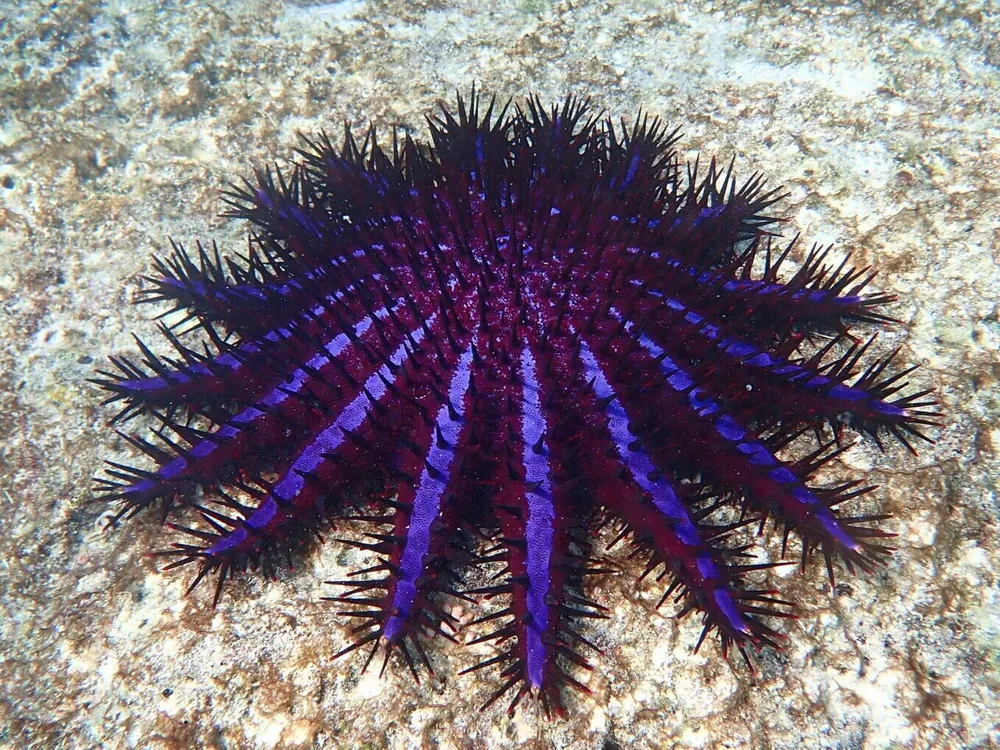
毒のとげThe crown-of-thorns starfish is a large starfish with long, sharp spines that look like a crown of thorns. It lives on coral reefs across the Indo-Pacific, from the Red Sea to the west coast of Central America, and it is most common around Australia. It feeds on hard coral, so it can change the reefs it lives on.1

 見分け方
見分け方
- Adults are normally 25 to 35 cm across.1
- Up to 21 arms, with long, stiff, very sharp spines that are 4 to 5 cm long on the top and sides of the arms.1
- Colour varies with diet or region: purple, purple-blue, reddish grey or brown with red spine tips, or green with yellow spine tips.1
- The body is flexible and can bend and twist around coral surfaces.1
よくまちがえられるのは: A close relative, Acanthaster brevispinus, lives on soft sea floors at moderate depths rather than on coral reefs. The two are considered sibling species.1
毒パワー
するどいとげに毒があるよ。ふんだりつかんだりすると痛い。
その毒(かむ・刺す毒)はどうなるの?
The spines do not inject venom. When they pierce skin, tissue containing saponins (detergent-like chemicals) is left in the wound. In humans this causes a sharp, stinging pain that can last several hours, persistent bleeding, and nausea and swelling that may last a week or more.1
人にとってどれくらい危険?
人への危険: 深刻とげが刺さったらお医者さんへ。死ぬことはとてもまれだよ。The spines can cause sharp pain, long-lasting bleeding, nausea and swelling. Brittle spines can break off and stay in the tissue.1
 とげが刺さったら
- Spines that become embedded in the tissue must be removed surgically.1
- 傷口をお湯につけよう。やけどしない範囲で、その人ががまんできるいちばん熱いお湯で。とげを取ってもらうために医療の助けを受けよう。自分でほじくり出さないで。
まず必ず救急番号(112、000、911)に電話しよう。これは一般的な応急手当の案内で、医療のアドバイスではないよ。 応急手当の基本
 安全に過ごそう
- 野生の動物には、小さくても、ねているように見えても、死んでいるように見えても、ぜったいにさわったり、つかまえたり、からかったりしないこと。
- 近づかないで。出会ったら落ちついて、ゆっくりあとずさりして、そのまま行かせてあげよう。
- とげが刺さったら:落ちついて、じっとして、救急番号(112、000、911)に電話するか、急いで病院へ行こう。見た目をおぼえておいてね。写真があると役に立つよ。
きみをねらっているわけじゃないよ。毒はエサをとったり身を守ったりするために使うだけで、本当はかくれていたいんだ。 安全に過ごすためにもっと知ろう
どれくらい大きい?
どれくらい長い?
 おもちゃのブロック11こを1列にならべた長さ
 カタツムリより遅い
Crown-of-thorns starfishは、きみとくらべてどれくらい大きい?
ブラウザで計算しているだけ。何も保存されないし、どこにも送られないよ。
どれくらい速い?

データ
An individual starfish can consume up to 6 square metres of living coral reef per year.1
When taken out of water, its soft body ruptures and collapses, but its spines can recover their shape if it is put back in the water while still alive.1
Its body contains detergent-like saponins, so keeping starfish in small volumes of water with aeration produces large amounts of foam.1
It is one of the largest starfish in the world.1
It has lost the usual five-fold symmetry of starfish as it grew more arms, although it begins life with five-fold symmetry.1
うそ・ほんとう
うそ: Its spines inject venom like a snake or stinging animal.
ほんとう: It has no mechanism for injecting toxin. Its spines pierce skin and leave saponin-containing tissue in the wound.1
毒のエキスパート向け
- 学名
- Acanthaster planci
- グループ
- ウニ、ヒトデ、ゴカイのなかま
- 家族
- Acanthasteridae2
- ならびかえ
- Valvatida
- 大陸
- インド洋, 太平洋, 紅海, サンゴ海, フィリピン海, 南シナ海, アンダマン海, アラビア海とペルシャ湾, ティモール海とアラフラ海, ベンガル湾, 海
- 赤ちゃん
- It releases vast amounts of eggs and sperm (gametes) during mass spawning events in summer, and the eggs contain saponins similar to those in adults.1
- 人への危険
- 3 / 5: 深刻3
事実の出典
- Crown-of-thorns starfish (Wikipedia (CC BY-SA 4.0))
- Acanthaster planci (iNaturalist): 名前と分類。
- Venom Wiki: 危険レベル、ふつうの大きさ、スピードの予想は、わたしたち独自のものだよ。どうやって決めているかはこちら: 危険度のつけ方.
このページのどの事実にも、出典をしめす番号がついているよ。まちがいがあったらごめんね、わたしたちは動物好きで、科学雑誌じゃないんだ。[email protected]に教えてくれたら直すよ。
 サソリはおなかがペコペコ! Venom Wikiはひとりでつくっているプロジェクト:無料で、広告もトラッカーもなし。少しのチップがサイトを続ける助けになるよ。サソリにエサをあげる
 Flower urchin
 Fire urchin
 Bearded fireworm
 Black long-spined urchin
 Bloodworm
 Bobbit worm
 オーストラリアウンバチクラゲ
 アンボイナガイ
 オオマルモンダコ
 ミナミヒョウモンダコ
 Hawksbill sea turtle
 Irukandji jellyfish
.jpg)