
 Африка
 Азия
Азия Еуропа
 Оңтүстік Америка
 Австралия және Океания
 Антарктида
 Тынық мұхиты
 Атлант мұхиты
 Үнді мұхиты
 Солтүстік Мұзды мұхит
 Жерорта теңізі
 Қызыл теңіз
 Кариб теңізі
 Маржан теңізі
 Оңтүстік Қытай теңізі
 Филиппин теңізі
 Андаман теңізі
 Солтүстік теңіз
 Тимор теңізі және Арафур теңізі
 Бенгал шығанағы
 Калифорния шығанағы
Kokoe poison frog
 Терісінде у барҚорегі: ЖәндіктерҰстауға не жеуге улы, бірақ тістеп не шағып у жібермейді
The Kokoe poison frog is a small, brightly striped frog that lives on the forest floor of western Colombia. It is one of the most poisonous frogs in the world. Its skin holds a toxin that can be deadly, so it should never be handled.1



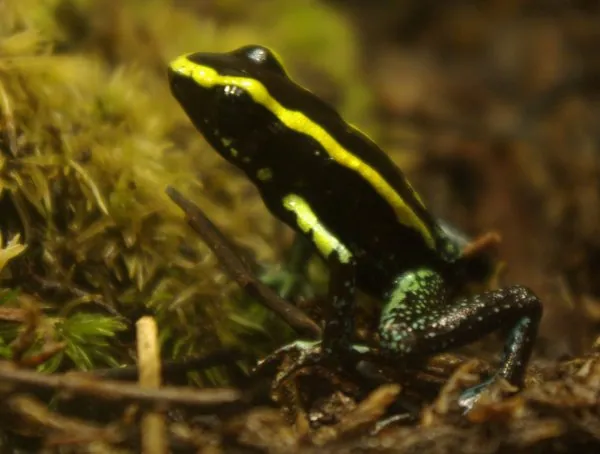
 Оны қалай тануға болады
- Black back, sometimes with orange patches.1
- Green, yellow, orange or brownish gold stripes along each side of the body.1
- Black belly with blue or green dots.1
- The smallest of the poison dart frogs in its genus, Phyllobates.1
- Two forms exist: a smaller form with large stripes and a larger form with small stripes.1
У күші
Оның терісі улы. Оны ұстау, жалау не жеу қауіпті.
Оның денесіндегі у не істейді?
This frog is poisonous rather than venomous, because its toxin is held in its skin and does not come from a bite or sting. The toxin, batrachotoxin, is a steroidal alkaloid. It keeps the sodium channels in nerve and muscle cells permanently open, which stops the cells from resetting. The result is paralysis, and often death, as affected muscles stay locked in a contracted state.1
Адамдарға қаншалықты қауіпті?
Адамдарға қауіп: Өте қауіптіЕм алмаған адамды өлтіруі мүмкін.Wild frogs are extremely deadly to humans, and the toxin can be fatal in doses as small as 100 μg. Frogs raised in captivity are generally non-toxic.1
Қорыққанда ол не істейді?
It releases its toxin from skin glands only when under stress.1
 Егер біреу оны ұстаса не жеп қойса
- Егер біреу оны ұстаса: қолды жақсылап жу және көзге не ауызға тиме. Егер бала не үй жануары оны жаласа не жеп қойса: улану орталығына немесе шұғыл көмек нөміріне қоңырау шал.
Әрқашан алдымен шұғыл көмек нөміріне қоңырау шал (112, 000, 911). Бұл алғашқы көмек бойынша жалпы нұсқаулық, медициналық кеңес емес. Алғашқы көмек негіздері
 Қауіпсіз бол
- Жабайы жануарды ешқашан ұстама, қолға алма және мазақтама, тіпті кішкентай болса да, тіпті ұйықтап жатқандай не өлі сияқты көрінсе де.
- Оған жол бер. Егер кездестірсең, сабырлы бол, ақырын артқа шегін және оны өз жолымен кетуге жібер.
- Егер оны ұстасаң не жесең: көзіңді не аузыңды үйкелеме, қолыңды жу және медициналық көмек ал.
Ол саған шабуыл жасағысы келмейді. Оның уы тек оны ешкім жемеуі үшін ғана керек. Қауіпсіздік туралы толығырақ
Әлемнің қай жерінде?
Ол қаншалықты үлкен?
Ол қаншалықты ұзын?
 шамамен қағаз қыстырғыштай ұзын
 100 метрді 100 секундта жүгіріп өте алар еді (ең жылдам адамға 9,6 секунд керек)
Kokoe poison frog СЕНІМЕН салыстырғанда қаншалықты үлкен?
Тек браузеріңдегі есептеу. Ештеңе сақталмайды және ешқайда жіберілмейді.
Ол қаншалықты жылдам?


Деректер
It is known as the third most poisonous frog in the world.1
Indigenous peoples of Colombia have used its poison on hunting darts.1
Unlike many other dart frogs, males do not wrestle. Rivals face off and call loudly until one backs down.1
Its mating calls are a loud, bird-like whirring twitter, which can last up to 45 seconds.1
Unlike other Phyllobates species, it does not breed in coconut shells. It lays its eggs in narrow tubes on the ground instead.1
Аңыз жоюшы
Аңыз: All poison frogs make their own poison.
Шындық: These frogs probably do not make batrachotoxin themselves. They take it in from their diet of beetles, millipedes and flies, and from the leaf litter. That is why captive frogs are generally non-toxic.1
Улардың сарапшыларына арналған
- Ғылыми атауы
- Phyllobates aurotaenia
- Топ
- Улы бақалар, құрбақалар және тритондар
- Отбасы
- Dendrobatidae2
- Реттеу
- Anura
- Құрлықтар
- Оңтүстік Америка
- Сәбилер
- The female lays a clutch of eggs in leaf litter, averaging 15 to 20. After the eggs hatch, the male carries the tadpoles to slow-flowing water.1
- Табиғатта жағдайы қалай
- Least Concern (IUCN), although its numbers and range are declining, mainly due to habitat loss1
- Адамдарға қауіп
- 4 / 5: Өте қауіпті3
Деректер қайдан алынған
- Phyllobates aurotaenia (Wikipedia (CC BY-SA 4.0))
- Phyllobates aurotaenia (iNaturalist): атаулары мен жіктелуі.
- Venom Wiki: қауіп деңгейі, әдеттегі өлшемі және жылдамдық болжамы біздікі. Оларды қалай есептейтінімізді қара: Қауіпті қалай бағалаймыз.
Бұл беттегі әр деректің дереккөзіне сілтейтін нөмірі бар. Егер бірдеңені қате жазсақ, кешір, біз ғылыми журнал емес, жануарлардың жанкүйерлеріміз. Бізге [email protected] мекенжайына жаз, түзетеміз.
 Шаян аш! Venom Wiki бір адамның жобасы: тегін, жарнамасыз және бақылаушыларсыз. Кішкене сыйақы оның интернетте жұмыс істей беруіне көмектеседі.Шаянды тамақтандыр
Осы топтан тағы: Улы бақалар, құрбақалар және тритондар
 Golden poison frogУлы бақалар, құрбақалар және тритондарӨлімге әкелетінҰстама
 Cane toadУлы бақалар, құрбақалар және тритондарДәрігер керекҰстама
 Dyeing poison dart frogУлы бақалар, құрбақалар және тритондарТек ауыртадыҰстама
 Black-legged poison frogУлы бақалар, құрбақалар және тритондарӨлтіруі мүмкінҰстама
 Bruno's casque-headed frogУлы бақалар, құрбақалар және тритондарДәрігер керекҰстама
 Harlequin poison frogУлы бақалар, құрбақалар және тритондарДәрігер керекҰстама
 Terciopelo
 Brazilian wandering spider
 Eyelash viper
 Golden lancehead
 South American bushmaster
 Peruvian giant centipede