
 អាហ្វ្រិក
 អាស៊ី
អាស៊ី អឺរ៉ុប
 អាមេរិកខាងត្បូង
 អូស្ត្រាលី និងអូសេអានី
 អង់តាក់ទិក
 មហាសមុទ្រប៉ាស៊ីហ្វិក
 មហាសមុទ្រអាត្លង់ទិក
 មហាសមុទ្រឥណ្ឌា
 មហាសមុទ្រអាកទិក
 សមុទ្រមេឌីទែរ៉ាណេ
 សមុទ្រក្រហម
 សមុទ្រការ៉ាអ៊ីប
 សមុទ្រផ្កាថ្ម
 សមុទ្រចិនខាងត្បូង
 សមុទ្រហ្វីលីពីន
 សមុទ្រអង់ដាម៉ាន់
 សមុទ្រខាងជើង
 សមុទ្រទីម័រ និងសមុទ្រអារ៉ាហ្វូរ៉ា
 ឈូងសមុទ្របេងហ្គាល់
 ឈូងសមុទ្រកាលីហ្វ័រញ៉ា
Bluespotted ribbontail ray
 ទិច
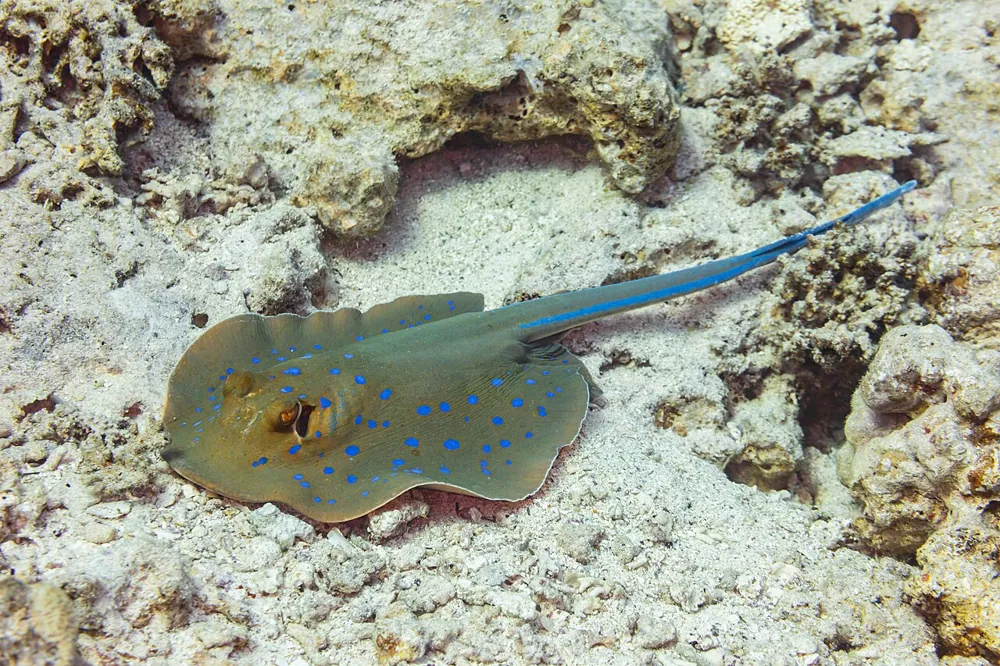
ទិចThe bluespotted ribbontail ray is a small stingray with bright electric blue spots on its back. It lives on coral reefs and sandy flats across the tropical Indian and western Pacific Oceans. It can sting with its tail, but it is shy and usually flees when threatened.1



 របៀបស្គាល់វា
- Numerous circular, neon blue spots on a yellowish brown or green back, with the spots smaller and denser towards the edge of the disc1
- Two stripes of the same blue running along the tail1
- Bright yellow eyes and a white belly1
- Oval, smooth-edged disc, with a thick tail about 1.5 times the length of the disc and one or two serrated spines near the base1
អំណាចពិស
ពិសចេញតាមម្ជុលទិច។
តើពិសរបស់វាធ្វើអ្វី?
Its tail carries one or two serrated spines that deliver venom when it stings. The sting can cause an excruciating wound.1
តើវាគ្រោះថ្នាក់ប៉ុណ្ណាចំពោះមនុស្ស?
គ្រោះថ្នាក់ចំពោះមនុស្ស: ធ្ងន់ធ្ងរការទិចត្រូវការគ្រូពេទ្យ។ ការស្លាប់កម្រណាស់។It is timid and harmless towards people unless provoked, and it prefers to flee. It is capable of injuring people with its venomous tail spines.1
តើវាធ្វើអ្វីនៅពេលវាខ្លាច?
When threatened, it flees at high speed in a zigzag pattern to throw off pursuers.1
 ប្រសិនបើវាទិច
- ដាក់របួសក្នុងទឹកក្តៅ ក្តៅតាមដែលអ្នករងគ្រោះអាចទ្រាំបានដោយមិនរលាក (សាកល្បងវាដោយដៃរបស់អ្នកផ្ទាល់) រយៈពេល 30 ទៅ 90 នាទី។ រកជំនួយវេជ្ជសាស្ត្រ ជាពិសេសសម្រាប់ត្រីថ្ម និងត្រីបបែល។
ត្រូវទូរស័ព្ទទៅលេខសង្គ្រោះបន្ទាន់ជាមុនសិនជានិច្ច (112, 000, 911)។ នេះជាការណែនាំសង្គ្រោះបឋមទូទៅ មិនមែនជាដំបូន្មានវេជ្ជសាស្ត្រទេ។ មូលដ្ឋាននៃការសង្គ្រោះបឋម
 រក្សាសុវត្ថិភាព
- កុំប៉ះ ចាប់ ឬរំខានសត្វព្រៃជាដាច់ខាត ទោះបីវាតូចក៏ដោយ ហើយទោះបីវាមើលទៅដូចជាកំពុងដេក ឬងាប់ក៏ដោយ។
- ទុកចន្លោះឱ្យវា។ ប្រសិនបើអ្នកជួបវា ចូរនៅស្ងប់ ថយក្រោយយឺតៗ ហើយទុកឱ្យវាទៅតាមផ្លូវរបស់វា។
- ប្រសិនបើវាទិចអ្នក៖ ចូរនៅស្ងប់ នៅស្ងៀម ទូរស័ព្ទទៅលេខសង្គ្រោះបន្ទាន់ (112, 000, 911) ឬទៅមន្ទីរពេទ្យឱ្យបានលឿន។ ចងចាំថាវាមានរូបរាងយ៉ាងដូចម្តេច រូបថតមួយអាចជួយបាន។
វាមិនមែនចង់តាមចាប់អ្នកទេ។ វាប្រើពិសរបស់វាដើម្បីចាប់ចំណី ឬការពារខ្លួន ហើយវាចូលចិត្តលាក់ខ្លួនជាង។ បន្ថែមទៀតអំពីការរក្សាសុវត្ថិភាព
នៅកន្លែងណាក្នុងពិភពលោក?
តើវាធំប៉ុណ្ណា?
តើវាវែងប៉ុណ្ណា?
តើវាធ្ងន់ប៉ុណ្ណា?
 វែងដូចឆ្មាក្នុងផ្ទះ 1.5 ក្បាល ពីច្រមុះដល់កន្ទុយ
 វែងដូចចេក 4 ផ្លែតភ្ជាប់គ្នាធ្ងន់ប្រហែលឆ្មាក្នុងផ្ទះមួយក្បាល
 អាចហែលពេញប្រវែងអាងហែលទឹកធំ (50 ម៉ែត្រ) ក្នុងរយៈពេល 11 វិនាទី
តើ Bluespotted ribbontail ray ធំប៉ុណ្ណា បើប្រៀបនឹងអ្នក?
គ្រាន់តែជាការគណនានៅក្នុងកម្មវិធីរុករករបស់អ្នក។ គ្មានអ្វីត្រូវបានរក្សាទុក ឬផ្ញើទៅកន្លែងណាទេ។
តើវាលឿនប៉ុណ្ណា?

ការពិត
It has been seen raising the edges of its disc and pelvic fins to attract cleaning by the bluestreak cleaner wrasse.1
Goatfish often follow foraging rays to catch food the ray misses.1
Most specimens struggle in home aquariums, and many stop feeding or die for no clear reason, so public aquariums have had more success keeping them.1
Unlike many other stingrays, it seldom buries itself in sand.1
សម្រាប់អ្នកជំនាញខាងពិស
- ឈ្មោះវិទ្យាសាស្ត្រ
- Taeniura lymma
- ក្រុម
- ត្រីមានពិស
- គ្រួសារ
- Dasyatidae2
- លំដាប់
- Myliobatiformes
- ទ្វីបនានា
- មហាសមុទ្រឥណ្ឌា, មហាសមុទ្រប៉ាស៊ីហ្វិក, សមុទ្រក្រហម, សមុទ្រផ្កាថ្ម, សមុទ្រអារ៉ាប់ និងឈូងសមុទ្រពែក្ស, សមុទ្រទីម័រ និងសមុទ្រអារ៉ាហ្វូរ៉ា, ឈូងសមុទ្របេងហ្គាល់, មហាសមុទ្រ
- កូនតូចៗ
- It gives birth to live young. Females bear litters of up to seven pups, each about 13–14 cm across, a miniature version of the adult.1
- ស្ថានភាពរបស់វានៅក្នុងធម្មជាតិ
- Least Concern (IUCN)1
- គ្រោះថ្នាក់ចំពោះមនុស្ស
- 3 / 5: ធ្ងន់ធ្ងរ3
ការពិតមកពីណា
- Bluespotted ribbontail ray (Wikipedia (CC BY-SA 4.0))
- Taeniura lymma (iNaturalist): ឈ្មោះ និងចំណាត់ថ្នាក់។
- Venom Wiki: កម្រិតគ្រោះថ្នាក់ ទំហំធម្មតា និងការប៉ាន់ស្មានល្បឿន គឺជារបស់យើងផ្ទាល់។ មើលពីរបៀបដែលយើងគណនាវា៖ របៀបដែលយើងវាយតម្លៃគ្រោះថ្នាក់.
ការពិតនីមួយៗនៅលើទំព័រនេះមានលេខដែលចង្អុលទៅប្រភពរបស់វា។ ប្រសិនបើយើងសរសេរខុស សូមអភ័យទោស យើងជាអ្នកស្រឡាញ់សត្វ មិនមែនជាទស្សនាវដ្តីវិទ្យាសាស្ត្រទេ។ ប្រាប់យើងតាម [email protected] ហើយយើងនឹងកែវា។
 ខ្ទួយឃ្លានហើយ! Venom Wiki ជាគម្រោងរបស់មនុស្សម្នាក់៖ ឥតគិតថ្លៃ គ្មានការផ្សាយពាណិជ្ជកម្ម និងគ្មានកម្មវិធីតាមដាន។ ការឧបត្ថម្ភតិចតួចជួយឱ្យវានៅតែដំណើរការលើអ៊ីនធឺណិត។ផ្តល់ចំណីខ្ទួយ
បន្ថែមទៀតពីក្រុមដូចគ្នា: ត្រីមានពិស
 Reef stonefish
 Red lionfish
 Estuarine stonefish
 Short-tail stingray
 Striped eel catfish
 Common stingray
,_mar_Rojo,_Egipto,_2023-04-14,_DD_64.jpg)
ក៏រស់នៅក្នុង: មហាសមុទ្រឥណ្ឌា
 Australian box jellyfishចាហួយសមុទ្រ និងសត្វសមុទ្រដែលទិចគ្រោះថ្នាក់ដល់ជីវិតកុំប៉ះ
 Geography coneខ្យងកោណ និងមឹកយក្សគ្រោះថ្នាក់ដល់ជីវិត
 Greater blue-ringed octopusខ្យងកោណ និងមឹកយក្សគ្រោះថ្នាក់ដល់ជីវិត
 Southern blue-ringed octopusខ្យងកោណ និងមឹកយក្សគ្រោះថ្នាក់ដល់ជីវិត
 Hawksbill sea turtleសត្វពុលផ្សេងទៀតអាចសម្លាប់បាន
 Irukandji jellyfishចាហួយសមុទ្រ និងសត្វសមុទ្រដែលទិចអាចសម្លាប់បានកុំប៉ះ