
 អាហ្វ្រិក
 អាស៊ី
អាស៊ី អឺរ៉ុប
 អាមេរិកខាងត្បូង
 អូស្ត្រាលី និងអូសេអានី
 អង់តាក់ទិក
 មហាសមុទ្រប៉ាស៊ីហ្វិក
 មហាសមុទ្រអាត្លង់ទិក
 មហាសមុទ្រឥណ្ឌា
 មហាសមុទ្រអាកទិក
 សមុទ្រមេឌីទែរ៉ាណេ
 សមុទ្រក្រហម
 សមុទ្រការ៉ាអ៊ីប
 សមុទ្រផ្កាថ្ម
 សមុទ្រចិនខាងត្បូង
 សមុទ្រហ្វីលីពីន
 សមុទ្រអង់ដាម៉ាន់
 សមុទ្រខាងជើង
 សមុទ្រទីម័រ និងសមុទ្រអារ៉ាហ្វូរ៉ា
 ឈូងសមុទ្របេងហ្គាល់
 ឈូងសមុទ្រកាលីហ្វ័រញ៉ា
Moses sole
 ជាតិពុលនៅក្នុងស្បែក
The Moses sole is a flatfish that lives in shallow coastal waters of the western Indian Ocean, from the Red Sea to Sri Lanka and along the east coast of Africa. It hides on the seabed and gives off a milky toxin from its fins to deter predators, including sharks.1

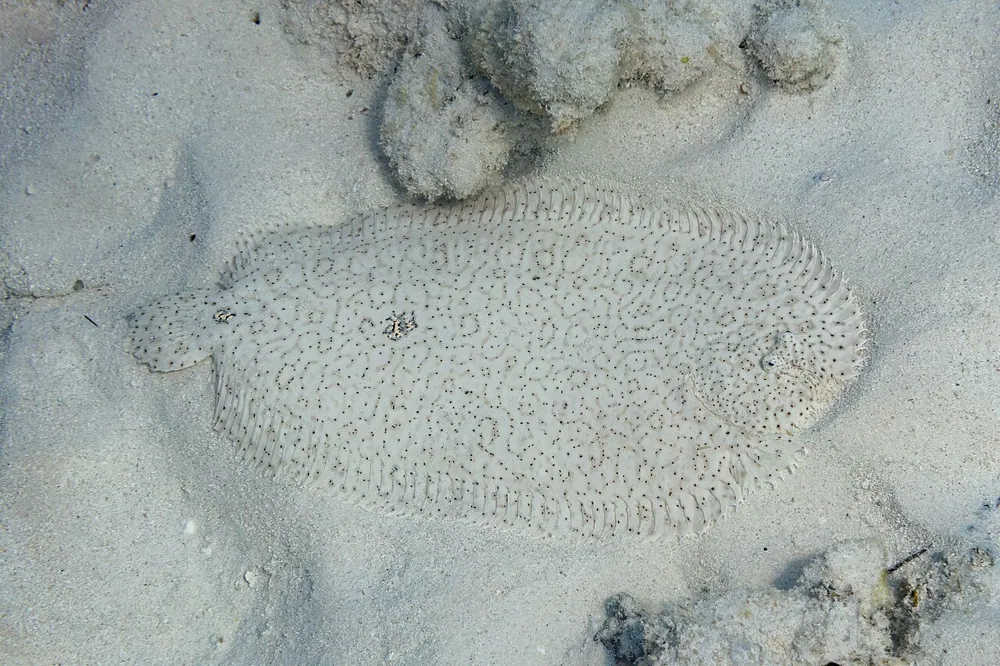
 របៀបស្គាល់វា
- Colour is variable, often whitish, pale brown or pale grey, with irregular dark brown ring-shaped markings1
- Many dark brown spots cover the head, body and fins1
- Normally two brown dots containing yellow flecks sit along the lateral line1
- Adults have a highly compressed, flat-sided body, with both eyes on the right side of the head1
- The rounded tail fin is not joined to the dorsal or cloacal fin1
ច្រើនតែច្រឡំជាមួយ៖ Mimic octopuses copy the finless sole by adapting their shape, colour and texture. They can also mimic venomous sea snakes and fish.1
អំណាចជាតិពុល
ស្បែករបស់វាពុល។ វាគ្រោះថ្នាក់ក្នុងការប៉ះ លិត ឬញ៉ាំ។
តើជាតិពុលរបស់វាធ្វើអ្វី?
The finless sole releases a milky toxin called an ichthyotoxin from the base of its dorsal and cloacal fins. The main toxin, pardaxin, damages cell membranes so that cells leak their contents. It irritates the sensitive gills of predator fish.1
តើវាគ្រោះថ្នាក់ប៉ុណ្ណាចំពោះមនុស្ស?
គ្រោះថ្នាក់ចំពោះមនុស្ស: ស្រាលដូចឃ្មុំទិច ឬតិចជាងនេះ។ ជាទូទៅគ្មានគ្រោះថ្នាក់ចំពោះមនុស្សទេ។It is caught for food and sold fresh, even though its skin secretion is poisonous.1
តើវាធ្វើអ្វីនៅពេលវាខ្លាច?
When threatened, it releases its toxic milky secretion from its fins, and its colour helps it blend in with sandy or pebbled seabeds.1
 ប្រសិនបើនរណាម្នាក់បានប៉ះ ឬញ៉ាំវា
- ប្រសិនបើនរណាម្នាក់បានញ៉ាំវា ឬមានរោគសញ្ញាបន្ទាប់ពីញ៉ាំវា៖ ទូរស័ព្ទទៅលេខសង្គ្រោះបន្ទាន់ ឬមជ្ឈមណ្ឌលប្រឆាំងការពុលភ្លាមៗ។
ត្រូវទូរស័ព្ទទៅលេខសង្គ្រោះបន្ទាន់ជាមុនសិនជានិច្ច (112, 000, 911)។ នេះជាការណែនាំសង្គ្រោះបឋមទូទៅ មិនមែនជាដំបូន្មានវេជ្ជសាស្ត្រទេ។ មូលដ្ឋាននៃការសង្គ្រោះបឋម
 រក្សាសុវត្ថិភាព
- កុំប៉ះ ចាប់ ឬរំខានសត្វព្រៃជាដាច់ខាត ទោះបីវាតូចក៏ដោយ ហើយទោះបីវាមើលទៅដូចជាកំពុងដេក ឬងាប់ក៏ដោយ។
- ទុកចន្លោះឱ្យវា។ ប្រសិនបើអ្នកជួបវា ចូរនៅស្ងប់ ថយក្រោយយឺតៗ ហើយទុកឱ្យវាទៅតាមផ្លូវរបស់វា។
- ប្រសិនបើអ្នកបានប៉ះ ឬញ៉ាំវា៖ កុំត្រដុសភ្នែក ឬមាត់ ចូរលាងដៃ ហើយរកជំនួយវេជ្ជសាស្ត្រ។
វាមិនមែនចង់តាមចាប់អ្នកទេ។ ជាតិពុលរបស់វាមានតែដើម្បីកុំឱ្យសត្វណាស៊ីវាប៉ុណ្ណោះ។ បន្ថែមទៀតអំពីការរក្សាសុវត្ថិភាព
នៅកន្លែងណាក្នុងពិភពលោក?
តើវាធំប៉ុណ្ណា?
តើវាវែងប៉ុណ្ណា?
 វែងដូចប្លុកសំណង់ក្មេងលេង 6 ដុំតជាជួរ
តើ Moses sole ធំប៉ុណ្ណា បើប្រៀបនឹងអ្នក?
គ្រាន់តែជាការគណនានៅក្នុងកម្មវិធីរុករករបស់អ្នក។ គ្មានអ្វីត្រូវបានរក្សាទុក ឬផ្ញើទៅកន្លែងណាទេ។
តើវាលឿនប៉ុណ្ណា?


ការពិត
One of its toxins, pardaxin-1, is 5 to 10 times more toxic than pardaxin-2 and has unusual shark-repelling properties.1
Its toxin, pardaxin, is used by the fish as a defence against sharks.1
Mimic octopuses copy its shape, colour and texture, and can also copy venomous sea snakes and fish.1
Juveniles have one eye on each side of the head, but as they mature the left eye moves to the right side.1
Eugenie Clark carried out much of the early research on this species.1
ការពិតមកពីណា
- Pardachirus marmoratus (Wikipedia (CC BY-SA 4.0))
- Pardachirus marmoratus (iNaturalist): ឈ្មោះ និងចំណាត់ថ្នាក់។
- Venom Wiki: កម្រិតគ្រោះថ្នាក់ ទំហំធម្មតា និងការប៉ាន់ស្មានល្បឿន គឺជារបស់យើងផ្ទាល់។ មើលពីរបៀបដែលយើងគណនាវា៖ របៀបដែលយើងវាយតម្លៃគ្រោះថ្នាក់.
ការពិតនីមួយៗនៅលើទំព័រនេះមានលេខដែលចង្អុលទៅប្រភពរបស់វា។ ប្រសិនបើយើងសរសេរខុស សូមអភ័យទោស យើងជាអ្នកស្រឡាញ់សត្វ មិនមែនជាទស្សនាវដ្តីវិទ្យាសាស្ត្រទេ។ ប្រាប់យើងតាម [email protected] ហើយយើងនឹងកែវា។
 ខ្ទួយឃ្លានហើយ! Venom Wiki ជាគម្រោងរបស់មនុស្សម្នាក់៖ ឥតគិតថ្លៃ គ្មានការផ្សាយពាណិជ្ជកម្ម និងគ្មានកម្មវិធីតាមដាន។ ការឧបត្ថម្ភតិចតួចជួយឱ្យវានៅតែដំណើរការលើអ៊ីនធឺណិត។ផ្តល់ចំណីខ្ទួយ
បន្ថែមទៀតពីក្រុមដូចគ្នា: សត្វពុលផ្សេងទៀត
 Japanese pufferfish
 Hawksbill sea turtle
 Greenland shark
 Silver-cheeked toadfish
 Blackspotted puffer
 White-spotted puffer
,_Zanz%C3%ADbar,_Tanzania,_2024-05-31,_DD_32.jpg)
ក៏រស់នៅក្នុង: មហាសមុទ្រប៉ាស៊ីហ្វិក
 Australian box jellyfishចាហួយសមុទ្រ និងសត្វសមុទ្រដែលទិចគ្រោះថ្នាក់ដល់ជីវិតកុំប៉ះ
 Geography coneខ្យងកោណ និងមឹកយក្សគ្រោះថ្នាក់ដល់ជីវិត
 Greater blue-ringed octopusខ្យងកោណ និងមឹកយក្សគ្រោះថ្នាក់ដល់ជីវិត
 Southern blue-ringed octopusខ្យងកោណ និងមឹកយក្សគ្រោះថ្នាក់ដល់ជីវិត
 Irukandji jellyfishចាហួយសមុទ្រ និងសត្វសមុទ្រដែលទិចអាចសម្លាប់បានកុំប៉ះ
 Reef stonefishត្រីមានពិសអាចសម្លាប់បានកុំប៉ះ