
 អាហ្វ្រិក
 អាស៊ី
អាស៊ី អឺរ៉ុប
 អាមេរិកខាងត្បូង
 អូស្ត្រាលី និងអូសេអានី
 អង់តាក់ទិក
 មហាសមុទ្រប៉ាស៊ីហ្វិក
 មហាសមុទ្រអាត្លង់ទិក
 មហាសមុទ្រឥណ្ឌា
 មហាសមុទ្រអាកទិក
 សមុទ្រមេឌីទែរ៉ាណេ
 សមុទ្រក្រហម
 សមុទ្រការ៉ាអ៊ីប
 សមុទ្រផ្កាថ្ម
 សមុទ្រចិនខាងត្បូង
 សមុទ្រហ្វីលីពីន
 សមុទ្រអង់ដាម៉ាន់
 សមុទ្រខាងជើង
 សមុទ្រទីម័រ និងសមុទ្រអារ៉ាហ្វូរ៉ា
 ឈូងសមុទ្របេងហ្គាល់
 ឈូងសមុទ្រកាលីហ្វ័រញ៉ា
Orange baboon tarantula
 ខាំ
ខាំThe orange baboon tarantula is a large, nocturnal spider, so it is most active at night. It lives in parts of Africa, including Angola, central and southern Africa and the island of Zanzibar. Its bite is not known to be deadly, but it is very painful, so it should be left alone.1



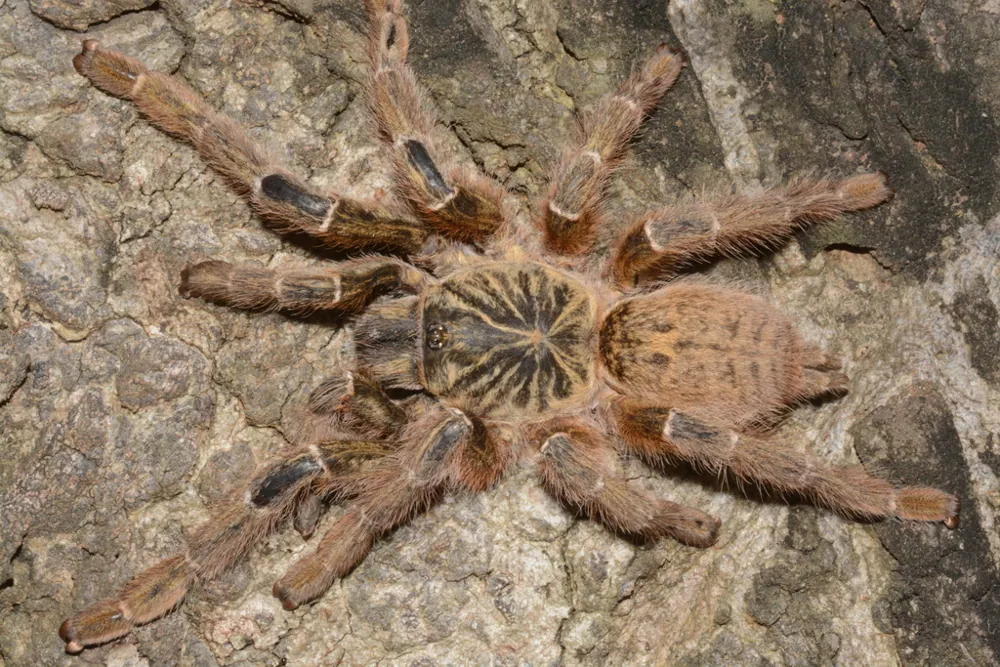
 របៀបស្គាល់វា
អំណាចពិស
ពិសចេញតាមចង្កូម ឬធ្មេញរបស់វា នៅពេលវាខាំ។
តើពិសរបស់វាធ្វើអ្វី?
The venom is not known to be lethal to humans, but the bite is considered medically significant. The bite is extremely painful.1
តើវាគ្រោះថ្នាក់ប៉ុណ្ណាចំពោះមនុស្ស?
គ្រោះថ្នាក់ចំពោះមនុស្ស: ឈឺចាប់វាអាចឈឺខ្លាំងមែន ប៉ុន្តែស្ទើរតែមិនដែលធ្ងន់ធ្ងរទេ។The bite is not thought to be serious, but it is extremely painful. It is considered medically significant, so handling this species is advised against.1
តើវាធ្វើអ្វីនៅពេលវាខ្លាច?
It is very defensive and will bite if provoked, often without first showing its typical threat display.1
 ប្រសិនបើវាខាំ
- លាងកន្លែងខាំ ហើយធ្វើឱ្យវាត្រជាក់។ រកជំនួយវេជ្ជសាស្ត្រ ប្រសិនបើឈឺខ្លាំង ឬអ្នករងគ្រោះមានអារម្មណ៍មិនស្រួល។
ត្រូវទូរស័ព្ទទៅលេខសង្គ្រោះបន្ទាន់ជាមុនសិនជានិច្ច (112, 000, 911)។ នេះជាការណែនាំសង្គ្រោះបឋមទូទៅ មិនមែនជាដំបូន្មានវេជ្ជសាស្ត្រទេ។ មូលដ្ឋាននៃការសង្គ្រោះបឋម
 រក្សាសុវត្ថិភាព
- កុំប៉ះ ចាប់ ឬរំខានសត្វព្រៃជាដាច់ខាត ទោះបីវាតូចក៏ដោយ ហើយទោះបីវាមើលទៅដូចជាកំពុងដេក ឬងាប់ក៏ដោយ។
- ទុកចន្លោះឱ្យវា។ ប្រសិនបើអ្នកជួបវា ចូរនៅស្ងប់ ថយក្រោយយឺតៗ ហើយទុកឱ្យវាទៅតាមផ្លូវរបស់វា។
- ប្រសិនបើវាខាំអ្នក៖ ចូរនៅស្ងប់ នៅស្ងៀម ទូរស័ព្ទទៅលេខសង្គ្រោះបន្ទាន់ (112, 000, 911) ឬទៅមន្ទីរពេទ្យឱ្យបានលឿន។ ចងចាំថាវាមានរូបរាងយ៉ាងដូចម្តេច រូបថតមួយអាចជួយបាន។
វាមិនមែនចង់តាមចាប់អ្នកទេ។ វាប្រើពិសរបស់វាដើម្បីចាប់ចំណី ឬការពារខ្លួន ហើយវាចូលចិត្តលាក់ខ្លួនជាង។ បន្ថែមទៀតអំពីការរក្សាសុវត្ថិភាព
នៅកន្លែងណាក្នុងពិភពលោក?
តើវាធំប៉ុណ្ណា?
តើវាវែងប៉ុណ្ណា?
 វែងដូចប្លុកសំណង់ក្មេងលេង 5 ដុំតជាជួរ
 អាចរត់បាន 100 ម៉ែត្រក្នុងរយៈពេល 200 វិនាទី (មនុស្សលឿនបំផុតត្រូវការ 9.6)
តើ Orange baboon tarantula ធំប៉ុណ្ណា បើប្រៀបនឹងអ្នក?
គ្រាន់តែជាការគណនានៅក្នុងកម្មវិធីរុករករបស់អ្នក។ គ្មានអ្វីត្រូវបានរក្សាទុក ឬផ្ញើទៅកន្លែងណាទេ។
តើវាលឿនប៉ុណ្ណា?


ការពិត
Hobbyists nickname it OBT, short for orange baboon tarantula or orange bitey thing, and call it the pterror, a pun on its genus name.1
It can be found in five known colour forms, and the colour is thought to be linked to the type of soil where each form lives.1
Unlike some New World tarantulas, it has no urticating hairs to irritate the skin.1
It builds a tunnel-shaped web.1
It is a nocturnal spider, so it is most active at night.1
ការពិតមកពីណា
- Pterinochilus murinus (Wikipedia (CC BY-SA 4.0))
- Pterinochilus murinus (iNaturalist): ឈ្មោះ និងចំណាត់ថ្នាក់។
- Venom Wiki: កម្រិតគ្រោះថ្នាក់ ទំហំធម្មតា និងការប៉ាន់ស្មានល្បឿន គឺជារបស់យើងផ្ទាល់។ មើលពីរបៀបដែលយើងគណនាវា៖ របៀបដែលយើងវាយតម្លៃគ្រោះថ្នាក់.
ការពិតនីមួយៗនៅលើទំព័រនេះមានលេខដែលចង្អុលទៅប្រភពរបស់វា។ ប្រសិនបើយើងសរសេរខុស សូមអភ័យទោស យើងជាអ្នកស្រឡាញ់សត្វ មិនមែនជាទស្សនាវដ្តីវិទ្យាសាស្ត្រទេ។ ប្រាប់យើងតាម [email protected] ហើយយើងនឹងកែវា។
 ខ្ទួយឃ្លានហើយ! Venom Wiki ជាគម្រោងរបស់មនុស្សម្នាក់៖ ឥតគិតថ្លៃ គ្មានការផ្សាយពាណិជ្ជកម្ម និងគ្មានកម្មវិធីតាមដាន។ ការឧបត្ថម្ភតិចតួចជួយឱ្យវានៅតែដំណើរការលើអ៊ីនធឺណិត។ផ្តល់ចំណីខ្ទួយ
បន្ថែមទៀតពីក្រុមដូចគ្នា: ពីងពាងតារ៉ាន់ទុឡា និងពីងពាងសំណាញ់រាងចីវ៉ែន
 King baboon spiderពីងពាងតារ៉ាន់ទុឡា និងពីងពាងសំណាញ់រាងចីវ៉ែនគ្រាន់តែឈឺ
 Featherleg baboon spiderពីងពាងតារ៉ាន់ទុឡា និងពីងពាងសំណាញ់រាងចីវ៉ែនត្រូវការគ្រូពេទ្យ
 Togo starburst tarantulaពីងពាងតារ៉ាន់ទុឡា និងពីងពាងសំណាញ់រាងចីវ៉ែនត្រូវការគ្រូពេទ្យ
 Cameroon red baboon spiderពីងពាងតារ៉ាន់ទុឡា និងពីងពាងសំណាញ់រាងចីវ៉ែនគ្រាន់តែឈឺ
 Golden blue-leg baboon spiderពីងពាងតារ៉ាន់ទុឡា និងពីងពាងសំណាញ់រាងចីវ៉ែនគ្រាន់តែឈឺ
 Horned baboon spiderពីងពាងតារ៉ាន់ទុឡា និងពីងពាងសំណាញ់រាងចីវ៉ែនគ្រាន់តែឈឺ
 Black mamba
 Deathstalker
 Egyptian cobra
 Puff adder
 Boomslang
 Fat-tailed scorpion