
 អាហ្វ្រិក
 អាស៊ី
អាស៊ី អឺរ៉ុប
 អាមេរិកខាងត្បូង
 អូស្ត្រាលី និងអូសេអានី
 អង់តាក់ទិក
 មហាសមុទ្រប៉ាស៊ីហ្វិក
 មហាសមុទ្រអាត្លង់ទិក
 មហាសមុទ្រឥណ្ឌា
 មហាសមុទ្រអាកទិក
 សមុទ្រមេឌីទែរ៉ាណេ
 សមុទ្រក្រហម
 សមុទ្រការ៉ាអ៊ីប
 សមុទ្រផ្កាថ្ម
 សមុទ្រចិនខាងត្បូង
 សមុទ្រហ្វីលីពីន
 សមុទ្រអង់ដាម៉ាន់
 សមុទ្រខាងជើង
 សមុទ្រទីម័រ និងសមុទ្រអារ៉ាហ្វូរ៉ា
 ឈូងសមុទ្របេងហ្គាល់
 ឈូងសមុទ្រកាលីហ្វ័រញ៉ា
Red harvester ant
 ទិច
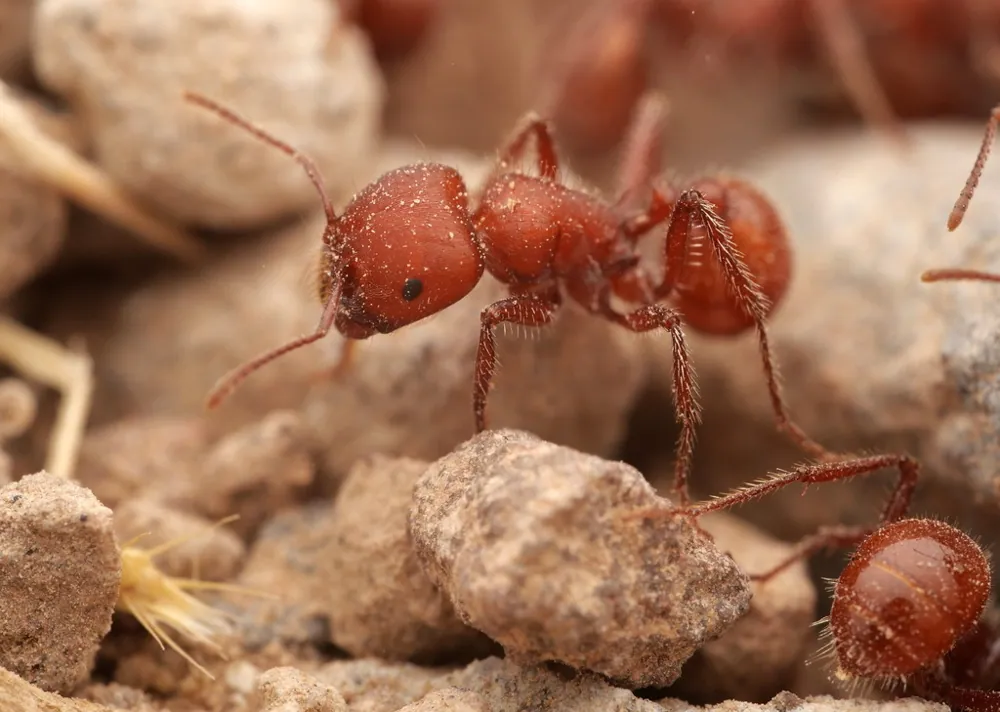
ទិចThe red harvester ant is a large ant that lives in the dry, scrubby land of the southwestern United States. Its nests are dug underground, and the bare patches around them are easy to spot in open grassland. It matters because these ants gather seeds and help spread plants across the land.1


 របៀបស្គាល់វា
- Large ant, about 5 to 7 mm long1
- Mound is flat and broad, up to 100 mm high and 300 to 1,200 mm across1
- Bare ground with no plants, and small pebbles around the tunnel entrance1
- Three to eight trails lead out from the mound, like arms1
- Seed hulls are often scattered around the nest1
ច្រើនតែច្រឡំជាមួយ៖ Red harvester ants are often mistaken for fire ants. They are not closely related to any fire ant species, native or introduced.1
អំណាចពិស
ពិសចេញតាមម្ជុលទិច។
តើវាគ្រោះថ្នាក់ប៉ុណ្ណាចំពោះមនុស្ស?
គ្រោះថ្នាក់ចំពោះមនុស្ស: ឈឺចាប់វាអាចឈឺខ្លាំងមែន ប៉ុន្តែស្ទើរតែមិនដែលធ្ងន់ធ្ងរទេ។ ប្រសិនបើវាទិច
- លាង និងធ្វើឱ្យកន្លែងទិចត្រជាក់។
- ប្រសិនបើអ្នករងគ្រោះពិបាកដកដង្ហើម ហើមមុខ ឬហើមបំពង់ក ឬមានអារម្មណ៍ដូចជិតសន្លប់ នោះជាភាពអាសន្ននៃប្រតិកម្មអាឡែស៊ី៖ ទូរស័ព្ទទៅលេខសង្គ្រោះបន្ទាន់។
ត្រូវទូរស័ព្ទទៅលេខសង្គ្រោះបន្ទាន់ជាមុនសិនជានិច្ច (112, 000, 911)។ នេះជាការណែនាំសង្គ្រោះបឋមទូទៅ មិនមែនជាដំបូន្មានវេជ្ជសាស្ត្រទេ។ មូលដ្ឋាននៃការសង្គ្រោះបឋម
 រក្សាសុវត្ថិភាព
- កុំប៉ះ ចាប់ ឬរំខានសត្វព្រៃជាដាច់ខាត ទោះបីវាតូចក៏ដោយ ហើយទោះបីវាមើលទៅដូចជាកំពុងដេក ឬងាប់ក៏ដោយ។
- ទុកចន្លោះឱ្យវា។ ប្រសិនបើអ្នកជួបវា ចូរនៅស្ងប់ ថយក្រោយយឺតៗ ហើយទុកឱ្យវាទៅតាមផ្លូវរបស់វា។
- ប្រសិនបើវាទិចអ្នក៖ ចូរនៅស្ងប់ នៅស្ងៀម ទូរស័ព្ទទៅលេខសង្គ្រោះបន្ទាន់ (112, 000, 911) ឬទៅមន្ទីរពេទ្យឱ្យបានលឿន។ ចងចាំថាវាមានរូបរាងយ៉ាងដូចម្តេច រូបថតមួយអាចជួយបាន។
វាមិនមែនចង់តាមចាប់អ្នកទេ។ វាប្រើពិសរបស់វាដើម្បីចាប់ចំណី ឬការពារខ្លួន ហើយវាចូលចិត្តលាក់ខ្លួនជាង។ បន្ថែមទៀតអំពីការរក្សាសុវត្ថិភាព
នៅកន្លែងណាក្នុងពិភពលោក?
តើវាធំប៉ុណ្ណា?
តើវាវែងប៉ុណ្ណា?
 តូចល្មមអាចអង្គុយលើក្រចកដៃរបស់អ្នកបាន
តើ Red harvester ant ធំប៉ុណ្ណា បើប្រៀបនឹងអ្នក?
គ្រាន់តែជាការគណនានៅក្នុងកម្មវិធីរុករករបស់អ្នក។ គ្មានអ្វីត្រូវបានរក្សាទុក ឬផ្ញើទៅកន្លែងណាទេ។
តើវាលឿនប៉ុណ្ណា?


ការពិត
Some queens have been known to live up to 30 years in the wild.1
Colonies have no central control. They adjust how much they forage using feedback from returning ants, which can take only seconds.1
Rival Novomessor cockerelli ants block nest entrances with sand and small rocks, delaying the red harvester ants' activity by one to three hours.1
Seeds are stored in the nest for months, and sometimes several years, so the colony has food during lean times.1
The plants benefit too. Ants carry seeds while foraging, which spreads the plants over a wider area.1
Ant foraging is guided by chemical signals, and foragers can travel up to 50 to 60 m from the nest.1
បំបែកជំនឿខុស
ជំនឿខុស៖ Red harvester ants are fire ants.
តាមពិត៖ They are often mistaken for fire ants but are not closely related to any fire ant species.1
សម្រាប់អ្នកជំនាញខាងពិស
- ឈ្មោះវិទ្យាសាស្ត្រ
- Pogonomyrmex barbatus
- ក្រុម
- ស្រមោច
- គ្រួសារ
- Formicidae2
- លំដាប់
- Hymenoptera
- ទ្វីបនានា
- អាមេរិកខាងជើង
- កូនតូចៗ
- A single queen starts each new colony by sealing herself in a soil nest and laying eggs. The first workers emerge over six to eight weeks.1
- អាយុកាល
- ប្រហែល 30 ឆ្នាំ1
- គ្រោះថ្នាក់ចំពោះមនុស្ស
- 2 / 5: ឈឺចាប់3
ការពិតមកពីណា
- Red harvester ant (Wikipedia (CC BY-SA 4.0))
- Pogonomyrmex barbatus (iNaturalist): ឈ្មោះ និងចំណាត់ថ្នាក់។
- Venom Wiki: កម្រិតគ្រោះថ្នាក់ ទំហំធម្មតា និងការប៉ាន់ស្មានល្បឿន គឺជារបស់យើងផ្ទាល់។ មើលពីរបៀបដែលយើងគណនាវា៖ របៀបដែលយើងវាយតម្លៃគ្រោះថ្នាក់.
ការពិតនីមួយៗនៅលើទំព័រនេះមានលេខដែលចង្អុលទៅប្រភពរបស់វា។ ប្រសិនបើយើងសរសេរខុស សូមអភ័យទោស យើងជាអ្នកស្រឡាញ់សត្វ មិនមែនជាទស្សនាវដ្តីវិទ្យាសាស្ត្រទេ។ ប្រាប់យើងតាម [email protected] ហើយយើងនឹងកែវា។
 ខ្ទួយឃ្លានហើយ! Venom Wiki ជាគម្រោងរបស់មនុស្សម្នាក់៖ ឥតគិតថ្លៃ គ្មានការផ្សាយពាណិជ្ជកម្ម និងគ្មានកម្មវិធីតាមដាន។ ការឧបត្ថម្ភតិចតួចជួយឱ្យវានៅតែដំណើរការលើអ៊ីនធឺណិត។ផ្តល់ចំណីខ្ទួយ
 Bullet ant
 Army ant
 Maricopa harvester ant
 Trap-jaw ant
 Acacia ant
 California harvester ant
 Terciopelo
 Eastern coral snake
 Eastern diamondback rattlesnake
 Eyelash viper
 Timber rattlesnake
 Western diamondback rattlesnake