
 អាហ្វ្រិក
 អាស៊ី
អាស៊ី អឺរ៉ុប
 អាមេរិកខាងត្បូង
 អូស្ត្រាលី និងអូសេអានី
 អង់តាក់ទិក
 មហាសមុទ្រប៉ាស៊ីហ្វិក
 មហាសមុទ្រអាត្លង់ទិក
 មហាសមុទ្រឥណ្ឌា
 មហាសមុទ្រអាកទិក
 សមុទ្រមេឌីទែរ៉ាណេ
 សមុទ្រក្រហម
 សមុទ្រការ៉ាអ៊ីប
 សមុទ្រផ្កាថ្ម
 សមុទ្រចិនខាងត្បូង
 សមុទ្រហ្វីលីពីន
 សមុទ្រអង់ដាម៉ាន់
 សមុទ្រខាងជើង
 សមុទ្រទីម័រ និងសមុទ្រអារ៉ាហ្វូរ៉ា
 ឈូងសមុទ្របេងហ្គាល់
 ឈូងសមុទ្រកាលីហ្វ័រញ៉ា
Woodlouse spider
 ខាំ
ខាំThe woodlouse spider is a small spider that hunts woodlice, the small grey creatures that curl up when touched. It lives in warm places under logs, stones and plant pots, and it is now found on almost every continent except Antarctica. It is a skilled hunter with large fangs, but it is not known to be a health risk to people.1



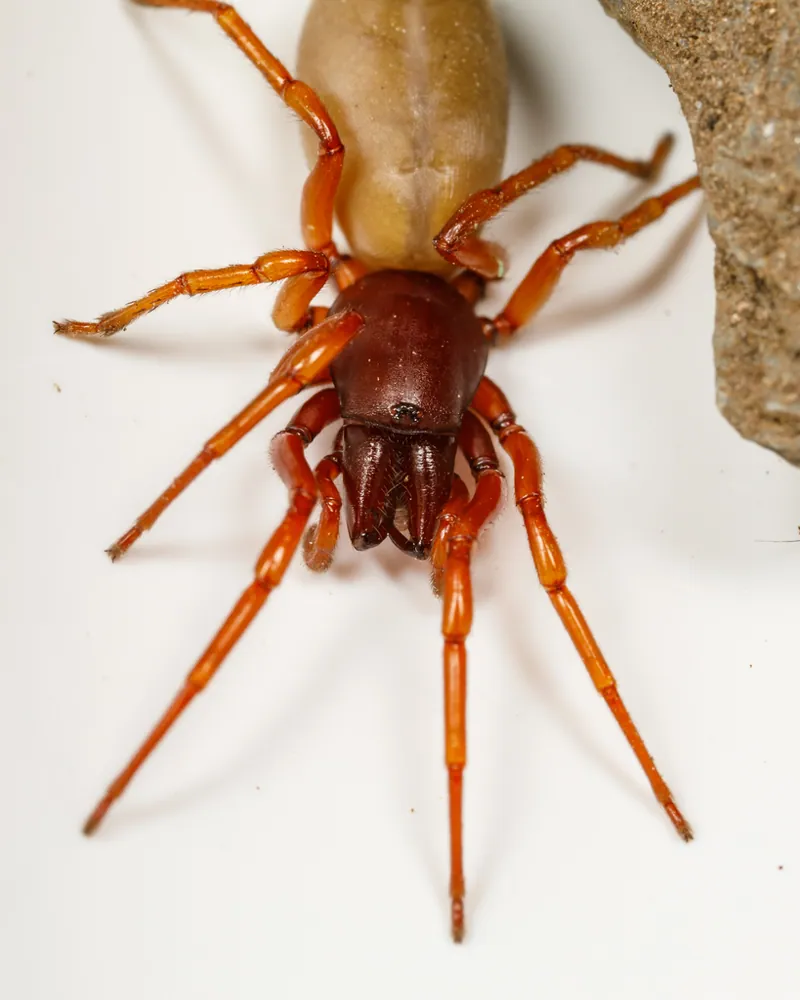
 របៀបស្គាល់វា
- Six eyes.1
- A tawny orange to dark red head and chest section (cephalothorax) and legs.1
- A shiny, pale beige to yellow-brown abdomen, which can be dark grey and sometimes very shiny.1
- Very large fangs (chelicerae) for a spider of its size.1
- Adult females are 11 to 15 mm long, and males are 9 to 10 mm long.1
ច្រើនតែច្រឡំជាមួយ៖ The woodlouse spider can be hard to tell apart from Dysdera erythrina, which is much less common. D. erythrina is not usually found near human homes, so location can help.1
អំណាចពិស
ពិសចេញតាមចង្កូម ឬធ្មេញរបស់វា នៅពេលវាខាំ។
តើពិសរបស់វាធ្វើអ្វី?
It injects venom through its fangs to subdue its prey. In people, bites have been known to cause localised itching at the bite site.1
តើវាគ្រោះថ្នាក់ប៉ុណ្ណាចំពោះមនុស្ស?
គ្រោះថ្នាក់ចំពោះមនុស្ស: ស្រាលដូចឃ្មុំទិច ឬតិចជាងនេះ។ ជាទូទៅគ្មានគ្រោះថ្នាក់ចំពោះមនុស្សទេ។It is a dangerous predator for woodlice but is not known to be a health hazard to humans or smaller animals. It has been known to bite people if handled. Verified bites have caused no major medical problems.1
 ប្រសិនបើវាខាំ
- លាងកន្លែងខាំ ហើយដាក់ថង់ទឹកកកលើវាដើម្បីបំបាត់ការឈឺចាប់។ រកជំនួយវេជ្ជសាស្ត្រ ប្រសិនបើឈឺខ្លាំង ការឈឺរាលដាល ឬអ្នករងគ្រោះមានអារម្មណ៍មិនស្រួល។
ត្រូវទូរស័ព្ទទៅលេខសង្គ្រោះបន្ទាន់ជាមុនសិនជានិច្ច (112, 000, 911)។ នេះជាការណែនាំសង្គ្រោះបឋមទូទៅ មិនមែនជាដំបូន្មានវេជ្ជសាស្ត្រទេ។ មូលដ្ឋាននៃការសង្គ្រោះបឋម
 រក្សាសុវត្ថិភាព
- កុំប៉ះ ចាប់ ឬរំខានសត្វព្រៃជាដាច់ខាត ទោះបីវាតូចក៏ដោយ ហើយទោះបីវាមើលទៅដូចជាកំពុងដេក ឬងាប់ក៏ដោយ។
- ទុកចន្លោះឱ្យវា។ ប្រសិនបើអ្នកជួបវា ចូរនៅស្ងប់ ថយក្រោយយឺតៗ ហើយទុកឱ្យវាទៅតាមផ្លូវរបស់វា។
- ប្រសិនបើវាខាំអ្នក៖ ចូរនៅស្ងប់ នៅស្ងៀម ទូរស័ព្ទទៅលេខសង្គ្រោះបន្ទាន់ (112, 000, 911) ឬទៅមន្ទីរពេទ្យឱ្យបានលឿន។ ចងចាំថាវាមានរូបរាងយ៉ាងដូចម្តេច រូបថតមួយអាចជួយបាន។
វាមិនមែនចង់តាមចាប់អ្នកទេ។ វាប្រើពិសរបស់វាដើម្បីចាប់ចំណី ឬការពារខ្លួន ហើយវាចូលចិត្តលាក់ខ្លួនជាង។ បន្ថែមទៀតអំពីការរក្សាសុវត្ថិភាព
នៅកន្លែងណាក្នុងពិភពលោក?
តើវាធំប៉ុណ្ណា?
តើវាវែងប៉ុណ្ណា?
 ខ្លីជាងម្រាមដៃកូនរបស់អ្នក
តើ Woodlouse spider ធំប៉ុណ្ណា បើប្រៀបនឹងអ្នក?
គ្រាន់តែជាការគណនានៅក្នុងកម្មវិធីរុករករបស់អ្នក។ គ្មានអ្វីត្រូវបានរក្សាទុក ឬផ្ញើទៅកន្លែងណាទេ។
តើវាលឿនប៉ុណ្ណា?


ការពិត
It is an unusually dominant predator for its size because of its large fangs and wide gape.1
It often dominates and sometimes kills other spiders and centipedes.1
Courtship is typically aggressive, and mates can be injured by each other's large fangs.1
It hunts at night and does not spin a web. Instead, it searches warm places for prey.1
Although it began in the Mediterranean, it is now found on several continents, including Australia and New Zealand.1
បំបែកជំនឿខុស
ជំនឿខុស៖ Woodlouse spiders are dangerous to people.
តាមពិត៖ They are not known to be a health hazard to humans. They can bite if handled, but verified bites have not caused major medical problems.1
ការពិតមកពីណា
- Woodlouse spider (Wikipedia (CC BY-SA 4.0))
- Dysdera crocata (iNaturalist): ឈ្មោះ និងចំណាត់ថ្នាក់។
- Venom Wiki: កម្រិតគ្រោះថ្នាក់ ទំហំធម្មតា និងការប៉ាន់ស្មានល្បឿន គឺជារបស់យើងផ្ទាល់។ មើលពីរបៀបដែលយើងគណនាវា៖ របៀបដែលយើងវាយតម្លៃគ្រោះថ្នាក់.
ការពិតនីមួយៗនៅលើទំព័រនេះមានលេខដែលចង្អុលទៅប្រភពរបស់វា។ ប្រសិនបើយើងសរសេរខុស សូមអភ័យទោស យើងជាអ្នកស្រឡាញ់សត្វ មិនមែនជាទស្សនាវដ្តីវិទ្យាសាស្ត្រទេ។ ប្រាប់យើងតាម [email protected] ហើយយើងនឹងកែវា។
 ខ្ទួយឃ្លានហើយ! Venom Wiki ជាគម្រោងរបស់មនុស្សម្នាក់៖ ឥតគិតថ្លៃ គ្មានការផ្សាយពាណិជ្ជកម្ម និងគ្មានកម្មវិធីតាមដាន។ ការឧបត្ថម្ភតិចតួចជួយឱ្យវានៅតែដំណើរការលើអ៊ីនធឺណិត។ផ្តល់ចំណីខ្ទួយ
បន្ថែមទៀតពីក្រុមដូចគ្នា: ពីងពាង
 Mediterranean black widow
 Diving bell spider
 European yellow sac spider
 Noble false widow
 Tarantula wolf spider
 Daddy long-legs spider
ក៏រស់នៅក្នុង: អឺរ៉ុប
 Common European adderពស់វ៉ៃពែរ និងពស់អាដឺត្រូវការគ្រូពេទ្យ
 Spanish flyសត្វពុលផ្សេងទៀតត្រូវការគ្រូពេទ្យកុំប៉ះ
 Common waspឃ្មុំ ឪម៉ាល់ និងឪម៉ាល់ធំគ្រាន់តែឈឺ
 European hornetឃ្មុំ ឪម៉ាល់ និងឪម៉ាល់ធំគ្រាន់តែឈឺ
 Fire salamanderកង្កែបពុល កង្កែបពក និងសត្វញូតគ្រាន់តែឈឺកុំប៉ះ
 Western honey beeឃ្មុំ ឪម៉ាល់ និងឪម៉ាល់ធំគ្រាន់តែឈឺ