
 ಆಫ್ರಿಕಾ
 ಏಷ್ಯಾ
ಏಷ್ಯಾ ಯುರೋಪ್
 ದಕ್ಷಿಣ ಅಮೆರಿಕ
 ಆಸ್ಟ್ರೇಲಿಯಾ ಮತ್ತು ಓಶಿಯಾನಿಯಾ
 ಅಂಟಾರ್ಕ್ಟಿಕಾ
 ಪೆಸಿಫಿಕ್ ಮಹಾಸಾಗರ
 ಅಟ್ಲಾಂಟಿಕ್ ಮಹಾಸಾಗರ
 ಹಿಂದೂ ಮಹಾಸಾಗರ
 ಆರ್ಕ್ಟಿಕ್ ಮಹಾಸಾಗರ
 ಮೆಡಿಟರೇನಿಯನ್ ಸಮುದ್ರ
 ಕೆಂಪು ಸಮುದ್ರ
 ಕೆರಿಬಿಯನ್ ಸಮುದ್ರ
 ಹವಳ ಸಮುದ್ರ
 ದಕ್ಷಿಣ ಚೀನಾ ಸಮುದ್ರ
 ಫಿಲಿಪೈನ್ ಸಮುದ್ರ
 ಅಂಡಮಾನ್ ಸಮುದ್ರ
 ಉತ್ತರ ಸಮುದ್ರ
 ಟಿಮೋರ್ ಮತ್ತು ಅರಫುರಾ ಸಮುದ್ರ
 ಬಂಗಾಳ ಕೊಲ್ಲಿ
 ಕ್ಯಾಲಿಫೋರ್ನಿಯಾ ಕೊಲ್ಲಿ
Six-eyed sand spider
 ಕಚ್ಚುತ್ತದೆ
Hahn's six-eyed sand spider is a medium-to-large spider that lives in deserts and sandy places in southern Africa. It rests flat against the ground or under a little loose soil, and its velvety hairs let it blend in almost perfectly. Its bite can be medically significant, but people rarely come across it.1
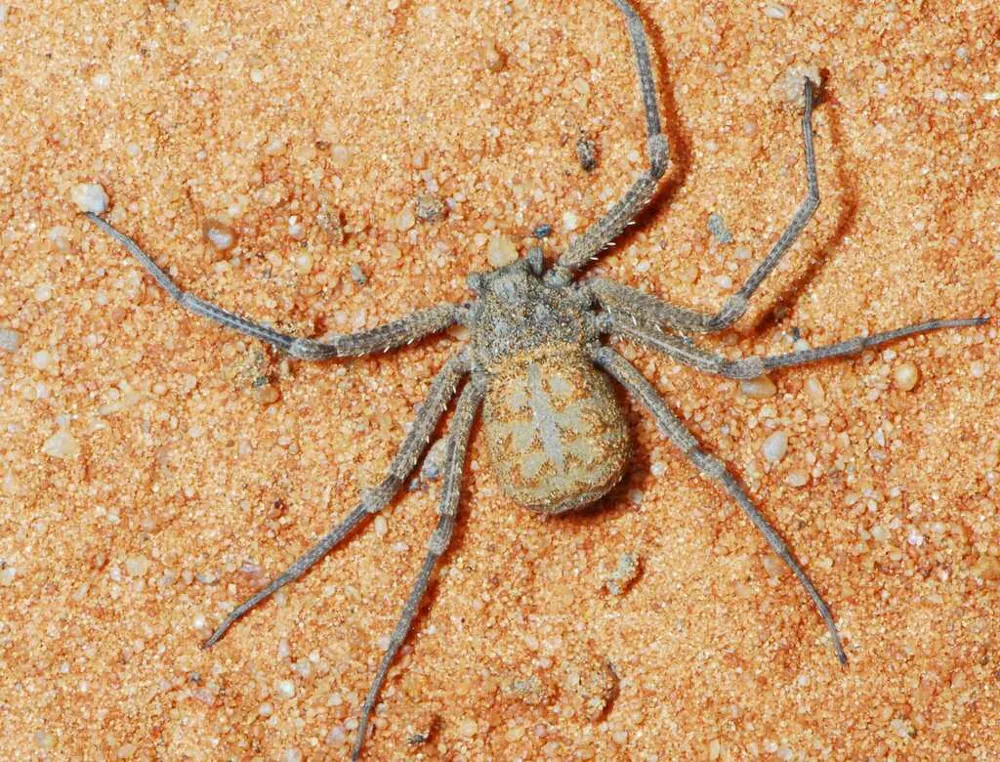
 ಇದನ್ನು ಗುರುತಿಸುವುದು ಹೇಗೆ
ವಿಷದ ಶಕ್ತಿ
ಅದು ಕಚ್ಚುವಾಗ ವಿಷ ಅದರ ಕೋರೆಹಲ್ಲುಗಳು ಅಥವಾ ಹಲ್ಲುಗಳ ಮೂಲಕ ಹೊರಬರುತ್ತದೆ.
ಅದರ ವಿಷ (ಕಚ್ಚಿದರೆ ಅಥವಾ ಕುಟುಕಿದರೆ) ಏನು ಮಾಡುತ್ತದೆ?
All Hexophthalma spiders produce venom with dermonecrotic effects, which means it can destroy skin and tissue. The damage is caused by proteins related to sphingomyelinase D, which are found in the venom of all sicariid spiders. For this species, the detailed effects on humans are unknown, because its venom has mainly been studied in the laboratory.1
ಇದು ಜನರಿಗೆ ಎಷ್ಟು ಅಪಾಯಕಾರಿ?
ಜನರಿಗೆ ಅಪಾಯ: ಗಂಭೀರಕಡಿತಕ್ಕೆ ವೈದ್ಯರ ಅಗತ್ಯವಿದೆ. ಸಾವುಗಳು ಬಹಳ ಅಪರೂಪ.The spider is capable of a medically significant bite. Serious or even life-threatening wounds are possible, especially if the wound becomes infected or the venom spreads through the body. No bites from this spider in southern Africa have been proven, and contact with people is considered unlikely.1
ಹೆದರಿದಾಗ ಅದು ಏನು ಮಾಡುತ್ತದೆ?
It relies on stillness and camouflage rather than running, and it can shift quickly across loose sand when disturbed.1
 ಅದು ಕಚ್ಚಿದರೆ
- ಕಡಿತವನ್ನು ತೊಳೆ ಮತ್ತು ನೋವಿಗೆ ಅದರ ಮೇಲೆ ಐಸ್ ಪ್ಯಾಕ್ ಇಡು. ನೋವು ಜೋರಾಗಿದ್ದರೆ, ಹರಡಿದರೆ ಅಥವಾ ವ್ಯಕ್ತಿಗೆ ಹುಷಾರಿಲ್ಲವೆನಿಸಿದರೆ ವೈದ್ಯಕೀಯ ಸಹಾಯ ಪಡೆ.
ಯಾವಾಗಲೂ ಮೊದಲು ನಿನ್ನ ತುರ್ತು ಸಂಖ್ಯೆಗೆ ಕರೆ ಮಾಡು (112, 000, 911). ಇದು ಸಾಮಾನ್ಯ ಪ್ರಥಮ ಚಿಕಿತ್ಸೆಯ ಮಾರ್ಗದರ್ಶನ, ವೈದ್ಯಕೀಯ ಸಲಹೆಯಲ್ಲ. ಪ್ರಥಮ ಚಿಕಿತ್ಸೆಯ ಮೂಲಭೂತ ಅಂಶಗಳು
 ಸುರಕ್ಷಿತವಾಗಿರು
- ಕಾಡು ಪ್ರಾಣಿಯನ್ನು ಎಂದಿಗೂ ಮುಟ್ಟಬೇಡ, ಹಿಡಿಯಬೇಡ ಅಥವಾ ಕೆಣಕಬೇಡ, ಅದು ಚಿಕ್ಕದಾಗಿದ್ದರೂ, ನಿದ್ರಿಸುತ್ತಿರುವಂತೆ ಅಥವಾ ಸತ್ತಂತೆ ಕಂಡರೂ ಸಹ.
- ಅದಕ್ಕೆ ಜಾಗ ಕೊಡು. ಒಂದು ಎದುರಾದರೆ, ಶಾಂತವಾಗಿರು, ನಿಧಾನವಾಗಿ ಹಿಂದೆ ಸರಿ ಮತ್ತು ಅದನ್ನು ಅದರ ದಾರಿಯಲ್ಲಿ ಹೋಗಲು ಬಿಡು.
- ಅಂಥದ್ದು ನಿನ್ನನ್ನು ಕಚ್ಚಿದರೆ: ಶಾಂತವಾಗಿರು, ಅಲುಗಾಡದೆ ಇರು, ನಿನ್ನ ತುರ್ತು ಸಂಖ್ಯೆಗೆ (112, 000, 911) ಕರೆ ಮಾಡು ಅಥವಾ ಬೇಗನೆ ಆಸ್ಪತ್ರೆಗೆ ಹೋಗು. ಅದು ಹೇಗಿತ್ತು ಎಂದು ನೆನಪಿಟ್ಟುಕೋ, ಫೋಟೋ ಸಹಾಯ ಮಾಡುತ್ತದೆ.
ಇದು ನಿನ್ನನ್ನು ಹುಡುಕಿಕೊಂಡು ಬರುವುದಿಲ್ಲ. ಆಹಾರ ಹಿಡಿಯಲು ಅಥವಾ ತನ್ನನ್ನು ರಕ್ಷಿಸಿಕೊಳ್ಳಲು ಇದು ತನ್ನ ವಿಷವನ್ನು ಬಳಸುತ್ತದೆ, ಮತ್ತು ಇದಕ್ಕೆ ಅಡಗಿಕೊಳ್ಳುವುದೇ ಹೆಚ್ಚು ಇಷ್ಟ. ಸುರಕ್ಷಿತವಾಗಿರುವ ಬಗ್ಗೆ ಇನ್ನಷ್ಟು
ಜಗತ್ತಿನಲ್ಲಿ ಎಲ್ಲಿ?
ಇದು ಎಷ್ಟು ದೊಡ್ಡದು?
ಇದು ಎಷ್ಟು ಉದ್ದ?
 ನಿನ್ನ ಕಿರುಬೆರಳಿಗಿಂತ ಚಿಕ್ಕದು
 100 ಮೀಟರ್ಗಳನ್ನು 330 ಸೆಕೆಂಡುಗಳಲ್ಲಿ ಕ್ರಮಿಸಬಲ್ಲದು (ಅತಿ ವೇಗದ ಮನುಷ್ಯನಿಗೆ 9.6 ಬೇಕು)
ನಿನಗೆ ಹೋಲಿಸಿದರೆ Six-eyed sand spider ಎಷ್ಟು ದೊಡ್ಡದು?
ನಿನ್ನ ಬ್ರೌಸರ್ನಲ್ಲಿ ಬರೀ ಲೆಕ್ಕಾಚಾರ. ಏನನ್ನೂ ಉಳಿಸುವುದಿಲ್ಲ ಅಥವಾ ಎಲ್ಲಿಗೂ ಕಳುಹಿಸುವುದಿಲ್ಲ.
ಇದು ಎಷ್ಟು ವೇಗ?


ಸಂಗತಿಗಳು
ಮಾಹಿತಿ ಎಲ್ಲಿಂದ ಬರುತ್ತದೆ
- Hexophthalma hahni (Wikipedia (CC BY-SA 4.0))
- Hexophthalma hahni (iNaturalist): ಹೆಸರುಗಳು ಮತ್ತು ವರ್ಗೀಕರಣ.
- Venom Wiki: ಅಪಾಯದ ಮಟ್ಟ, ಸಾಮಾನ್ಯ ಗಾತ್ರ ಮತ್ತು ವೇಗದ ಅಂದಾಜು ನಮ್ಮದೇ. ನಾವು ಅವನ್ನು ಹೇಗೆ ಲೆಕ್ಕ ಹಾಕುತ್ತೇವೆ ನೋಡು: ನಾವು ಅಪಾಯವನ್ನು ಹೇಗೆ ಅಳೆಯುತ್ತೇವೆ.
ಈ ಪುಟದ ಪ್ರತಿ ಸಂಗತಿಗೂ ಅದರ ಮೂಲವನ್ನು ತೋರಿಸುವ ಒಂದು ಸಂಖ್ಯೆ ಇದೆ. ನಾವು ಏನಾದರೂ ತಪ್ಪು ಮಾಡಿದ್ದರೆ, ಕ್ಷಮಿಸು, ನಾವು ಪ್ರಾಣಿ ಪ್ರೇಮಿಗಳು, ವೈಜ್ಞಾನಿಕ ಪತ್ರಿಕೆಯಲ್ಲ. [email protected] ಗೆ ನಮಗೆ ತಿಳಿಸು, ನಾವು ಸರಿಪಡಿಸುತ್ತೇವೆ.
 ಚೇಳಿಗೆ ಹಸಿವಾಗಿದೆ! Venom Wiki ಒಬ್ಬ ವ್ಯಕ್ತಿಯ ಯೋಜನೆ: ಉಚಿತ, ಜಾಹೀರಾತುಗಳಿಲ್ಲ ಮತ್ತು ಟ್ರ್ಯಾಕರ್ಗಳಿಲ್ಲ. ಒಂದು ಸಣ್ಣ ಟಿಪ್ ಇದನ್ನು ಆನ್ಲೈನ್ನಲ್ಲಿ ಇರಿಸಲು ಸಹಾಯ ಮಾಡುತ್ತದೆ.ಚೇಳಿಗೆ ಊಟ ಕೊಡು
 Mediterranean black widow
 Brown widow
 Noble false widow
 Darwin's bark spider
 Wasp spider
 Black button spider
 Black mamba
 Deathstalker
 Egyptian cobra
 Puff adder
 Boomslang
 Fat-tailed scorpion