
 아프리카
아프리카 아시아
아시아 유럽
유럽 남아메리카
남아메리카 호주와 오세아니아
 남극
남극 태평양
태평양 대서양
대서양 인도양
인도양 북극해
북극해 지중해
지중해 홍해
홍해 카리브해
카리브해 산호해
산호해 남중국해
남중국해 필리핀해
필리핀해 안다만해
안다만해 북해
북해 티모르해와 아라푸라해
 벵골만
벵골만 캘리포니아만
Hickory tussock moth
 쏘는 털
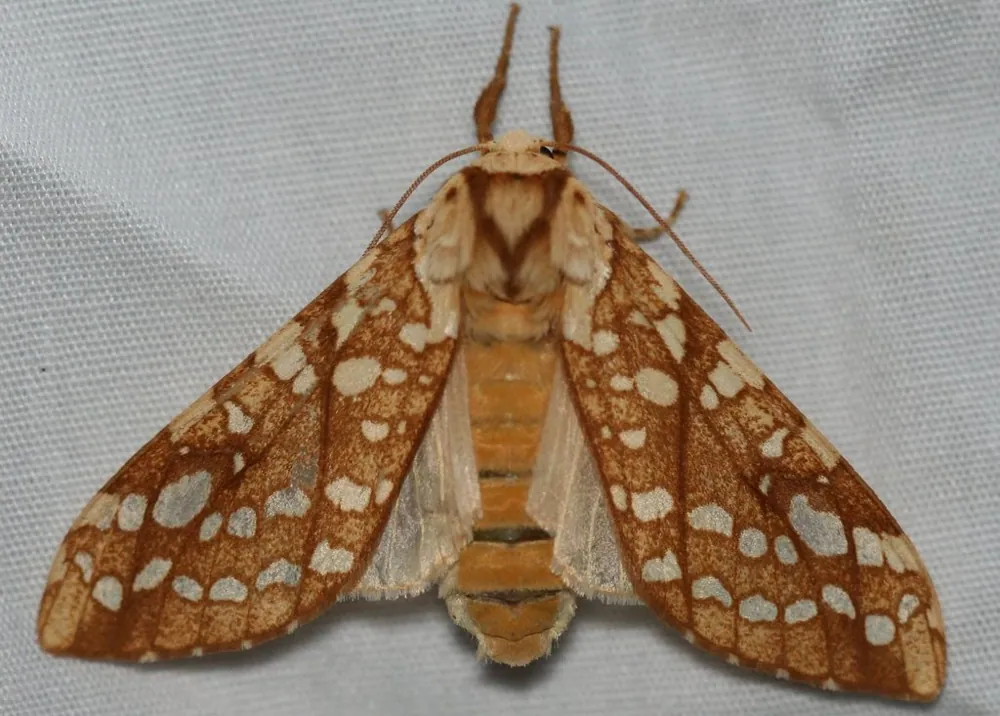
쏘는 털The hickory tussock moth is a moth whose caterpillars are covered in long, hairy tufts. It lives across the eastern half of North America. Its hairs can cause an itchy rash, but no venom has been found in it.1

 알아보는 법
- The caterpillar is completely covered in long, hairlike setae arranged in spreading tufts, and most are white.1
- The caterpillar has black tufts along the middle of its back and four long black hair pencils, two near the front and two near the back.1
- The caterpillar has black spots along its sides and a black head capsule.1
- The adult moth has yellowish-brown forewings marked with white splotches, which look like stained glass.1
- The adult moth has mostly white hindwings and a hairy, pale brown body.1
독의 힘
작은 털이나 센털이 피부에 박혀 부러지면서 따끔하게 쏘아.
이 독(물거나 쏘는 독)은 어떤 작용을 할까?
No venom has yet been isolated or identified in this moth. Its hairs cause irritant contact dermatitis, an itchy rash, in many people, especially those prone to allergies. The rash can resemble exposure to urushiol, the irritant found in poison ivy.1
사람에게 얼마나 위험할까?
사람에게 위험한 정도: 약함벌에 쏘인 정도거나 그보다 덜해. 사람에게는 거의 무해해.In over 350 documented cases, most people had no symptoms within 24 hours. No case involved anaphylaxis, a severe allergic reaction. The hairs are microscopically barbed, and if they are transferred from the hands to the eyes they may rarely cause serious medical complications.1
 털을 만지면
- 쐐기벌레의 쏘는 털은: 테이프로 떼어 낸 다음 피부를 씻어. 문지르지 마.
- 물렸을 때: 씻고 식혀. 그 사람이 몸이 안 좋거나 피가 잘 멈추지 않으면 의료 도움을 받아.
언제나 먼저 응급 번호(112, 000, 911)에 전화해. 이건 일반적인 응급처치 안내이고, 의학적 조언이 아니야. 응급처치 기본
 안전하게 지내
- 야생 동물은 작더라도, 자거나 죽은 것처럼 보이더라도 절대 만지거나, 잡거나, 괴롭히지 마.
- 거리를 둬. 마주치면 침착하게 천천히 뒤로 물러나서 제 갈 길을 가게 해 줘.
- 털을 만졌다면: 침착하게, 가만히 있고, 응급 번호(112, 000, 911)에 전화하거나 빨리 병원에 가. 생김새를 기억해 둬. 사진이 있으면 도움이 돼.
너를 노리는 게 아니야. 독은 먹이를 잡거나 자기를 지키려고 쓰는 거고, 사실은 숨는 걸 훨씬 좋아해. 안전하게 지내는 법 더 보기
얼마나 클까?
얼마나 길까?
 네 새끼손가락보다 짧아
 달팽이보다 느려
Hickory tussock moth, 너와 비교하면 얼마나 클까?
브라우저에서 계산만 해. 아무것도 저장되거나 어디로도 보내지지 않아.
얼마나 빠를까?

사실
The hairs of the caterpillar are microscopically barbed, which is why they can irritate the skin.1
Young caterpillars feed in groups of about 100, but older caterpillars are solitary.1
The adult's forewings are marked with white splotches that look like stained glass.1
The loose cocoon has hairs woven into it and overwinters in leaf litter.1
오해 바로잡기
오해: The hickory tussock moth is venomous, as some anecdotal claims say.
진실: No venom has been isolated or identified in this species. Its hairs cause an irritant skin rash in many people.1
사실의 출처
- Lophocampa caryae (Wikipedia (CC BY-SA 4.0))
- Lophocampa caryae (iNaturalist): 이름과 분류.
- Venom Wiki: 위험 수준, 일반적인 크기, 속도 추측은 우리가 직접 정한 거야. 어떻게 정하는지 봐: 위험도를 매기는 방법.
이 페이지의 모든 사실에는 출처를 가리키는 번호가 있어. 틀린 게 있다면 미안해, 우리는 동물 팬이지 과학 학술지가 아니거든. [email protected]로 알려 주면 고칠게.
 전갈이 배고파! Venom Wiki는 한 사람이 만드는 프로젝트야: 무료이고, 광고도 추적기도 없어. 작은 팁이 사이트를 계속 운영하는 데 도움이 돼.전갈에게 먹이 주기
 Giant water bug
 Puss caterpillar
 Saddleback caterpillar
 Wheel bug
 Giant vinegaroon
 Rhodnius kissing bug
 테르시오펠로
 Eastern coral snake
 Eastern diamondback rattlesnake
 Eyelash viper
 Timber rattlesnake
 Western diamondback rattlesnake