
 ອາຟຣິກາ
 ອາຊີ
ອາຊີ ເອີຣົບ
 ອາເມລິກາໃຕ້
 ອົດສະຕຣາລີ ແລະ ໂອເຊຍເນຍ
 ແອນຕາກຕິກາ
 ມະຫາສະໝຸດປາຊີຟິກ
 ມະຫາສະໝຸດອັດລັງຕິກ
 ມະຫາສະໝຸດອິນເດຍ
 ມະຫາສະໝຸດອາກຕິກ
 ທະເລເມດິເຕີເຣນຽນ
 ທະເລແດງ
 ທະເລຄາຣິບບຽນ
 ທະເລຄໍຣັລ
 ທະເລຈີນໃຕ້
 ທະເລຟິລິບປິນ
 ທະເລອັນດາມັນ
 ທະເລເໜືອ
 ທະເລຕີມໍ ແລະ ທະເລອາຣາຟູຣາ
 ອ່າວເບັງກອນ
 ອ່າວແຄລິຟໍເນຍ
Bluespotted ribbontail ray
 ຕອດ
ຕອດThe bluespotted ribbontail ray is a small stingray with bright electric blue spots on its back. It lives on coral reefs and sandy flats across the tropical Indian and western Pacific Oceans. It can sting with its tail, but it is shy and usually flees when threatened.1



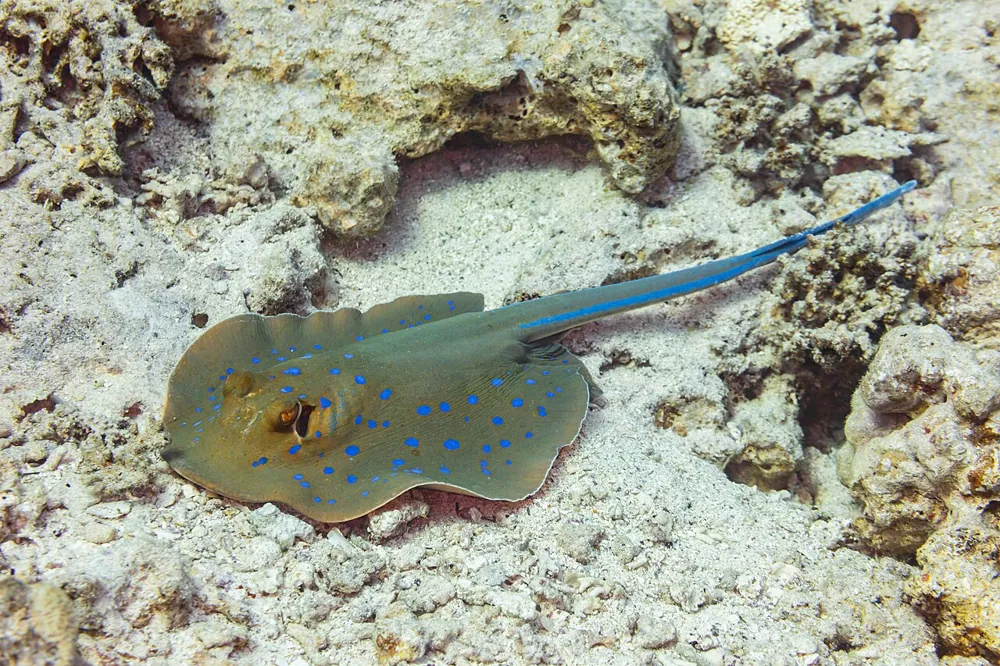
 ວິທີສັງເກດມັນ
- Numerous circular, neon blue spots on a yellowish brown or green back, with the spots smaller and denser towards the edge of the disc1
- Two stripes of the same blue running along the tail1
- Bright yellow eyes and a white belly1
- Oval, smooth-edged disc, with a thick tail about 1.5 times the length of the disc and one or two serrated spines near the base1
ພະລັງພິດ
ພິດອອກມາທາງເຫຼັກໃນ
ພິດທີ່ມັນປ່ອຍອອກມາເຮັດຫຍັງ?
Its tail carries one or two serrated spines that deliver venom when it stings. The sting can cause an excruciating wound.1
ມັນອັນຕະລາຍຕໍ່ຄົນປານໃດ?
ອັນຕະລາຍຕໍ່ຄົນ: ຮ້າຍແຮງຖ້າຖືກມັນຕອດ ຕ້ອງໄປຫາໝໍ ການເສຍຊີວິດເກີດຂຶ້ນໜ້ອຍຫຼາຍIt is timid and harmless towards people unless provoked, and it prefers to flee. It is capable of injuring people with its venomous tail spines.1
ມັນເຮັດແນວໃດເວລາມັນຢ້ານ?
When threatened, it flees at high speed in a zigzag pattern to throw off pursuers.1
 ຖ້າມັນຕອດ
- ແຊ່ບາດແຜໃນນ້ຳຮ້ອນ, ຮ້ອນເທົ່າທີ່ຜູ້ປ່ວຍທົນໄດ້ໂດຍບໍ່ລວກຜິວ (ທົດສອບດ້ວຍມືຂອງເຈົ້າເອງ), ເປັນເວລາ 30 ຫາ 90 ນາທີ ໄປຫາໝໍ, ໂດຍສະເພາະສຳລັບປາຫີນ ແລະ ປາກະເບນ
ໂທຫາເບີສຸກເສີນກ່ອນສະເໝີ (112, 000, 911) ນີ້ແມ່ນຄຳແນະນຳການປະຖົມພະຍາບານທົ່ວໄປ, ບໍ່ແມ່ນຄຳແນະນຳທາງການແພດ ພື້ນຖານການປະຖົມພະຍາບານ
 ຢູ່ຢ່າງປອດໄພ
- ຢ່າຈັບ, ຢ່າຈັບເອົາ ຫຼື ຢ່າຫຍອກສັດປ່າເດັດຂາດ, ເຖິງແມ່ນມັນໂຕນ້ອຍ ແລະ ເຖິງແມ່ນມັນເບິ່ງຄືນອນຫຼັບ ຫຼື ຕາຍແລ້ວ
- ໃຫ້ພື້ນທີ່ມັນ ຖ້າເຈົ້າພົບມັນ, ໃຈເຢັນໄວ້, ຖອຍຫຼັງຊ້າໆ ແລະ ປ່ອຍໃຫ້ມັນໄປທາງຂອງມັນ
- ຖ້າມີໂຕໃດຕອດເຈົ້າ: ໃຈເຢັນໄວ້, ຢູ່ນິ້ງໆ, ໂທຫາເບີສຸກເສີນ (112, 000, 911) ຫຼື ໄປໂຮງໝໍໃຫ້ໄວ ຈື່ໄວ້ວ່າມັນມີລັກສະນະແນວໃດ, ຮູບຖ່າຍຊ່ວຍໄດ້
ມັນບໍ່ໄດ້ຢາກທຳຮ້າຍເຈົ້າ ມັນໃຊ້ພິດເພື່ອຈັບອາຫານ ຫຼື ເພື່ອປ້ອງກັນຕົວ, ແລະ ມັນມັກລີ້ຫຼາຍກວ່າ ເພີ່ມເຕີມກ່ຽວກັບການຢູ່ຢ່າງປອດໄພ
ຢູ່ໃສໃນໂລກ?
ມັນໃຫຍ່ປານໃດ?
ມັນຍາວປານໃດ?
ມັນໜັກປານໃດ?
 ຍາວເທົ່າແມວບ້ານ 1,5 ໂຕຕໍ່ດັງຕໍ່ຫາງ
 ຍາວເທົ່າກ້ວຍ 4 ໜ່ວຍຕໍ່ກັນໜັກປະມານແມວບ້ານໂຕໜຶ່ງ
 ລອຍຕາມຄວາມຍາວຂອງສະລອຍນ້ຳໃຫຍ່ (50 ມ) ໄດ້ໃນ 11 ວິນາທີ
Bluespotted ribbontail ray ໃຫຍ່ປານໃດ ເມື່ອທຽບກັບເຈົ້າ?
ພຽງແຕ່ຄິດໄລ່ໃນບຣາວເຊີຂອງເຈົ້າ ບໍ່ມີຫຍັງຖືກບັນທຶກ ຫຼື ສົ່ງໄປບ່ອນໃດ
ມັນໄວປານໃດ?

ຂໍ້ມູນ
It has been seen raising the edges of its disc and pelvic fins to attract cleaning by the bluestreak cleaner wrasse.1
Goatfish often follow foraging rays to catch food the ray misses.1
Most specimens struggle in home aquariums, and many stop feeding or die for no clear reason, so public aquariums have had more success keeping them.1
Unlike many other stingrays, it seldom buries itself in sand.1
ສຳລັບຜູ້ຊ່ຽວຊານດ້ານພິດ
- ຊື່ວິທະຍາສາດ
- Taeniura lymma
- ກຸ່ມ
- ປາທີ່ມີພິດ
- ຄອບຄົວ
- Dasyatidae2
- ອັນດັບ
- Myliobatiformes
- ທະວີບຕ່າງໆ
- ມະຫາສະໝຸດອິນເດຍ, ມະຫາສະໝຸດປາຊີຟິກ, ທະເລແດງ, ທະເລຄໍຣັລ, ທະເລອາຣັບ ແລະ ອ່າວເປີເຊຍ, ທະເລຕີມໍ ແລະ ທະເລອາຣາຟູຣາ, ອ່າວເບັງກອນ, ມະຫາສະໝຸດ
- ລູກສັດ
- It gives birth to live young. Females bear litters of up to seven pups, each about 13–14 cm across, a miniature version of the adult.1
- ສະຖານະຂອງມັນໃນທຳມະຊາດ
- Least Concern (IUCN)1
- ອັນຕະລາຍຕໍ່ຄົນ
- 3 / 5: ຮ້າຍແຮງ3
ຂໍ້ມູນມາຈາກໃສ
- Bluespotted ribbontail ray (Wikipedia (CC BY-SA 4.0))
- Taeniura lymma (iNaturalist): ຊື່ ແລະ ການຈັດໝວດໝູ່
- Venom Wiki: ລະດັບອັນຕະລາຍ, ຂະໜາດທົ່ວໄປ ແລະ ຄວາມໄວທີ່ຄາດຄະເນ ແມ່ນຂອງພວກເຮົາເອງ ເບິ່ງວ່າພວກເຮົາຄິດໄລ່ແນວໃດ: ພວກເຮົາໃຫ້ຄະແນນອັນຕະລາຍແນວໃດ.
ທຸກຂໍ້ມູນໃນໜ້ານີ້ມີຕົວເລກທີ່ຊີ້ໄປຫາແຫຼ່ງທີ່ມາ ຖ້າພວກເຮົາຜິດພາດ, ຂໍໂທດເດີ້, ພວກເຮົາເປັນຄົນມັກສັດ ບໍ່ແມ່ນວາລະສານວິທະຍາສາດ ບອກພວກເຮົາທີ່ [email protected] ແລ້ວພວກເຮົາຈະແກ້ໄຂ
 ແມງເງົາຫິວແລ້ວ! Venom Wiki ເປັນໂຄງການຂອງຄົນຄົນດຽວ: ຟຣີ, ບໍ່ມີໂຄສະນາ ແລະ ບໍ່ມີຕົວຕິດຕາມ ທິບນ້ອຍໆຊ່ວຍໃຫ້ມັນຢູ່ອອນລາຍຕໍ່ໄປໄດ້ໃຫ້ອາຫານແມງເງົາ
ເພີ່ມເຕີມຈາກກຸ່ມດຽວກັນ: ປາທີ່ມີພິດ
 Reef stonefish
 Red lionfish
 Estuarine stonefish
 Short-tail stingray
 Striped eel catfish
 Common stingray
,_mar_Rojo,_Egipto,_2023-04-14,_DD_64.jpg)
ຍັງອາໄສຢູ່ໃນ: ມະຫາສະໝຸດອິນເດຍ
 Australian box jellyfishແມງກະພຸນ ແລະ ສັດທະເລທີ່ຕອດໄດ້ເຖິງຕາຍຫ້າມຈັບ
 Geography coneຫອຍເຕົ້າປູນ ແລະ ປາມຶກເຖິງຕາຍ
 Greater blue-ringed octopusຫອຍເຕົ້າປູນ ແລະ ປາມຶກເຖິງຕາຍ
 Southern blue-ringed octopusຫອຍເຕົ້າປູນ ແລະ ປາມຶກເຖິງຕາຍ
 Hawksbill sea turtleສັດມີພິດໃນຕົວອື່ນໆເຖິງຕາຍໄດ້
 Irukandji jellyfishແມງກະພຸນ ແລະ ສັດທະເລທີ່ຕອດໄດ້ເຖິງຕາຍໄດ້ຫ້າມຈັບ