
 ອາຟຣິກາ
 ອາຊີ
ອາຊີ ເອີຣົບ
 ອາເມລິກາໃຕ້
 ອົດສະຕຣາລີ ແລະ ໂອເຊຍເນຍ
 ແອນຕາກຕິກາ
 ມະຫາສະໝຸດປາຊີຟິກ
 ມະຫາສະໝຸດອັດລັງຕິກ
 ມະຫາສະໝຸດອິນເດຍ
 ມະຫາສະໝຸດອາກຕິກ
 ທະເລເມດິເຕີເຣນຽນ
 ທະເລແດງ
 ທະເລຄາຣິບບຽນ
 ທະເລຄໍຣັລ
 ທະເລຈີນໃຕ້
 ທະເລຟິລິບປິນ
 ທະເລອັນດາມັນ
 ທະເລເໜືອ
 ທະເລຕີມໍ ແລະ ທະເລອາຣາຟູຣາ
 ອ່າວເບັງກອນ
 ອ່າວແຄລິຟໍເນຍ
Eastern cicada killer
 ຕອດ
ຕອດThe eastern cicada killer is a large wasp that hunts cicadas, the loud insects that buzz in summer trees. It lives in the Eastern and Midwest United States and further south into Mexico and Central America. Females are not aggressive and rarely sting, so the sight of them flying over lawns is usually harmless.1


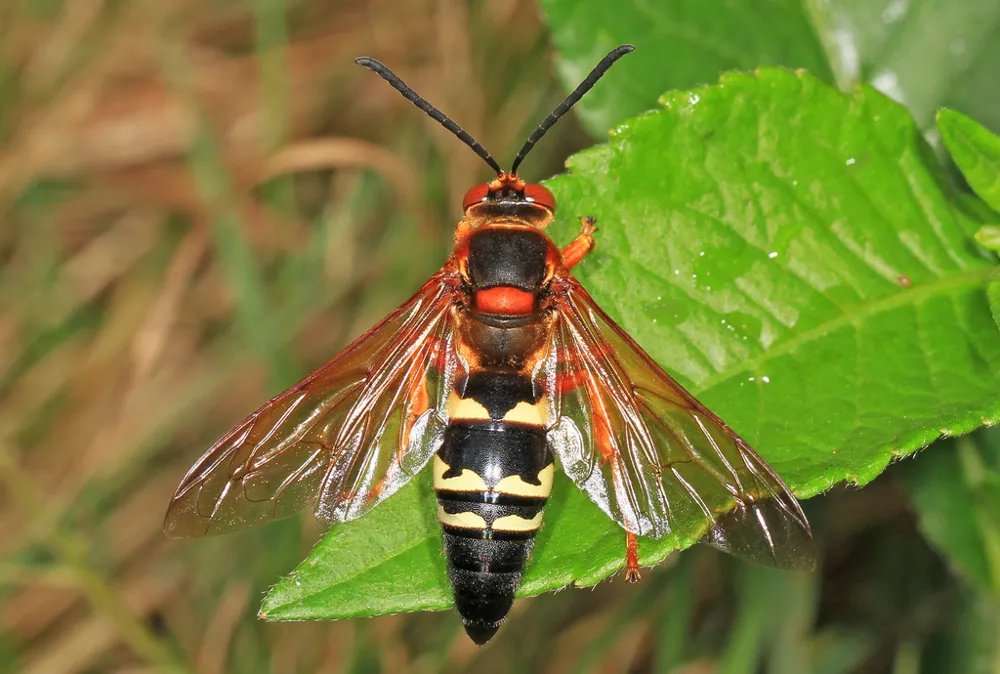
 ວິທີສັງເກດມັນ
- Large, at 1.5 to 5.0 cm long1
- Hairy thorax with reddish and black areas1
- Black to reddish brown abdomen marked with light yellow stripes1
- Brownish wings1
- Females are somewhat larger than males1
ມັກສັບສົນກັບ: Its colours resemble some yellowjacket and hornet species, and European hornets are often mistaken for it. European hornets are about 3.5 cm long, so they are smaller than the largest cicada killers.1
ພະລັງພິດ
ພິດອອກມາທາງເຫຼັກໃນ
ພິດທີ່ມັນປ່ອຍອອກມາເຮັດຫຍັງ?
The female's sting paralyses cicadas so that they can be stored as food for the young.1
ມັນອັນຕະລາຍຕໍ່ຄົນປານໃດ?
ອັນຕະລາຍຕໍ່ຄົນ: ເລັກນ້ອຍຄືກັບເຜິ້ງຕອດ ຫຼື ໜ້ອຍກວ່າ ເກືອບບໍ່ເປັນອັນຕະລາຍຕໍ່ຄົນFemales are not aggressive and rarely sting unless they are grasped roughly, stepped on with bare feet, or caught in clothing. One author who was stung said the sting felt like not much more than a pinprick. Males cannot sting.1
ມັນເຮັດແນວໃດເວລາມັນຢ້ານ?
Females sting only if handled roughly. Males may jab with a sharp spine on the tip of the abdomen if handled roughly, but they usually fly away when swatted at.1
 ຖ້າມັນຕອດ
- ຂູດເຫຼັກໃນເຜິ້ງອອກ ແລະ ເຮັດໃຫ້ບ່ອນນັ້ນເຢັນ
- ຖ້າຜູ້ປ່ວຍຫາຍໃຈຍາກ, ໃບໜ້າ ຫຼື ຄໍບວມ, ຫຼື ຮູ້ສຶກຈະເປັນລົມ, ນັ້ນແມ່ນພາວະສຸກເສີນຈາກການແພ້: ໂທຫາເບີສຸກເສີນ ແລະ ໃຊ້ປາກກາສັກອະດຣີນາລີນຂອງເຂົາ ຖ້າເຂົາມີ
ໂທຫາເບີສຸກເສີນກ່ອນສະເໝີ (112, 000, 911) ນີ້ແມ່ນຄຳແນະນຳການປະຖົມພະຍາບານທົ່ວໄປ, ບໍ່ແມ່ນຄຳແນະນຳທາງການແພດ ພື້ນຖານການປະຖົມພະຍາບານ
 ຢູ່ຢ່າງປອດໄພ
- ຢ່າຈັບ, ຢ່າຈັບເອົາ ຫຼື ຢ່າຫຍອກສັດປ່າເດັດຂາດ, ເຖິງແມ່ນມັນໂຕນ້ອຍ ແລະ ເຖິງແມ່ນມັນເບິ່ງຄືນອນຫຼັບ ຫຼື ຕາຍແລ້ວ
- ໃຫ້ພື້ນທີ່ມັນ ຖ້າເຈົ້າພົບມັນ, ໃຈເຢັນໄວ້, ຖອຍຫຼັງຊ້າໆ ແລະ ປ່ອຍໃຫ້ມັນໄປທາງຂອງມັນ
- ຖ້າມີໂຕໃດຕອດເຈົ້າ: ໃຈເຢັນໄວ້, ຢູ່ນິ້ງໆ, ໂທຫາເບີສຸກເສີນ (112, 000, 911) ຫຼື ໄປໂຮງໝໍໃຫ້ໄວ ຈື່ໄວ້ວ່າມັນມີລັກສະນະແນວໃດ, ຮູບຖ່າຍຊ່ວຍໄດ້
ມັນບໍ່ໄດ້ຢາກທຳຮ້າຍເຈົ້າ ມັນໃຊ້ພິດເພື່ອຈັບອາຫານ ຫຼື ເພື່ອປ້ອງກັນຕົວ, ແລະ ມັນມັກລີ້ຫຼາຍກວ່າ ເພີ່ມເຕີມກ່ຽວກັບການຢູ່ຢ່າງປອດໄພ
ມັນໃຫຍ່ປານໃດ?
ມັນຍາວປານໃດ?
 ສັ້ນກວ່ານິ້ວກ້ອຍຂອງເຈົ້າ
 ບິນຂ້າມສະໜາມບານເຕະທັງສະໜາມໄດ້ໃນ 9,7 ວິນາທີ
Eastern cicada killer ໃຫຍ່ປານໃດ ເມື່ອທຽບກັບເຈົ້າ?
ພຽງແຕ່ຄິດໄລ່ໃນບຣາວເຊີຂອງເຈົ້າ ບໍ່ມີຫຍັງຖືກບັນທຶກ ຫຼື ສົ່ງໄປບ່ອນໃດ
ມັນໄວປານໃດ?


ຂໍ້ມູນ
A female often carries a cicada up into a tree before flying to her burrow, because the cicada can weigh more than twice as much as she does.1
Males are seen in groups and may lock together in midair combat until one breaks away.1
Cicada killers may help trees by reducing the number of cicadas that feed on them.1
The parasitic velvet ant wasp, also called the cow-killer wasp, often lays its egg in cicada killer nest cells.1
A single burrow may eventually have 10 or more nest cells.1
ນັກລົບລ້າງຄວາມເຊື່ອຜິດໆ
ຄວາມເຊື່ອຜິດໆ: Male cicada killers are dangerous and will sting people.
ຄວາມຈິງ: Males only grapple with other insects and cannot sting. They investigate things that move near them because they are looking for females.1
ສຳລັບຜູ້ຊ່ຽວຊານດ້ານພິດ
- ຊື່ວິທະຍາສາດ
- Sphecius speciosus
- ກຸ່ມ
- ເຜິ້ງ, ແຕນ ແລະ ຕໍ່
- ຄອບຄົວ
- Crabronidae2
- ອັນດັບ
- Hymenoptera
- ທະວີບຕ່າງໆ
- ອາເມລິກາເໜືອ
- ລູກສັດ
- Each female lays one egg on a cicada inside a nest cell, and the egg hatches in one or two days. Males receive one cicada per egg and females receive two or sometimes three.1
- ອັນຕະລາຍຕໍ່ຄົນ
- 1 / 5: ເລັກນ້ອຍ3
ຂໍ້ມູນມາຈາກໃສ
- Sphecius speciosus (Wikipedia (CC BY-SA 4.0))
- Sphecius speciosus (iNaturalist): ຊື່ ແລະ ການຈັດໝວດໝູ່
- Venom Wiki: ລະດັບອັນຕະລາຍ, ຂະໜາດທົ່ວໄປ ແລະ ຄວາມໄວທີ່ຄາດຄະເນ ແມ່ນຂອງພວກເຮົາເອງ ເບິ່ງວ່າພວກເຮົາຄິດໄລ່ແນວໃດ: ພວກເຮົາໃຫ້ຄະແນນອັນຕະລາຍແນວໃດ.
ທຸກຂໍ້ມູນໃນໜ້ານີ້ມີຕົວເລກທີ່ຊີ້ໄປຫາແຫຼ່ງທີ່ມາ ຖ້າພວກເຮົາຜິດພາດ, ຂໍໂທດເດີ້, ພວກເຮົາເປັນຄົນມັກສັດ ບໍ່ແມ່ນວາລະສານວິທະຍາສາດ ບອກພວກເຮົາທີ່ [email protected] ແລ້ວພວກເຮົາຈະແກ້ໄຂ
 ແມງເງົາຫິວແລ້ວ! Venom Wiki ເປັນໂຄງການຂອງຄົນຄົນດຽວ: ຟຣີ, ບໍ່ມີໂຄສະນາ ແລະ ບໍ່ມີຕົວຕິດຕາມ ທິບນ້ອຍໆຊ່ວຍໃຫ້ມັນຢູ່ອອນລາຍຕໍ່ໄປໄດ້ໃຫ້ອາຫານແມງເງົາ
 Tarantula hawk
 Executioner wasp
 Warrior wasp
 Bald-faced hornet
 Cow killer velvet ant
 Aerial yellowjacket
 Terciopelo
 Eastern coral snake
 Eastern diamondback rattlesnake
 Eyelash viper
 Timber rattlesnake
 Western diamondback rattlesnake