
 ອາຟຣິກາ
 ອາຊີ
ອາຊີ ເອີຣົບ
 ອາເມລິກາໃຕ້
 ອົດສະຕຣາລີ ແລະ ໂອເຊຍເນຍ
 ແອນຕາກຕິກາ
 ມະຫາສະໝຸດປາຊີຟິກ
 ມະຫາສະໝຸດອັດລັງຕິກ
 ມະຫາສະໝຸດອິນເດຍ
 ມະຫາສະໝຸດອາກຕິກ
 ທະເລເມດິເຕີເຣນຽນ
 ທະເລແດງ
 ທະເລຄາຣິບບຽນ
 ທະເລຄໍຣັລ
 ທະເລຈີນໃຕ້
 ທະເລຟິລິບປິນ
 ທະເລອັນດາມັນ
 ທະເລເໜືອ
 ທະເລຕີມໍ ແລະ ທະເລອາຣາຟູຣາ
 ອ່າວເບັງກອນ
 ອ່າວແຄລິຟໍເນຍ
Forest cobra
 ກັດ
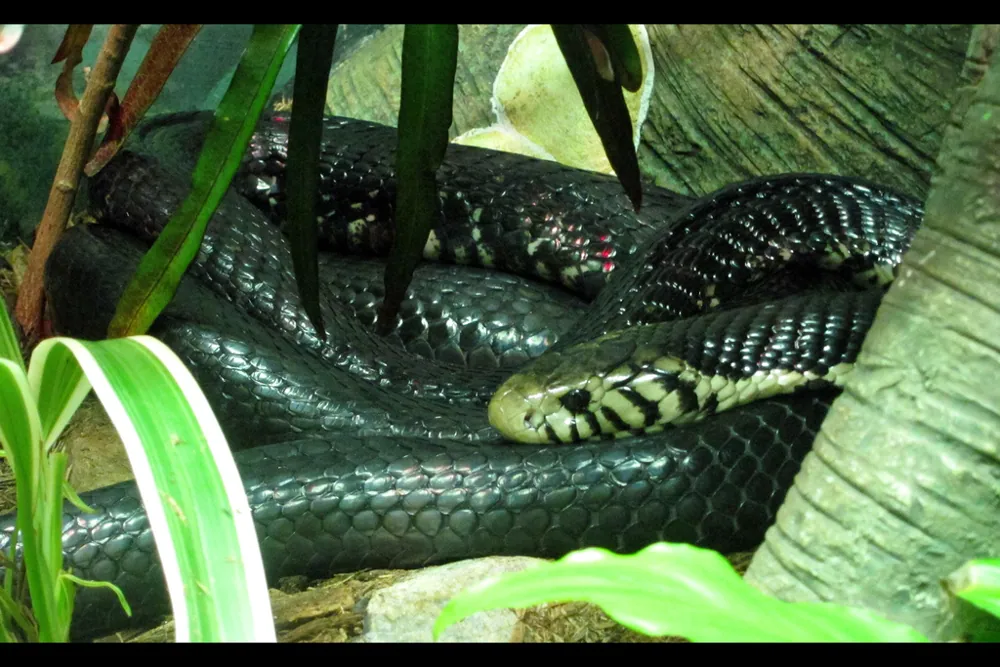
ກັດThe forest cobra is a large, highly venomous snake that lives in central and western Africa. It is the largest true cobra, and it is one of the few African cobras that lives in high forest. It is dangerous, so anyone bitten needs urgent medical care.1



 ວິທີສັງເກດມັນ
- Forest and forest-edge forms are glossy black, with cream or white chin, throat and belly, and broad black cross-bars and blotches.1
- The sides of the head show black and white markings that look like vertical bars on the lips.1
- West African savanna forms are banded black and yellow, with a black tail and yellow lips, chin and throat.1
- East African coastal forms are brownish or blackish-brown above, with a yellow or cream belly speckled with brown or black.1
- Adults are usually 140 to 220 cm long.1
ພະລັງພິດ
ພິດອອກມາທາງເຂ້ຍ ຫຼື ແຂ້ວຂອງມັນ ເວລາມັນກັດ
ພິດທີ່ມັນປ່ອຍອອກມາເຮັດຫຍັງ?
Its venom is a postsynaptic neurotoxin, which attacks the nerves and causes severe neurotoxicity. Symptoms can include drooping eyelids, drowsiness, limb paralysis, hearing loss, inability to speak, dizziness, shock, low blood pressure, stomach pain, fever and breathing problems. A large amount of venom can be injected in one bite.1
ມັນອັນຕະລາຍຕໍ່ຄົນປານໃດ?
ອັນຕະລາຍຕໍ່ຄົນ: ອັນຕະລາຍຫຼາຍມັນເຮັດໃຫ້ຄົນທີ່ບໍ່ໄດ້ຮັບການປິ່ນປົວເສຍຊີວິດໄດ້It is one of the least frequent causes of snake bites among African cobras, largely because it lives in forests. Even so, it ranks as the 4th most venomous Naja (true cobra) species, and a bite is a life-threatening emergency. Deaths from respiratory failure have been reported. A child in Ghana died within 20 minutes of being bitten by a snake thought to be this species.1
 ຂ່າວດີ: ໝໍມີຢາ (ເຊຣຸ່ມຕ້ານພິດ) ຫຼື ວິທີປິ່ນປົວສຳລັບອັນນີ້1
ມັນເຮັດແນວໃດເວລາມັນຢ້ານ?
When threatened, it raises the front of its body off the ground, spreads a narrow hood and hisses loudly. If cornered or agitated, it can attack quickly.1
 ຖ້າມັນກັດ
- Most victims survive if antivenom is given promptly, as soon as signs of envenomation appear. Because a bite is a life-threatening emergency, the bitten person needs urgent medical care.1
- ໃຫ້ຜູ້ປ່ວຍຢູ່ນິ້ງໆ ແລະ ໃຈເຢັນ, ຖອດແຫວນ ແລະ ສິ່ງທີ່ຮັດແໜ້ນອອກ, ແລະ ໄປໂຮງໝໍໃຫ້ໄວ: ເຊຣຸ່ມຕ້ານພິດແມ່ນການປິ່ນປົວ
ໂທຫາເບີສຸກເສີນກ່ອນສະເໝີ (112, 000, 911) ນີ້ແມ່ນຄຳແນະນຳການປະຖົມພະຍາບານທົ່ວໄປ, ບໍ່ແມ່ນຄຳແນະນຳທາງການແພດ ພື້ນຖານການປະຖົມພະຍາບານ
 ຢູ່ຢ່າງປອດໄພ
- ຢ່າຈັບ, ຢ່າຈັບເອົາ ຫຼື ຢ່າຫຍອກສັດປ່າເດັດຂາດ, ເຖິງແມ່ນມັນໂຕນ້ອຍ ແລະ ເຖິງແມ່ນມັນເບິ່ງຄືນອນຫຼັບ ຫຼື ຕາຍແລ້ວ
- ໃຫ້ພື້ນທີ່ມັນ ຖ້າເຈົ້າພົບມັນ, ໃຈເຢັນໄວ້, ຖອຍຫຼັງຊ້າໆ ແລະ ປ່ອຍໃຫ້ມັນໄປທາງຂອງມັນ
- ຖ້າມີໂຕໃດກັດເຈົ້າ: ໃຈເຢັນໄວ້, ຢູ່ນິ້ງໆ, ໂທຫາເບີສຸກເສີນ (112, 000, 911) ຫຼື ໄປໂຮງໝໍໃຫ້ໄວ ຈື່ໄວ້ວ່າມັນມີລັກສະນະແນວໃດ, ຮູບຖ່າຍຊ່ວຍໄດ້
ມັນບໍ່ໄດ້ຢາກທຳຮ້າຍເຈົ້າ ມັນໃຊ້ພິດເພື່ອຈັບອາຫານ ຫຼື ເພື່ອປ້ອງກັນຕົວ, ແລະ ມັນມັກລີ້ຫຼາຍກວ່າ ເພີ່ມເຕີມກ່ຽວກັບການຢູ່ຢ່າງປອດໄພ
ມັນໃຫຍ່ປານໃດ?
ມັນຍາວປານໃດ?
ມັນໜັກປານໃດ?
 ຍາວເທົ່າໝາ 3 ໂຕຕໍ່ດັງຕໍ່ຫາງ
 ຍາວເທົ່າກ້ວຍ 18 ໜ່ວຍຕໍ່ກັນ
 ໜັກປະມານແມວບ້ານໂຕໜຶ່ງ
 ແລ່ນ 100 ແມັດໄດ້ໃນ 41 ວິນາທີ (ຄົນທີ່ໄວທີ່ສຸດໃຊ້ 9.6)
Forest cobra ໃຫຍ່ປານໃດ ເມື່ອທຽບກັບເຈົ້າ?
ພຽງແຕ່ຄິດໄລ່ໃນບຣາວເຊີຂອງເຈົ້າ ບໍ່ມີຫຍັງຖືກບັນທຶກ ຫຼື ສົ່ງໄປບ່ອນໃດ
ມັນໄວປານໃດ?


ຂໍ້ມູນ
It is the largest true cobra species and possibly the largest of all Naja species in the world.1
It is an excellent climber and has been known to climb trees to 10 m or more.1
It swims well and is often considered semi-aquatic.1
It does not spit or spray its venom.1
It is mainly active during the day in quiet areas, but it can be active at night in towns.1
ຂໍ້ມູນມາຈາກໃສ
- Forest cobra (Wikipedia (CC BY-SA 4.0))
- Naja melanoleuca (iNaturalist): ຊື່ ແລະ ການຈັດໝວດໝູ່
- Venom Wiki: ລະດັບອັນຕະລາຍ, ຂະໜາດທົ່ວໄປ ແລະ ຄວາມໄວທີ່ຄາດຄະເນ ແມ່ນຂອງພວກເຮົາເອງ ເບິ່ງວ່າພວກເຮົາຄິດໄລ່ແນວໃດ: ພວກເຮົາໃຫ້ຄະແນນອັນຕະລາຍແນວໃດ.
ທຸກຂໍ້ມູນໃນໜ້ານີ້ມີຕົວເລກທີ່ຊີ້ໄປຫາແຫຼ່ງທີ່ມາ ຖ້າພວກເຮົາຜິດພາດ, ຂໍໂທດເດີ້, ພວກເຮົາເປັນຄົນມັກສັດ ບໍ່ແມ່ນວາລະສານວິທະຍາສາດ ບອກພວກເຮົາທີ່ [email protected] ແລ້ວພວກເຮົາຈະແກ້ໄຂ
 ແມງເງົາຫິວແລ້ວ! Venom Wiki ເປັນໂຄງການຂອງຄົນຄົນດຽວ: ຟຣີ, ບໍ່ມີໂຄສະນາ ແລະ ບໍ່ມີຕົວຕິດຕາມ ທິບນ້ອຍໆຊ່ວຍໃຫ້ມັນຢູ່ອອນລາຍຕໍ່ໄປໄດ້ໃຫ້ອາຫານແມງເງົາ
ເພີ່ມເຕີມຈາກກຸ່ມດຽວກັນ: ງູເຫົ່າ, ງູແມມບາ ແລະ ງູສາມຫຼ່ຽມ
 Black mambaງູເຫົ່າ, ງູແມມບາ ແລະ ງູສາມຫຼ່ຽມເຖິງຕາຍ
 Egyptian cobraງູເຫົ່າ, ງູແມມບາ ແລະ ງູສາມຫຼ່ຽມເຖິງຕາຍ
 Cape cobraງູເຫົ່າ, ງູແມມບາ ແລະ ງູສາມຫຼ່ຽມເຖິງຕາຍ
 Eastern green mambaງູເຫົ່າ, ງູແມມບາ ແລະ ງູສາມຫຼ່ຽມເຖິງຕາຍ
 Jameson's mambaງູເຫົ່າ, ງູແມມບາ ແລະ ງູສາມຫຼ່ຽມເຖິງຕາຍ
 Western green mambaງູເຫົ່າ, ງູແມມບາ ແລະ ງູສາມຫຼ່ຽມເຖິງຕາຍ
 Deathstalker
 Puff adder
 Boomslang
 Fat-tailed scorpion
 Gaboon viper
 Western honey bee