
 ອາຟຣິກາ
 ອາຊີ
ອາຊີ ເອີຣົບ
 ອາເມລິກາໃຕ້
 ອົດສະຕຣາລີ ແລະ ໂອເຊຍເນຍ
 ແອນຕາກຕິກາ
 ມະຫາສະໝຸດປາຊີຟິກ
 ມະຫາສະໝຸດອັດລັງຕິກ
 ມະຫາສະໝຸດອິນເດຍ
 ມະຫາສະໝຸດອາກຕິກ
 ທະເລເມດິເຕີເຣນຽນ
 ທະເລແດງ
 ທະເລຄາຣິບບຽນ
 ທະເລຄໍຣັລ
 ທະເລຈີນໃຕ້
 ທະເລຟິລິບປິນ
 ທະເລອັນດາມັນ
 ທະເລເໜືອ
 ທະເລຕີມໍ ແລະ ທະເລອາຣາຟູຣາ
 ອ່າວເບັງກອນ
 ອ່າວແຄລິຟໍເນຍ
Fried egg jellyfish
 ໜວດພິດ
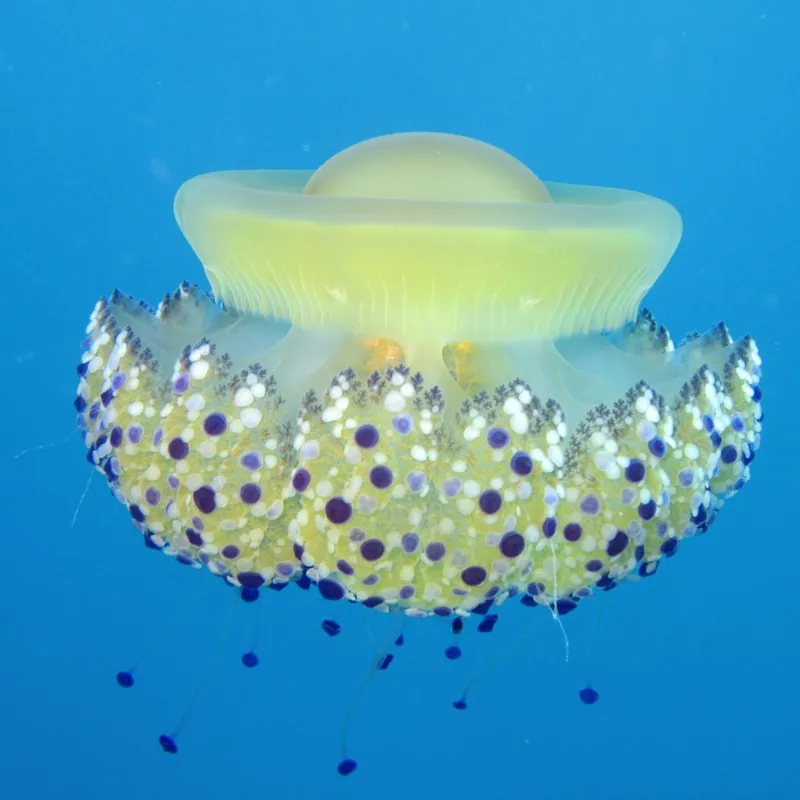
The fried egg jellyfish is a jellyfish that lives in the Mediterranean, Aegean and Adriatic Seas. It gets its name from its flat, rounded body, which looks like a fried egg. Its sting has little or no effect on most people, so it is more of a nuisance than a danger.1


 ວິທີສັງເກດມັນ
- A smooth, raised central dome sits inside a gutter-like ring.1
- The marginal lappets, the flaps around the edge of the bell, are long and roughly rectangular.1
- Each mouth arm splits near its base and branches several times.1
- Many short, club-shaped appendages with disc-like ends surround the mouth arms.1
- Adults can reach 40 cm across, but are usually less than 17 cm wide. Older jellyfish lose colour and their bodies become damaged.1
ພະລັງພິດ
ເຊວເຂັມພິດນ້ອຍໆຫຼາຍພັນເຊວ ຍິງອອກເມື່ອມີຫຍັງມາແຕະພວກມັນ
ມັນອັນຕະລາຍຕໍ່ຄົນປານໃດ?
ອັນຕະລາຍຕໍ່ຄົນ: ເລັກນ້ອຍຄືກັບເຜິ້ງຕອດ ຫຼື ໜ້ອຍກວ່າ ເກືອບບໍ່ເປັນອັນຕະລາຍຕໍ່ຄົນIts sting has very little or no effect on humans. However, it can cause allergic reactions in more sensitive people, usually itching and scratching in the stung area. Large summer blooms mainly cause problems for tourism and fishing.1
 ຖ້າມັນຕອດ
- ຂຶ້ນຈາກນ້ຳ ແລະ ເກັບໜວດພິດອອກ (ໃຊ້ຖົງມື ຫຼື ຜ້າ)
- ສຳລັບແມງກະພຸນກ່ອງເຂດຮ້ອນ: ເທນ້ຳສົ້ມສາຍຊູໃສ່ບ່ອນຖືກຕອດຢ່າງໜ້ອຍ 30 ວິນາທີ, ໂທຂໍຄວາມຊ່ວຍເຫຼືອ ແລະ ກຽມພ້ອມເຮັດ CPR (ການກູ້ຊີບ) ສຳລັບແມງກະພຸນຂວດສີຟ້າ ແລະ ຊະນິດອື່ນໆສ່ວນຫຼາຍ: ລ້າງດ້ວຍນ້ຳທະເລ, ແລ້ວໃຊ້ນ້ຳຮ້ອນເພື່ອບັນເທົາຄວາມເຈັບ
ໂທຫາເບີສຸກເສີນກ່ອນສະເໝີ (112, 000, 911) ນີ້ແມ່ນຄຳແນະນຳການປະຖົມພະຍາບານທົ່ວໄປ, ບໍ່ແມ່ນຄຳແນະນຳທາງການແພດ ພື້ນຖານການປະຖົມພະຍາບານ
 ຢູ່ຢ່າງປອດໄພ
- ຢ່າຈັບ, ຢ່າຈັບເອົາ ຫຼື ຢ່າຫຍອກສັດປ່າເດັດຂາດ, ເຖິງແມ່ນມັນໂຕນ້ອຍ ແລະ ເຖິງແມ່ນມັນເບິ່ງຄືນອນຫຼັບ ຫຼື ຕາຍແລ້ວ
- ໃຫ້ພື້ນທີ່ມັນ ຖ້າເຈົ້າພົບມັນ, ໃຈເຢັນໄວ້, ຖອຍຫຼັງຊ້າໆ ແລະ ປ່ອຍໃຫ້ມັນໄປທາງຂອງມັນ
- ຖ້າມີໂຕໃດຕອດເຈົ້າ: ໃຈເຢັນໄວ້, ຢູ່ນິ້ງໆ, ໂທຫາເບີສຸກເສີນ (112, 000, 911) ຫຼື ໄປໂຮງໝໍໃຫ້ໄວ ຈື່ໄວ້ວ່າມັນມີລັກສະນະແນວໃດ, ຮູບຖ່າຍຊ່ວຍໄດ້
ມັນບໍ່ໄດ້ຢາກທຳຮ້າຍເຈົ້າ ມັນໃຊ້ພິດເພື່ອຈັບອາຫານ ຫຼື ເພື່ອປ້ອງກັນຕົວ, ແລະ ມັນມັກລີ້ຫຼາຍກວ່າ ເພີ່ມເຕີມກ່ຽວກັບການຢູ່ຢ່າງປອດໄພ
ຢູ່ໃສໃນໂລກ?
ມັນໃຫຍ່ປານໃດ?
ມັນຍາວປານໃດ?
 ຍາວເທົ່າກ້ວຍ 2 ໜ່ວຍຕໍ່ກັນ
 ຍາວເທົ່າຕັນຕໍ່ເຄື່ອງຫຼິ້ນ 12 ອັນລຽງກັນ
Fried egg jellyfish ໃຫຍ່ປານໃດ ເມື່ອທຽບກັບເຈົ້າ?
ພຽງແຕ່ຄິດໄລ່ໃນບຣາວເຊີຂອງເຈົ້າ ບໍ່ມີຫຍັງຖືກບັນທຶກ ຫຼື ສົ່ງໄປບ່ອນໃດ
ມັນໄວປານໃດ?


ຂໍ້ມູນ
It has algae living inside its body, which use sunlight to make energy that the jellyfish can use and store.1
Researchers have studied its effects on certain breast cancer cells, though much more work is still needed.1
Its young cannot develop properly without these algae, as the algae help start the early stage of adult form.1
Its mouth arms carry sperm to females, which fertilise the eggs inside them.1
Its population grows into large blooms every summer, and it has a yearly life cycle.1
ນັກລົບລ້າງຄວາມເຊື່ອຜິດໆ
ຄວາມເຊື່ອຜິດໆ: The fried egg jellyfish is dangerous to people because it stings.
ຄວາມຈິງ: Its sting has very little or no effect on most people. Only sensitive people may react, usually with itching.1
ສຳລັບຜູ້ຊ່ຽວຊານດ້ານພິດ
- ຊື່ວິທະຍາສາດ
- Cotylorhiza tuberculata
- ກຸ່ມ
- ແມງກະພຸນ ແລະ ສັດທະເລທີ່ຕອດໄດ້
- ຄອບຄົວ
- Cepheidae2
- ອັນດັບ
- Rhizostomeae
- ທະວີບຕ່າງໆ
- ມະຫາສະໝຸດອັດລັງຕິກ, ທະເລເມດິເຕີເຣນຽນ, ມະຫາສະໝຸດ
- ລູກສັດ
- After internal fertilisation, females release large numbers of larvae called planulae into the water, mainly between August and October.1
- ອັນຕະລາຍຕໍ່ຄົນ
- 1 / 5: ເລັກນ້ອຍ3
ຂໍ້ມູນມາຈາກໃສ
- Cotylorhiza tuberculata (Wikipedia (CC BY-SA 4.0))
- Cotylorhiza tuberculata (iNaturalist): ຊື່ ແລະ ການຈັດໝວດໝູ່
- Venom Wiki: ລະດັບອັນຕະລາຍ, ຂະໜາດທົ່ວໄປ ແລະ ຄວາມໄວທີ່ຄາດຄະເນ ແມ່ນຂອງພວກເຮົາເອງ ເບິ່ງວ່າພວກເຮົາຄິດໄລ່ແນວໃດ: ພວກເຮົາໃຫ້ຄະແນນອັນຕະລາຍແນວໃດ.
ທຸກຂໍ້ມູນໃນໜ້ານີ້ມີຕົວເລກທີ່ຊີ້ໄປຫາແຫຼ່ງທີ່ມາ ຖ້າພວກເຮົາຜິດພາດ, ຂໍໂທດເດີ້, ພວກເຮົາເປັນຄົນມັກສັດ ບໍ່ແມ່ນວາລະສານວິທະຍາສາດ ບອກພວກເຮົາທີ່ [email protected] ແລ້ວພວກເຮົາຈະແກ້ໄຂ
 ແມງເງົາຫິວແລ້ວ! Venom Wiki ເປັນໂຄງການຂອງຄົນຄົນດຽວ: ຟຣີ, ບໍ່ມີໂຄສະນາ ແລະ ບໍ່ມີຕົວຕິດຕາມ ທິບນ້ອຍໆຊ່ວຍໃຫ້ມັນຢູ່ອອນລາຍຕໍ່ໄປໄດ້ໃຫ້ອາຫານແມງເງົາ
ເພີ່ມເຕີມຈາກກຸ່ມດຽວກັນ: ແມງກະພຸນ ແລະ ສັດທະເລທີ່ຕອດໄດ້
 Australian box jellyfishແມງກະພຸນ ແລະ ສັດທະເລທີ່ຕອດໄດ້ເຖິງຕາຍຫ້າມຈັບ
 Irukandji jellyfishແມງກະພຸນ ແລະ ສັດທະເລທີ່ຕອດໄດ້ເຖິງຕາຍໄດ້ຫ້າມຈັບ
 Portuguese man o' warແມງກະພຸນ ແລະ ສັດທະເລທີ່ຕອດໄດ້ຕ້ອງໄປຫາໝໍຫ້າມຈັບ
 Lion's mane jellyfishແມງກະພຸນ ແລະ ສັດທະເລທີ່ຕອດໄດ້ພຽງແຕ່ເຈັບຫ້າມຈັບ
 Moon jellyfishແມງກະພຸນ ແລະ ສັດທະເລທີ່ຕອດໄດ້ບໍ່ມີອັນຕະລາຍ
 Common kingslayerແມງກະພຸນ ແລະ ສັດທະເລທີ່ຕອດໄດ້ເຖິງຕາຍໄດ້ຫ້າມຈັບ
 Hawksbill sea turtle
 Blue sea dragon
 Greenland shark
 Common octopus
 Common stingray
 Greater weever
_-_Mar_Jonio,_Italy.jpg)