
 ອາຟຣິກາ
 ອາຊີ
ອາຊີ ເອີຣົບ
 ອາເມລິກາໃຕ້
 ອົດສະຕຣາລີ ແລະ ໂອເຊຍເນຍ
 ແອນຕາກຕິກາ
 ມະຫາສະໝຸດປາຊີຟິກ
 ມະຫາສະໝຸດອັດລັງຕິກ
 ມະຫາສະໝຸດອິນເດຍ
 ມະຫາສະໝຸດອາກຕິກ
 ທະເລເມດິເຕີເຣນຽນ
 ທະເລແດງ
 ທະເລຄາຣິບບຽນ
 ທະເລຄໍຣັລ
 ທະເລຈີນໃຕ້
 ທະເລຟິລິບປິນ
 ທະເລອັນດາມັນ
 ທະເລເໜືອ
 ທະເລຕີມໍ ແລະ ທະເລອາຣາຟູຣາ
 ອ່າວເບັງກອນ
 ອ່າວແຄລິຟໍເນຍ
Red harvester ant
 ຕອດ
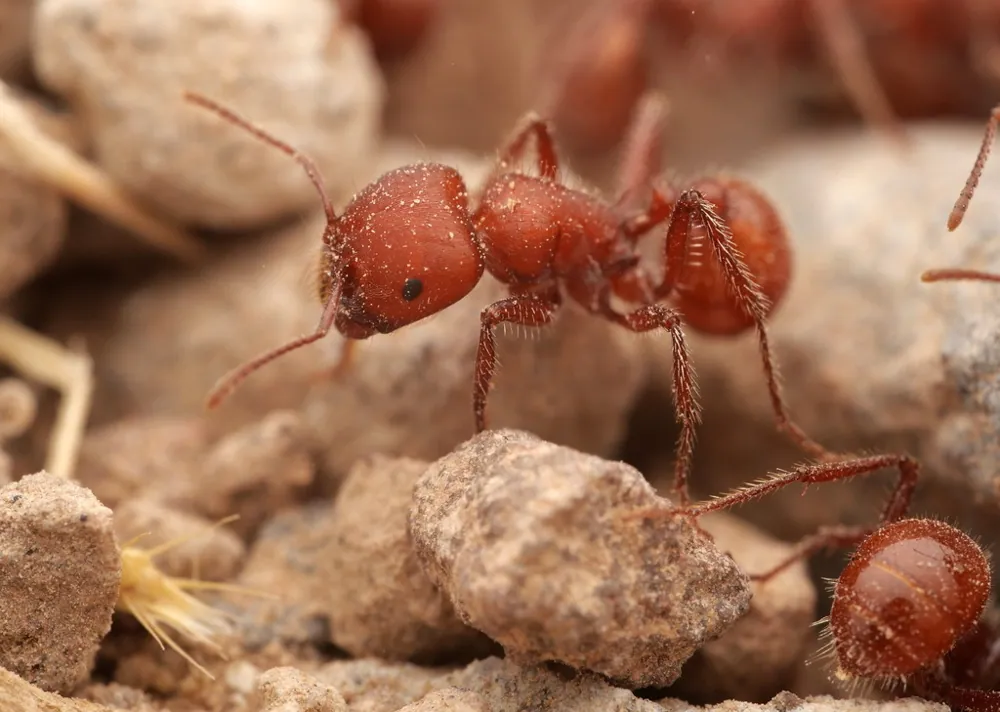
ຕອດThe red harvester ant is a large ant that lives in the dry, scrubby land of the southwestern United States. Its nests are dug underground, and the bare patches around them are easy to spot in open grassland. It matters because these ants gather seeds and help spread plants across the land.1


 ວິທີສັງເກດມັນ
- Large ant, about 5 to 7 mm long1
- Mound is flat and broad, up to 100 mm high and 300 to 1,200 mm across1
- Bare ground with no plants, and small pebbles around the tunnel entrance1
- Three to eight trails lead out from the mound, like arms1
- Seed hulls are often scattered around the nest1
ມັກສັບສົນກັບ: Red harvester ants are often mistaken for fire ants. They are not closely related to any fire ant species, native or introduced.1
ພະລັງພິດ
ພິດອອກມາທາງເຫຼັກໃນ
ມັນອັນຕະລາຍຕໍ່ຄົນປານໃດ?
ອັນຕະລາຍຕໍ່ຄົນ: ເຈັບມັນເຈັບຫຼາຍແທ້, ແຕ່ເກືອບບໍ່ເຄີຍຮ້າຍແຮງ ຖ້າມັນຕອດ
- ລ້າງ ແລະ ເຮັດໃຫ້ບ່ອນຖືກຕອດເຢັນ
- ຖ້າຜູ້ປ່ວຍຫາຍໃຈຍາກ, ໃບໜ້າ ຫຼື ຄໍບວມ, ຫຼື ຮູ້ສຶກຈະເປັນລົມ, ນັ້ນແມ່ນພາວະສຸກເສີນຈາກການແພ້: ໂທຫາເບີສຸກເສີນ
ໂທຫາເບີສຸກເສີນກ່ອນສະເໝີ (112, 000, 911) ນີ້ແມ່ນຄຳແນະນຳການປະຖົມພະຍາບານທົ່ວໄປ, ບໍ່ແມ່ນຄຳແນະນຳທາງການແພດ ພື້ນຖານການປະຖົມພະຍາບານ
 ຢູ່ຢ່າງປອດໄພ
- ຢ່າຈັບ, ຢ່າຈັບເອົາ ຫຼື ຢ່າຫຍອກສັດປ່າເດັດຂາດ, ເຖິງແມ່ນມັນໂຕນ້ອຍ ແລະ ເຖິງແມ່ນມັນເບິ່ງຄືນອນຫຼັບ ຫຼື ຕາຍແລ້ວ
- ໃຫ້ພື້ນທີ່ມັນ ຖ້າເຈົ້າພົບມັນ, ໃຈເຢັນໄວ້, ຖອຍຫຼັງຊ້າໆ ແລະ ປ່ອຍໃຫ້ມັນໄປທາງຂອງມັນ
- ຖ້າມີໂຕໃດຕອດເຈົ້າ: ໃຈເຢັນໄວ້, ຢູ່ນິ້ງໆ, ໂທຫາເບີສຸກເສີນ (112, 000, 911) ຫຼື ໄປໂຮງໝໍໃຫ້ໄວ ຈື່ໄວ້ວ່າມັນມີລັກສະນະແນວໃດ, ຮູບຖ່າຍຊ່ວຍໄດ້
ມັນບໍ່ໄດ້ຢາກທຳຮ້າຍເຈົ້າ ມັນໃຊ້ພິດເພື່ອຈັບອາຫານ ຫຼື ເພື່ອປ້ອງກັນຕົວ, ແລະ ມັນມັກລີ້ຫຼາຍກວ່າ ເພີ່ມເຕີມກ່ຽວກັບການຢູ່ຢ່າງປອດໄພ
ມັນໃຫຍ່ປານໃດ?
ມັນຍາວປານໃດ?
 ນ້ອຍພໍທີ່ຈະນັ່ງຢູ່ເທິງເລັບມືຂອງເຈົ້າໄດ້
Red harvester ant ໃຫຍ່ປານໃດ ເມື່ອທຽບກັບເຈົ້າ?
ພຽງແຕ່ຄິດໄລ່ໃນບຣາວເຊີຂອງເຈົ້າ ບໍ່ມີຫຍັງຖືກບັນທຶກ ຫຼື ສົ່ງໄປບ່ອນໃດ
ມັນໄວປານໃດ?


ຂໍ້ມູນ
Some queens have been known to live up to 30 years in the wild.1
Colonies have no central control. They adjust how much they forage using feedback from returning ants, which can take only seconds.1
Rival Novomessor cockerelli ants block nest entrances with sand and small rocks, delaying the red harvester ants' activity by one to three hours.1
Seeds are stored in the nest for months, and sometimes several years, so the colony has food during lean times.1
The plants benefit too. Ants carry seeds while foraging, which spreads the plants over a wider area.1
Ant foraging is guided by chemical signals, and foragers can travel up to 50 to 60 m from the nest.1
ນັກລົບລ້າງຄວາມເຊື່ອຜິດໆ
ຄວາມເຊື່ອຜິດໆ: Red harvester ants are fire ants.
ຄວາມຈິງ: They are often mistaken for fire ants but are not closely related to any fire ant species.1
ສຳລັບຜູ້ຊ່ຽວຊານດ້ານພິດ
ຂໍ້ມູນມາຈາກໃສ
- Red harvester ant (Wikipedia (CC BY-SA 4.0))
- Pogonomyrmex barbatus (iNaturalist): ຊື່ ແລະ ການຈັດໝວດໝູ່
- Venom Wiki: ລະດັບອັນຕະລາຍ, ຂະໜາດທົ່ວໄປ ແລະ ຄວາມໄວທີ່ຄາດຄະເນ ແມ່ນຂອງພວກເຮົາເອງ ເບິ່ງວ່າພວກເຮົາຄິດໄລ່ແນວໃດ: ພວກເຮົາໃຫ້ຄະແນນອັນຕະລາຍແນວໃດ.
ທຸກຂໍ້ມູນໃນໜ້ານີ້ມີຕົວເລກທີ່ຊີ້ໄປຫາແຫຼ່ງທີ່ມາ ຖ້າພວກເຮົາຜິດພາດ, ຂໍໂທດເດີ້, ພວກເຮົາເປັນຄົນມັກສັດ ບໍ່ແມ່ນວາລະສານວິທະຍາສາດ ບອກພວກເຮົາທີ່ [email protected] ແລ້ວພວກເຮົາຈະແກ້ໄຂ
 ແມງເງົາຫິວແລ້ວ! Venom Wiki ເປັນໂຄງການຂອງຄົນຄົນດຽວ: ຟຣີ, ບໍ່ມີໂຄສະນາ ແລະ ບໍ່ມີຕົວຕິດຕາມ ທິບນ້ອຍໆຊ່ວຍໃຫ້ມັນຢູ່ອອນລາຍຕໍ່ໄປໄດ້ໃຫ້ອາຫານແມງເງົາ
 Bullet ant
 Army ant
 Maricopa harvester ant
 Trap-jaw ant
 Acacia ant
 California harvester ant
 Terciopelo
 Eastern coral snake
 Eastern diamondback rattlesnake
 Eyelash viper
 Timber rattlesnake
 Western diamondback rattlesnake