
 ອາຟຣິກາ
 ອາຊີ
ອາຊີ ເອີຣົບ
 ອາເມລິກາໃຕ້
 ອົດສະຕຣາລີ ແລະ ໂອເຊຍເນຍ
 ແອນຕາກຕິກາ
 ມະຫາສະໝຸດປາຊີຟິກ
 ມະຫາສະໝຸດອັດລັງຕິກ
 ມະຫາສະໝຸດອິນເດຍ
 ມະຫາສະໝຸດອາກຕິກ
 ທະເລເມດິເຕີເຣນຽນ
 ທະເລແດງ
 ທະເລຄາຣິບບຽນ
 ທະເລຄໍຣັລ
 ທະເລຈີນໃຕ້
 ທະເລຟິລິບປິນ
 ທະເລອັນດາມັນ
 ທະເລເໜືອ
 ທະເລຕີມໍ ແລະ ທະເລອາຣາຟູຣາ
 ອ່າວເບັງກອນ
 ອ່າວແຄລິຟໍເນຍ
Rose flower urchin
 ຕອດ
ຕອດThe rose flower urchin is a sea urchin with a pink, red or purple shell and clusters of flower-like grasping parts. It lives in the East Pacific, from Peru to California and around the Galapagos Islands. It is venomous, so its flower-like parts can give a painful sting.1

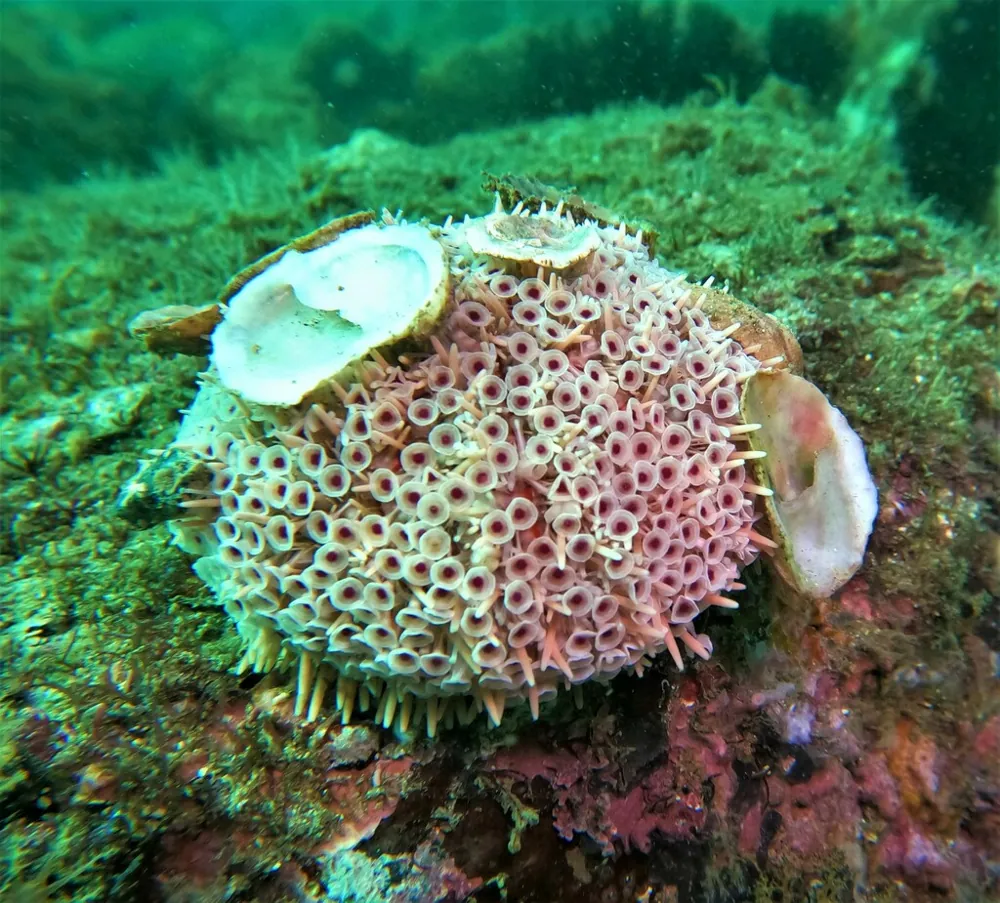
 ວິທີສັງເກດມັນ
- Its shell (test) is rigid and a solid pink, red or purple1
- Its many pedicellariae (stalked grasping parts) look like a cluster of flowers1
- It often covers its body with debris from its surroundings1
ມັກສັບສົນກັບ: It is similar to the flower urchin (Toxopneustes pileolus), which lives in the Indo-West Pacific. The rose flower urchin has a solid pink, red or purple shell, while the flower urchin's shell is variegated, meaning it has mixed colours.1
ພະລັງພິດ
ພິດອອກມາທາງເຫຼັກໃນ
ພິດທີ່ມັນປ່ອຍອອກມາເຮັດຫຍັງ?
This sea urchin is venomous, like other members of its genus. Its flower-like pedicellariae can deliver a painful sting if they are touched.1
ມັນອັນຕະລາຍຕໍ່ຄົນປານໃດ?
ອັນຕະລາຍຕໍ່ຄົນ: ເຈັບມັນເຈັບຫຼາຍແທ້, ແຕ່ເກືອບບໍ່ເຄີຍຮ້າຍແຮງ ຖ້າມັນຕອດ
- ແຊ່ບາດແຜໃນນ້ຳຮ້ອນ, ຮ້ອນເທົ່າທີ່ຜູ້ປ່ວຍທົນໄດ້ໂດຍບໍ່ລວກຜິວ, ແລະ ໄປຫາໝໍເພື່ອເອົາໜາມອອກ ຢ່າແກະຂຸດເອົາເອງ
ໂທຫາເບີສຸກເສີນກ່ອນສະເໝີ (112, 000, 911) ນີ້ແມ່ນຄຳແນະນຳການປະຖົມພະຍາບານທົ່ວໄປ, ບໍ່ແມ່ນຄຳແນະນຳທາງການແພດ ພື້ນຖານການປະຖົມພະຍາບານ
 ຢູ່ຢ່າງປອດໄພ
- ຢ່າຈັບ, ຢ່າຈັບເອົາ ຫຼື ຢ່າຫຍອກສັດປ່າເດັດຂາດ, ເຖິງແມ່ນມັນໂຕນ້ອຍ ແລະ ເຖິງແມ່ນມັນເບິ່ງຄືນອນຫຼັບ ຫຼື ຕາຍແລ້ວ
- ໃຫ້ພື້ນທີ່ມັນ ຖ້າເຈົ້າພົບມັນ, ໃຈເຢັນໄວ້, ຖອຍຫຼັງຊ້າໆ ແລະ ປ່ອຍໃຫ້ມັນໄປທາງຂອງມັນ
- ຖ້າມີໂຕໃດຕອດເຈົ້າ: ໃຈເຢັນໄວ້, ຢູ່ນິ້ງໆ, ໂທຫາເບີສຸກເສີນ (112, 000, 911) ຫຼື ໄປໂຮງໝໍໃຫ້ໄວ ຈື່ໄວ້ວ່າມັນມີລັກສະນະແນວໃດ, ຮູບຖ່າຍຊ່ວຍໄດ້
ມັນບໍ່ໄດ້ຢາກທຳຮ້າຍເຈົ້າ ມັນໃຊ້ພິດເພື່ອຈັບອາຫານ ຫຼື ເພື່ອປ້ອງກັນຕົວ, ແລະ ມັນມັກລີ້ຫຼາຍກວ່າ ເພີ່ມເຕີມກ່ຽວກັບການຢູ່ຢ່າງປອດໄພ
ຢູ່ໃສໃນໂລກ?
ມັນໃຫຍ່ປານໃດ?
ມັນຍາວປານໃດ?
 ຍາວເທົ່າຕັນຕໍ່ເຄື່ອງຫຼິ້ນ 3 ອັນລຽງກັນ
 ຊ້າກວ່າຫອຍທາກໃນສວນ
Rose flower urchin ໃຫຍ່ປານໃດ ເມື່ອທຽບກັບເຈົ້າ?
ພຽງແຕ່ຄິດໄລ່ໃນບຣາວເຊີຂອງເຈົ້າ ບໍ່ມີຫຍັງຖືກບັນທຶກ ຫຼື ສົ່ງໄປບ່ອນໃດ
ມັນໄວປານໃດ?

ຂໍ້ມູນ
It is one of the "collector urchins", which cover their upper surfaces with debris from their surroundings.1
A 1998 study suggests the debris may act as ballast, stopping the urchin being swept away by wave surges while it feeds.1
The genus name Toxopneustes means "poison breath", from Greek words for poison arrows and breath.1
ຂໍ້ມູນມາຈາກໃສ
- Toxopneustes roseus (Wikipedia (CC BY-SA 4.0))
- Toxopneustes roseus (iNaturalist): ຊື່ ແລະ ການຈັດໝວດໝູ່
- Venom Wiki: ລະດັບອັນຕະລາຍ, ຂະໜາດທົ່ວໄປ ແລະ ຄວາມໄວທີ່ຄາດຄະເນ ແມ່ນຂອງພວກເຮົາເອງ ເບິ່ງວ່າພວກເຮົາຄິດໄລ່ແນວໃດ: ພວກເຮົາໃຫ້ຄະແນນອັນຕະລາຍແນວໃດ.
ທຸກຂໍ້ມູນໃນໜ້ານີ້ມີຕົວເລກທີ່ຊີ້ໄປຫາແຫຼ່ງທີ່ມາ ຖ້າພວກເຮົາຜິດພາດ, ຂໍໂທດເດີ້, ພວກເຮົາເປັນຄົນມັກສັດ ບໍ່ແມ່ນວາລະສານວິທະຍາສາດ ບອກພວກເຮົາທີ່ [email protected] ແລ້ວພວກເຮົາຈະແກ້ໄຂ
 ແມງເງົາຫິວແລ້ວ! Venom Wiki ເປັນໂຄງການຂອງຄົນຄົນດຽວ: ຟຣີ, ບໍ່ມີໂຄສະນາ ແລະ ບໍ່ມີຕົວຕິດຕາມ ທິບນ້ອຍໆຊ່ວຍໃຫ້ມັນຢູ່ອອນລາຍຕໍ່ໄປໄດ້ໃຫ້ອາຫານແມງເງົາ
ເພີ່ມເຕີມຈາກກຸ່ມດຽວກັນ: ເໝັ້ນທະເລ, ດາວທະເລ ແລະ ໜອນ
 Crown-of-thorns starfishເໝັ້ນທະເລ, ດາວທະເລ ແລະ ໜອນຕ້ອງໄປຫາໝໍຫ້າມຈັບ
 Flower urchinເໝັ້ນທະເລ, ດາວທະເລ ແລະ ໜອນເຖິງຕາຍໄດ້
 Fire urchinເໝັ້ນທະເລ, ດາວທະເລ ແລະ ໜອນຕ້ອງໄປຫາໝໍຫ້າມຈັບ
 Bearded firewormເໝັ້ນທະເລ, ດາວທະເລ ແລະ ໜອນພຽງແຕ່ເຈັບຫ້າມຈັບ
 Black long-spined urchinເໝັ້ນທະເລ, ດາວທະເລ ແລະ ໜອນພຽງແຕ່ເຈັບຫ້າມຈັບ
 Bloodwormເໝັ້ນທະເລ, ດາວທະເລ ແລະ ໜອນພຽງແຕ່ເຈັບ
ຍັງອາໄສຢູ່ໃນ: ມະຫາສະໝຸດອິນເດຍ
 Australian box jellyfishແມງກະພຸນ ແລະ ສັດທະເລທີ່ຕອດໄດ້ເຖິງຕາຍຫ້າມຈັບ
 Geography coneຫອຍເຕົ້າປູນ ແລະ ປາມຶກເຖິງຕາຍ
 Greater blue-ringed octopusຫອຍເຕົ້າປູນ ແລະ ປາມຶກເຖິງຕາຍ
 Southern blue-ringed octopusຫອຍເຕົ້າປູນ ແລະ ປາມຶກເຖິງຕາຍ
 Hawksbill sea turtleສັດມີພິດໃນຕົວອື່ນໆເຖິງຕາຍໄດ້
 Irukandji jellyfishແມງກະພຸນ ແລະ ສັດທະເລທີ່ຕອດໄດ້ເຖິງຕາຍໄດ້ຫ້າມຈັບ