
 ອາຟຣິກາ
 ອາຊີ
ອາຊີ ເອີຣົບ
 ອາເມລິກາໃຕ້
 ອົດສະຕຣາລີ ແລະ ໂອເຊຍເນຍ
 ແອນຕາກຕິກາ
 ມະຫາສະໝຸດປາຊີຟິກ
 ມະຫາສະໝຸດອັດລັງຕິກ
 ມະຫາສະໝຸດອິນເດຍ
 ມະຫາສະໝຸດອາກຕິກ
 ທະເລເມດິເຕີເຣນຽນ
 ທະເລແດງ
 ທະເລຄາຣິບບຽນ
 ທະເລຄໍຣັລ
 ທະເລຈີນໃຕ້
 ທະເລຟິລິບປິນ
 ທະເລອັນດາມັນ
 ທະເລເໜືອ
 ທະເລຕີມໍ ແລະ ທະເລອາຣາຟູຣາ
 ອ່າວເບັງກອນ
 ອ່າວແຄລິຟໍເນຍ
Venezuelan suntiger
 ກັດ
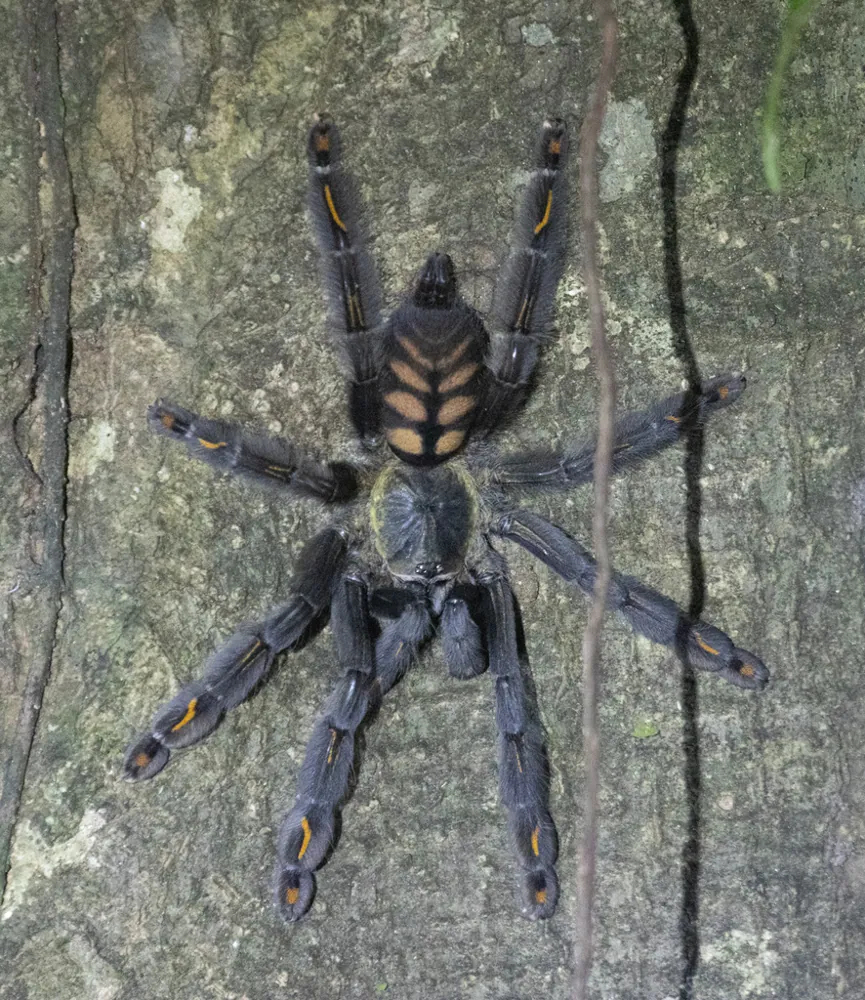
ກັດThe Venezuelan suntiger is a tarantula that lives in the forests of northern South America. It spends much of its life in holes and crevices above ground, and it is a popular pet in the exotic pet trade. Its striking black and orange colours are the main reason it is so well known.1

 ວິທີສັງເກດມັນ
- Black, with vibrant orange markings on the abdomen and legs.1
- Adults of both sexes have orange 'flame' markings on the legs, and the abdomen has a chevron pattern.1
- Once mature, the male turns entirely grey or grey-brown, keeping orange only on the tarsi (the last leg segments).1
- Mature males have much 'leggier' proportions than females.1
- Spiderlings are orange-red on the carapace (the upper body shell), with black legs and a black abdomen. They gradually gain adult colours with each moult.1
ພະລັງພິດ
ພິດອອກມາທາງເຂ້ຍ ຫຼື ແຂ້ວຂອງມັນ ເວລາມັນກັດ
ມັນອັນຕະລາຍຕໍ່ຄົນປານໃດ?
ອັນຕະລາຍຕໍ່ຄົນ: ເຈັບມັນເຈັບຫຼາຍແທ້, ແຕ່ເກືອບບໍ່ເຄີຍຮ້າຍແຮງມັນເຮັດແນວໃດເວລາມັນຢ້ານ?
When threatened, it may flee into its retreat or raise its front legs and show its fangs in a threat posture. If it cannot escape, it bites. It does not throw urticating hairs, unlike most New World tarantulas.1
 ຖ້າມັນກັດ
- ລ້າງບ່ອນຖືກກັດ ແລະ ເຮັດໃຫ້ເຢັນ ໄປຫາໝໍຖ້າເຈັບຫຼາຍ ຫຼື ຜູ້ປ່ວຍຮູ້ສຶກບໍ່ສະບາຍ
ໂທຫາເບີສຸກເສີນກ່ອນສະເໝີ (112, 000, 911) ນີ້ແມ່ນຄຳແນະນຳການປະຖົມພະຍາບານທົ່ວໄປ, ບໍ່ແມ່ນຄຳແນະນຳທາງການແພດ ພື້ນຖານການປະຖົມພະຍາບານ
 ຢູ່ຢ່າງປອດໄພ
- ຢ່າຈັບ, ຢ່າຈັບເອົາ ຫຼື ຢ່າຫຍອກສັດປ່າເດັດຂາດ, ເຖິງແມ່ນມັນໂຕນ້ອຍ ແລະ ເຖິງແມ່ນມັນເບິ່ງຄືນອນຫຼັບ ຫຼື ຕາຍແລ້ວ
- ໃຫ້ພື້ນທີ່ມັນ ຖ້າເຈົ້າພົບມັນ, ໃຈເຢັນໄວ້, ຖອຍຫຼັງຊ້າໆ ແລະ ປ່ອຍໃຫ້ມັນໄປທາງຂອງມັນ
- ຖ້າມີໂຕໃດກັດເຈົ້າ: ໃຈເຢັນໄວ້, ຢູ່ນິ້ງໆ, ໂທຫາເບີສຸກເສີນ (112, 000, 911) ຫຼື ໄປໂຮງໝໍໃຫ້ໄວ ຈື່ໄວ້ວ່າມັນມີລັກສະນະແນວໃດ, ຮູບຖ່າຍຊ່ວຍໄດ້
ມັນບໍ່ໄດ້ຢາກທຳຮ້າຍເຈົ້າ ມັນໃຊ້ພິດເພື່ອຈັບອາຫານ ຫຼື ເພື່ອປ້ອງກັນຕົວ, ແລະ ມັນມັກລີ້ຫຼາຍກວ່າ ເພີ່ມເຕີມກ່ຽວກັບການຢູ່ຢ່າງປອດໄພ
ມັນໃຫຍ່ປານໃດ?
ມັນຍາວປານໃດ?
 ຍາວເທົ່າຕັນຕໍ່ເຄື່ອງຫຼິ້ນ 4 ອັນລຽງກັນ
 ແລ່ນ 100 ແມັດໄດ້ໃນ 210 ວິນາທີ (ຄົນທີ່ໄວທີ່ສຸດໃຊ້ 9.6)
Venezuelan suntiger ໃຫຍ່ປານໃດ ເມື່ອທຽບກັບເຈົ້າ?
ພຽງແຕ່ຄິດໄລ່ໃນບຣາວເຊີຂອງເຈົ້າ ບໍ່ມີຫຍັງຖືກບັນທຶກ ຫຼື ສົ່ງໄປບ່ອນໃດ
ມັນໄວປານໃດ?


ຂໍ້ມູນ
Adult males change colour dramatically after their final moult, turning from black with orange to mostly grey.1
The undersides of its tarsi and metatarsi are iridescent, and they are visible during its threat display, which probably helps the display work.1
Psalmopoeus species lack the urticating hairs that most New World tarantulas use to defend themselves.1
Mature males spin special sperm webs, onto which they deposit sperm and then store it in their palpal bulbs (copulatory organs) ready for mating.1
The species is classed as a Psalmopoeus because it has stridulatory setae, also called a lyra, on its maxillae. No other described New World species has this trait.1
ຂໍ້ມູນມາຈາກໃສ
- Psalmopoeus irminia (Wikipedia (CC BY-SA 4.0))
- Psalmopoeus irminia (iNaturalist): ຊື່ ແລະ ການຈັດໝວດໝູ່
- Venom Wiki: ລະດັບອັນຕະລາຍ, ຂະໜາດທົ່ວໄປ ແລະ ຄວາມໄວທີ່ຄາດຄະເນ ແມ່ນຂອງພວກເຮົາເອງ ເບິ່ງວ່າພວກເຮົາຄິດໄລ່ແນວໃດ: ພວກເຮົາໃຫ້ຄະແນນອັນຕະລາຍແນວໃດ.
ທຸກຂໍ້ມູນໃນໜ້ານີ້ມີຕົວເລກທີ່ຊີ້ໄປຫາແຫຼ່ງທີ່ມາ ຖ້າພວກເຮົາຜິດພາດ, ຂໍໂທດເດີ້, ພວກເຮົາເປັນຄົນມັກສັດ ບໍ່ແມ່ນວາລະສານວິທະຍາສາດ ບອກພວກເຮົາທີ່ [email protected] ແລ້ວພວກເຮົາຈະແກ້ໄຂ
 ແມງເງົາຫິວແລ້ວ! Venom Wiki ເປັນໂຄງການຂອງຄົນຄົນດຽວ: ຟຣີ, ບໍ່ມີໂຄສະນາ ແລະ ບໍ່ມີຕົວຕິດຕາມ ທິບນ້ອຍໆຊ່ວຍໃຫ້ມັນຢູ່ອອນລາຍຕໍ່ໄປໄດ້ໃຫ້ອາຫານແມງເງົາ
ເພີ່ມເຕີມຈາກກຸ່ມດຽວກັນ: ແມງມຸມທາຣັນທູລາ ແລະ ແມງມຸມໃຍຮູບກວຍ
 Goliath birdeaterແມງມຸມທາຣັນທູລາ ແລະ ແມງມຸມໃຍຮູບກວຍພຽງແຕ່ເຈັບ
 Brazilian salmon pink birdeaterແມງມຸມທາຣັນທູລາ ແລະ ແມງມຸມໃຍຮູບກວຍບໍ່ມີອັນຕະລາຍ
 Chilean rose tarantulaແມງມຸມທາຣັນທູລາ ແລະ ແມງມຸມໃຍຮູບກວຍບໍ່ມີອັນຕະລາຍ
 Greenbottle blue tarantulaແມງມຸມທາຣັນທູລາ ແລະ ແມງມຸມໃຍຮູບກວຍບໍ່ມີອັນຕະລາຍ
 Pinktoe tarantulaແມງມຸມທາຣັນທູລາ ແລະ ແມງມຸມໃຍຮູບກວຍບໍ່ມີອັນຕະລາຍ
 Brazilian funnel-web spiderແມງມຸມທາຣັນທູລາ ແລະ ແມງມຸມໃຍຮູບກວຍຕ້ອງໄປຫາໝໍ
ຍັງອາໄສຢູ່ໃນ: ອາເມລິກາໃຕ້
 Golden poison frogກົບພິດ, ຄັນຄາກ ແລະ ນິວເຖິງຕາຍຫ້າມຈັບ
 Terciopeloງູພິດໄວເປີ (ມີຮູຮັບຄວາມຮ້ອນ)ເຖິງຕາຍ
 Brazilian wandering spiderແມງມຸມເຖິງຕາຍໄດ້
 Eyelash viperງູພິດໄວເປີ (ມີຮູຮັບຄວາມຮ້ອນ)ເຖິງຕາຍໄດ້
 Golden lanceheadງູພິດໄວເປີ (ມີຮູຮັບຄວາມຮ້ອນ)ເຖິງຕາຍໄດ້
 South American bushmasterງູພິດໄວເປີ (ມີຮູຮັບຄວາມຮ້ອນ)ເຖິງຕາຍໄດ້