
 ອາຟຣິກາ
 ອາຊີ
ອາຊີ ເອີຣົບ
 ອາເມລິກາໃຕ້
 ອົດສະຕຣາລີ ແລະ ໂອເຊຍເນຍ
 ແອນຕາກຕິກາ
 ມະຫາສະໝຸດປາຊີຟິກ
 ມະຫາສະໝຸດອັດລັງຕິກ
 ມະຫາສະໝຸດອິນເດຍ
 ມະຫາສະໝຸດອາກຕິກ
 ທະເລເມດິເຕີເຣນຽນ
 ທະເລແດງ
 ທະເລຄາຣິບບຽນ
 ທະເລຄໍຣັລ
 ທະເລຈີນໃຕ້
 ທະເລຟິລິບປິນ
 ທະເລອັນດາມັນ
 ທະເລເໜືອ
 ທະເລຕີມໍ ແລະ ທະເລອາຣາຟູຣາ
 ອ່າວເບັງກອນ
 ອ່າວແຄລິຟໍເນຍ
Western hognose snake
 ກັດ
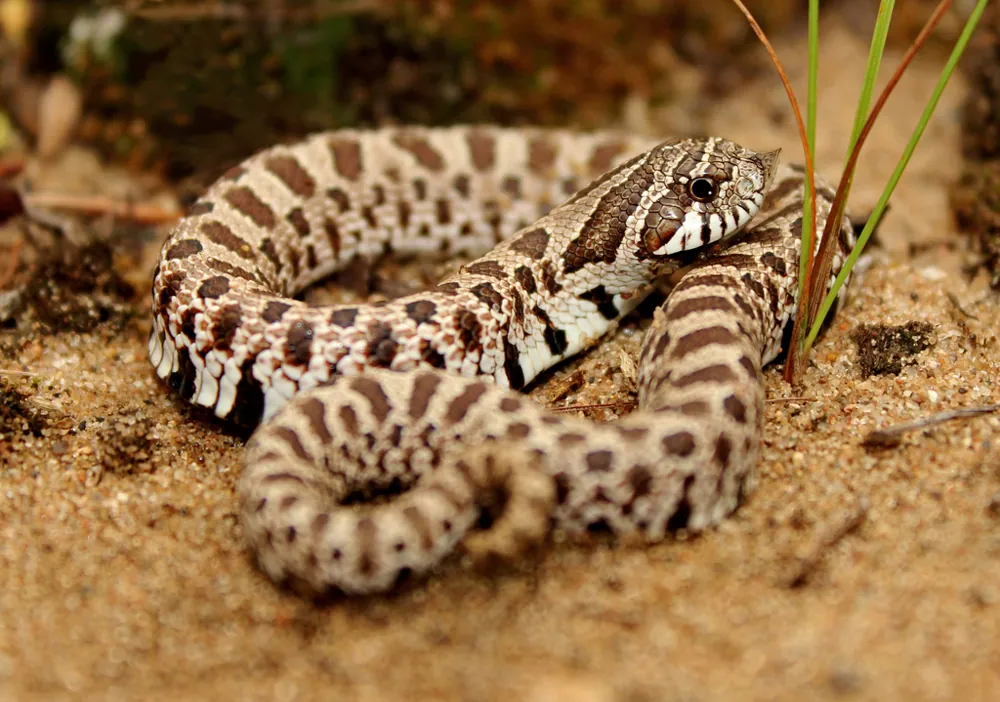
ກັດThe western hognose snake is a small, stout-bodied snake with an upturned nose that looks a bit like a pig's snout. It lives across much of North America, from southern Canada to northern Mexico, in sandy and gravelly places such as prairies and grasslands. It is often mistaken for a rattlesnake, but its bite is not regarded as dangerous to people.1



 ວິທີສັງເກດມັນ
- Relatively small and stout-bodied, with adults rarely exceeding 40–50 cm in total length, tail included.1
- A modified, upturned nose scale gives it a distinctive hog-like snout.1
- Colour and pattern vary a great deal between subspecies and individuals.1
- When threatened, it flattens its neck, hisses and may puff up its throat with air.1
ມັກສັບສົນກັບ: To an untrained eye, most individuals look much like rattlesnakes, which is thought to be a form of mimicry that makes predators wary. Its upturned snout and small, stout body are features to note.1
ພະລັງພິດ
ພິດອອກມາທາງເຂ້ຍ ຫຼື ແຂ້ວຂອງມັນ ເວລາມັນກັດ
ພິດທີ່ມັນປ່ອຍອອກມາເຮັດຫຍັງ?
The snake releases modified saliva from its Duvernoy's glands, which runs down a groove in its rear fang and helps break down the toxins of toads it eats. No deaths or whole-body (systemic) effects in people have been recorded from its bite. Bites may occasionally be medically significant.1
ມັນອັນຕະລາຍຕໍ່ຄົນປານໃດ?
ອັນຕະລາຍຕໍ່ຄົນ: ເລັກນ້ອຍຄືກັບເຜິ້ງຕອດ ຫຼື ໜ້ອຍກວ່າ ເກືອບບໍ່ເປັນອັນຕະລາຍຕໍ່ຄົນThe species is not dangerous to people and is not regarded as venomous. Its bites are extremely rare, and no deaths or systemic effects have been recorded. Bites may uncommonly be medically significant.1
ມັນເຮັດແນວໃດເວລາມັນຢ້ານ?
It flattens its neck, hisses and may make mock strikes with its mouth closed. If harassed further, it usually plays dead rather than biting.1
 ຖ້າມັນກັດ
- ລ້າງບ່ອນຖືກກັດ, ໃຫ້ຜູ້ປ່ວຍໃຈເຢັນ ແລະ ໄປຫາໝໍ ບາງຊະນິດ (ເຊັ່ນ ງູບູມສະແລງ) ອາດເຮັດໃຫ້ເສຍຊີວິດໄດ້ຫຼາຍຊົ່ວໂມງຕໍ່ມາ
ໂທຫາເບີສຸກເສີນກ່ອນສະເໝີ (112, 000, 911) ນີ້ແມ່ນຄຳແນະນຳການປະຖົມພະຍາບານທົ່ວໄປ, ບໍ່ແມ່ນຄຳແນະນຳທາງການແພດ ພື້ນຖານການປະຖົມພະຍາບານ
 ຢູ່ຢ່າງປອດໄພ
- ຢ່າຈັບ, ຢ່າຈັບເອົາ ຫຼື ຢ່າຫຍອກສັດປ່າເດັດຂາດ, ເຖິງແມ່ນມັນໂຕນ້ອຍ ແລະ ເຖິງແມ່ນມັນເບິ່ງຄືນອນຫຼັບ ຫຼື ຕາຍແລ້ວ
- ໃຫ້ພື້ນທີ່ມັນ ຖ້າເຈົ້າພົບມັນ, ໃຈເຢັນໄວ້, ຖອຍຫຼັງຊ້າໆ ແລະ ປ່ອຍໃຫ້ມັນໄປທາງຂອງມັນ
- ຖ້າມີໂຕໃດກັດເຈົ້າ: ໃຈເຢັນໄວ້, ຢູ່ນິ້ງໆ, ໂທຫາເບີສຸກເສີນ (112, 000, 911) ຫຼື ໄປໂຮງໝໍໃຫ້ໄວ ຈື່ໄວ້ວ່າມັນມີລັກສະນະແນວໃດ, ຮູບຖ່າຍຊ່ວຍໄດ້
ມັນບໍ່ໄດ້ຢາກທຳຮ້າຍເຈົ້າ ມັນໃຊ້ພິດເພື່ອຈັບອາຫານ ຫຼື ເພື່ອປ້ອງກັນຕົວ, ແລະ ມັນມັກລີ້ຫຼາຍກວ່າ ເພີ່ມເຕີມກ່ຽວກັບການຢູ່ຢ່າງປອດໄພ
ມັນໃຫຍ່ປານໃດ?
ມັນຍາວປານໃດ?
 ຍາວເທົ່າກ້ວຍ 3 ໜ່ວຍຕໍ່ກັນ
 ຍາວເທົ່າຕັນຕໍ່ເຄື່ອງຫຼິ້ນ 16 ອັນລຽງກັນ
 ແລ່ນ 100 ແມັດໄດ້ໃນ 77 ວິນາທີ (ຄົນທີ່ໄວທີ່ສຸດໃຊ້ 9.6)
Western hognose snake ໃຫຍ່ປານໃດ ເມື່ອທຽບກັບເຈົ້າ?
ພຽງແຕ່ຄິດໄລ່ໃນບຣາວເຊີຂອງເຈົ້າ ບໍ່ມີຫຍັງຖືກບັນທຶກ ຫຼື ສົ່ງໄປບ່ອນໃດ
ມັນໄວປານໃດ?


ຂໍ້ມູນ
Captive breeders have produced more than 50 'designer' colour morphs of this snake.1
In captivity, many hognose snakes refuse food for about two to three and a half months, from January to mid March, because they instinctively brumate, or sleep, underground in winter.1
Males are considerably smaller than females.1
Hatchlings reach sexual maturity after about two years, based mostly on size rather than age.1
ນັກລົບລ້າງຄວາມເຊື່ອຜິດໆ
ຄວາມເຊື່ອຜິດໆ: Because it looks like a rattlesnake, it must be dangerous or deadly.
ຄວາມຈິງ: The western hognose snake is not dangerous to people. Its rare bites have not caused recorded deaths or whole-body effects, and it usually plays dead instead of biting.1
ສຳລັບຜູ້ຊ່ຽວຊານດ້ານພິດ
ຂໍ້ມູນມາຈາກໃສ
- Western hognose snake (Wikipedia (CC BY-SA 4.0))
- Heterodon nasicus (iNaturalist): ຊື່ ແລະ ການຈັດໝວດໝູ່
- Venom Wiki: ລະດັບອັນຕະລາຍ, ຂະໜາດທົ່ວໄປ ແລະ ຄວາມໄວທີ່ຄາດຄະເນ ແມ່ນຂອງພວກເຮົາເອງ ເບິ່ງວ່າພວກເຮົາຄິດໄລ່ແນວໃດ: ພວກເຮົາໃຫ້ຄະແນນອັນຕະລາຍແນວໃດ.
ທຸກຂໍ້ມູນໃນໜ້ານີ້ມີຕົວເລກທີ່ຊີ້ໄປຫາແຫຼ່ງທີ່ມາ ຖ້າພວກເຮົາຜິດພາດ, ຂໍໂທດເດີ້, ພວກເຮົາເປັນຄົນມັກສັດ ບໍ່ແມ່ນວາລະສານວິທະຍາສາດ ບອກພວກເຮົາທີ່ [email protected] ແລ້ວພວກເຮົາຈະແກ້ໄຂ
 ແມງເງົາຫິວແລ້ວ! Venom Wiki ເປັນໂຄງການຂອງຄົນຄົນດຽວ: ຟຣີ, ບໍ່ມີໂຄສະນາ ແລະ ບໍ່ມີຕົວຕິດຕາມ ທິບນ້ອຍໆຊ່ວຍໃຫ້ມັນຢູ່ອອນລາຍຕໍ່ໄປໄດ້ໃຫ້ອາຫານແມງເງົາ
 Brown vine snake
 Eastern hognose snake
 Green vine snake
 Desert night snake
 Night snake
 Sonoran lyre snake
 Terciopelo
 Eastern coral snake
 Eastern diamondback rattlesnake
 Eyelash viper
 Timber rattlesnake
 Western diamondback rattlesnake