
 Afrika
 Azija
Azija Europa
 Pietų Amerika
 Australija ir Okeanija
 Antarktida
 Ramusis vandenynas
 Atlanto vandenynas
 Indijos vandenynas
 Arkties vandenynas
 Viduržemio jūra
 Raudonoji jūra
 Karibų jūra
 Koralų jūra
 Pietų Kinijos jūra
 Filipinų jūra
 Andamanų jūra
 Šiaurės jūra
 Timoro ir Arafūros jūros
 Bengalijos įlanka
 Kalifornijos įlanka
Aquatic coral snake
 Įkandimai
The aquatic coral snake is a venomous snake that spends much of its time in water. It is one of the heaviest and sturdiest coral snakes, and it lives in the forests of northern South America. It is special because it swims well and can stay underwater for a long time.1



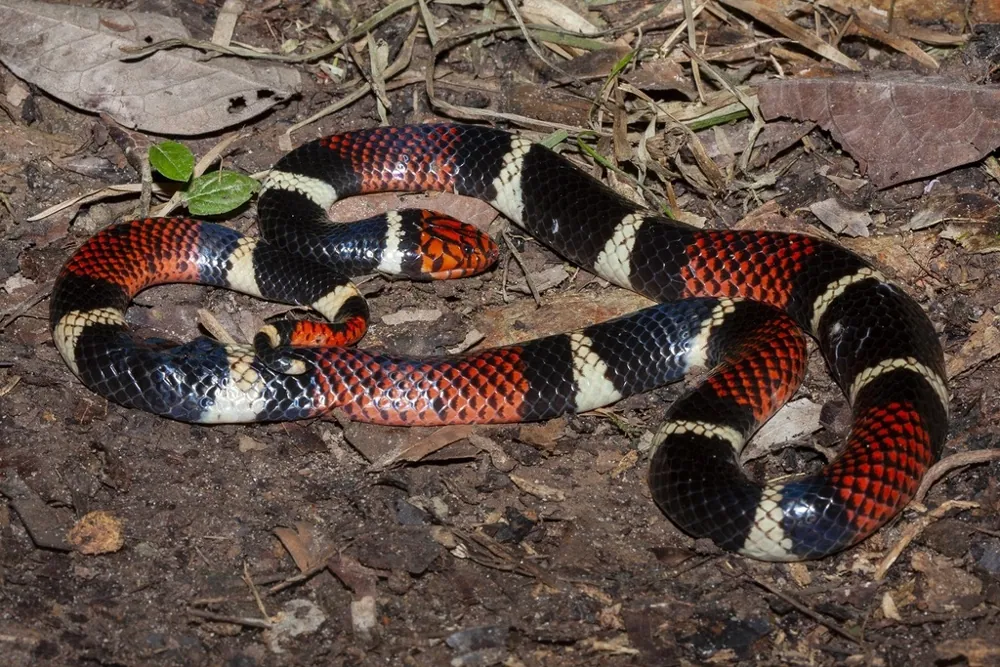
 Kaip jį atpažinti
- The head is mainly red with black edging on the scales.1
- The head is large with a long snout, and the eyes and nostrils sit higher on the head than in other coral snakes.1
- The body has wide red rings separated by groups of three black rings, with narrow cream or yellowish rings between the black bands.1
- The scales are smooth and shiny, and arranged in 15 rows.1
- Adults usually measure 80 to 100 cm, tail included.1
Nuodų galia
Nuodai išeina per iltis ar dantis, kai jis įkanda.
Ką daro jo nuodai?
Its venom is neurotoxic, meaning it attacks the nerves. It blocks signals between nerves and muscles, which causes paralysis. Symptoms can include blurred vision, difficulty speaking, swallowing and walking, and breathing failure. In a well-reported case in the Amazon, the victim reached hospital about 20 minutes after the bite.1
Koks jis pavojingas žmonėms?
Pavojus žmonėms: Labai pavojingasJis gali nužudyti žmogų, kuris negauna gydymo.Bites are rare, but the venom can cause paralysis of the cranial nerves and can be fatal. The estimated lethal dose for an adult human is 18–20 mg, which is higher than the 4–7 mg for smaller coral snake species. Because it is a large snake, it can carry a lot of venom, with an average yield of 56 mg and a maximum of 160 mg when milked by scientists.1
 Gera žinia: gydytojai turi vaistų (priešnuodį) arba gydymą nuo to.1
Ką jis daro, kai išsigąsta?
When threatened, it flattens its body and raises its tail.1
 Jei jis įkanda
- A bite needs hospital care. In a recorded case, the victim needed mechanical ventilation because paralysis of the breathing muscles made it hard to breathe, and was given specific Micrurus antivenom.1
- Laikyk žmogų nejudantį ir ramų ir greitai nugabenk į ligoninę, net jei įkandimas atrodo mažas: simptomai gali prasidėti po kelių valandų.
Visada pirmiausia skambink pagalbos numeriu (112, 000, 911). Tai bendri pirmosios pagalbos patarimai, o ne medicininė konsultacija. Pirmosios pagalbos pagrindai
 Būk saugus
- Niekada neliesk, negaudyk ir neerzink laukinio gyvūno, net mažo, ir net jei jis atrodo miegantis ar negyvas.
- Palik jam vietos. Jei tokį sutiksi, išlik ramus, lėtai atsitrauk ir leisk jam eiti savo keliu.
- Jei toks tau įkando: išlik ramus, nejudėk, skambink pagalbos numeriu (112, 000, 911) arba greitai vyk į ligoninę. Įsimink, kaip jis atrodė, nuotrauka padeda.
Jis nesiruošia tavęs medžioti. Nuodus jis naudoja maistui sugauti arba apsiginti ir daug mieliau pasislėptų. Daugiau apie saugumą
Koks jis didelis?
Koks jis ilgas?
 ilgas kaip 2,5 naminės katės nuo nosies iki uodegos
 ilgas kaip 8 bananai, sudėti vienas po kito
 galėtų nubėgti 100 metrų per 68 sekundžių (greičiausiam žmogui reikia 9,6)
Koks didelis Aquatic coral snake, palyginti su TAVIMI?
Tik matematika tavo naršyklėje. Niekas neišsaugoma ir niekur nesiunčiama.
Koks jis greitas?


Faktai
It swims very well and can stay submerged for a long period.1
Although its venom is weaker than that of smaller members of its genus, it can carry a large amount of venom because of its size.1
It is one of the heaviest and most robust coral snakes.1
It is mainly active at night, though it can also be active during the day.1
It is not aggressive towards humans.1
Iš kur faktai
- Aquatic coral snake (Wikipedia (CC BY-SA 4.0))
- Micrurus surinamensis (iNaturalist): pavadinimai ir klasifikacija.
- Venom Wiki: pavojaus lygis, tipiškas dydis ir greičio spėjimas yra mūsų pačių. Pažiūrėk, kaip juos apskaičiuojame: Kaip vertiname pavojų.
Kiekvienas faktas šiame puslapyje turi numerį, rodantį į jo šaltinį. Jei kažką supainiojome, atsiprašome, mes gyvūnų gerbėjai, o ne mokslo žurnalas. Parašyk mums [email protected] ir mes ištaisysime.
 Skorpionas alkanas! Venom Wiki yra vieno žmogaus projektas: nemokamas, be reklamų ir be sekiklių. Maži arbatpinigiai padeda jam išlikti internete.Pamaitink skorpioną
Daugiau iš tos pačios grupės: Koralinės gyvatės
 Central American coral snakeKoralinės gyvatėsGali nužudyti
 Amazonian coral snakeKoralinės gyvatėsGali nužudyti
 Argentinian coral snakeKoralinės gyvatėsGali nužudyti
 Caatinga coral snakeKoralinės gyvatėsGali nužudyti
 Dumeril's coral snakeKoralinės gyvatėsGali nužudyti
 Mesopotamian coral snakeKoralinės gyvatėsGali nužudyti
Taip pat gyvena: Pietų Amerika
 Auksinė toksiškoji varlėToksiškos varlės, rupūžės ir tritonaiMirtinasNeliesti
 Šiurkščioji lancetgalvėDuobagalvės angysMirtinas
 Brazilian wandering spiderVoraiGali nužudyti
 Eyelash viperDuobagalvės angysGali nužudyti
 Golden lanceheadDuobagalvės angysGali nužudyti
 South American bushmasterDuobagalvės angysGali nužudyti