
 Afrika
 Azija
Azija Europa
 Pietų Amerika
 Australija ir Okeanija
 Antarktida
 Ramusis vandenynas
 Atlanto vandenynas
 Indijos vandenynas
 Arkties vandenynas
 Viduržemio jūra
 Raudonoji jūra
 Karibų jūra
 Koralų jūra
 Pietų Kinijos jūra
 Filipinų jūra
 Andamanų jūra
 Šiaurės jūra
 Timoro ir Arafūros jūros
 Bengalijos įlanka
 Kalifornijos įlanka
Bald-faced hornet
 Įgėlimai
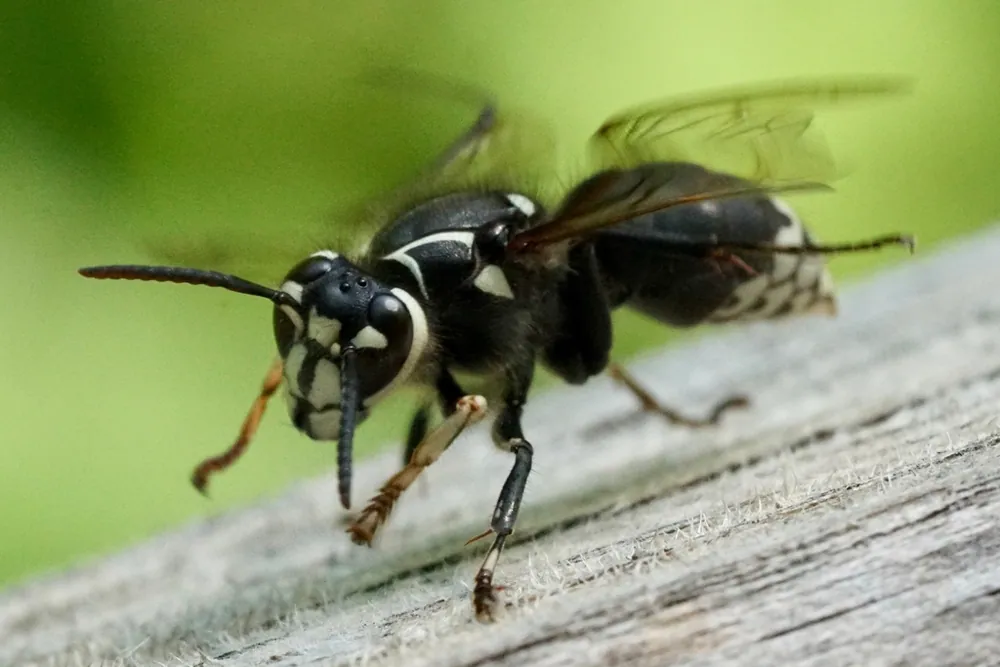
The bald-faced hornet is a wasp with a striking black and white body and a white face. It builds large, hanging paper nests in trees and bushes across North America. Its workers will defend the nest by stinging repeatedly, so it is important to keep well away from its nests.1



 Kaip jį atpažinti
- Black and white colouring, unlike other yellowjackets of its genus, which are mostly black and yellow1
- A white or "bald" face1
- Three white stripes at the end of the body1
- Adults average about 19 mm long, larger than other Dolichovespula species1
- A large, egg-shaped, grey paper nest that hangs from trees or bushes, up to 58 cm long1
Dažnai painiojamas su: Other Dolichovespula wasps are mostly black and yellow. The bald-faced hornet's black and white colouring and white face set it apart. It is not one of the true hornets, which belong to the genus Vespa.1
Nuodų galia
Nuodai išeina per geluonį.
Ką daro jo nuodai?
Workers can squirt venom from the stinger into the eyes of animals that intrude on the nest. The venom makes the eyes water immediately and causes temporary blindness.1
Koks jis pavojingas žmonėms?
Pavojus žmonėms: SkausmingasGali labai skaudėti, bet beveik niekada nebūna rimta.It is aggressive when defending its nest. Workers sting repeatedly, and colonies can have 400 to 700 workers. The risk is highest when people walk too close to a nest or when a nest is built near homes.1
Ką jis daro, kai išsigąsta?
Workers defend the nest by stinging repeatedly and can squirt venom into the eyes of intruders.1
 Jei jis įgelia
- Išgremžk bitės geluonį ir atvėsink vietą.
- Jei žmogui sunku kvėpuoti, tinsta veidas ar gerklė arba jis jaučiasi lyg tuoj nualps, tai skubi alerginė būklė: skambink pagalbos numeriu ir panaudok jo adrenalino autoinjektorių (švirkštiklį), jei jis jį turi.
Visada pirmiausia skambink pagalbos numeriu (112, 000, 911). Tai bendri pirmosios pagalbos patarimai, o ne medicininė konsultacija. Pirmosios pagalbos pagrindai
 Būk saugus
- Niekada neliesk, negaudyk ir neerzink laukinio gyvūno, net mažo, ir net jei jis atrodo miegantis ar negyvas.
- Palik jam vietos. Jei tokį sutiksi, išlik ramus, lėtai atsitrauk ir leisk jam eiti savo keliu.
- Jei toks tau įgėlė: išlik ramus, nejudėk, skambink pagalbos numeriu (112, 000, 911) arba greitai vyk į ligoninę. Įsimink, kaip jis atrodė, nuotrauka padeda.
Jis nesiruošia tavęs medžioti. Nuodus jis naudoja maistui sugauti arba apsiginti ir daug mieliau pasislėptų. Daugiau apie saugumą
Koks jis didelis?
Koks jis ilgas?
 trumpesnis už tavo mažąjį pirštelį
 galėtų perskristi visą futbolo aikštę per 15 sekundžių
Koks didelis Bald-faced hornet, palyginti su TAVIMI?
Tik matematika tavo naršyklėje. Niekas neišsaugoma ir niekur nesiunčiama.
Koks jis greitas?


Faktai
It can spray venom from its stinger into the eyes of nest intruders, causing temporary blindness.1
Its colony can have 400 to 700 workers, the largest recorded colony size in its genus, Dolichovespula.1
Female bee moths can lay eggs in its nests, and the hatched larvae feed on the eggs, larvae and pupae inside, sometimes destroying large parts of the nest.1
Its nests are made from chewed wood fibres mixed with saliva, which dries into a papery structure.1
A colony lasts about 4 months in Washington, from mid-May to mid-September. Colonies in lower latitudes last longer.1
Mitų griovėjas
Mitas: It is a true hornet.
Tiesa: It is a yellowjacket wasp. True hornets belong to the genus Vespa.1
Nuodų ekspertams
- Mokslinis pavadinimas
- Dolichovespula maculata
- Grupė
- Bitės, vapsvos ir širšės
- Šeima
- Vespidae2
- Tvarka
- Hymenoptera
- Žemynai
- Šiaurės Amerika
- Mažyliai
- A single queen starts each new nest in spring, laying eggs that hatch into workers, and later lays eggs that become males and new queens.1
- Pavojus žmonėms
- 2 / 5: Skausmingas3
Iš kur faktai
- Dolichovespula maculata (Wikipedia (CC BY-SA 4.0))
- Dolichovespula maculata (iNaturalist): pavadinimai ir klasifikacija.
- Venom Wiki: pavojaus lygis, tipiškas dydis ir greičio spėjimas yra mūsų pačių. Pažiūrėk, kaip juos apskaičiuojame: Kaip vertiname pavojų.
Kiekvienas faktas šiame puslapyje turi numerį, rodantį į jo šaltinį. Jei kažką supainiojome, atsiprašome, mes gyvūnų gerbėjai, o ne mokslo žurnalas. Parašyk mums [email protected] ir mes ištaisysime.
 Skorpionas alkanas! Venom Wiki yra vieno žmogaus projektas: nemokamas, be reklamų ir be sekiklių. Maži arbatpinigiai padeda jam išlikti internete.Pamaitink skorpioną
Daugiau iš tos pačios grupės: Bitės, vapsvos ir širšės
 Tarantula hawkBitės, vapsvos ir širšėsTik skauda
 Executioner waspBitės, vapsvos ir širšėsReikia gydytojo
 Warrior waspBitės, vapsvos ir širšėsReikia gydytojo
 Cow killer velvet antBitės, vapsvos ir širšėsTik skauda
 Eastern cicada killerBitės, vapsvos ir širšėsNekenksmingas
 Aerial yellowjacketBitės, vapsvos ir širšėsTik skauda
 Šiurkščioji lancetgalvė
 Eastern coral snake
 Eastern diamondback rattlesnake
 Eyelash viper
 Timber rattlesnake
 Western diamondback rattlesnake