
 Afrika
 Azija
Azija Europa
 Pietų Amerika
 Australija ir Okeanija
 Antarktida
 Ramusis vandenynas
 Atlanto vandenynas
 Indijos vandenynas
 Arkties vandenynas
 Viduržemio jūra
 Raudonoji jūra
 Karibų jūra
 Koralų jūra
 Pietų Kinijos jūra
 Filipinų jūra
 Andamanų jūra
 Šiaurės jūra
 Timoro ir Arafūros jūros
 Bengalijos įlanka
 Kalifornijos įlanka
Katipo
 Įkandimai
The katipō is a cobweb spider found only in New Zealand, where it lives in coastal sand dunes. It is closely related to the Australian redback spider. Its bite is venomous to people, but bites are rare.1
 Kaip jį atpažinti
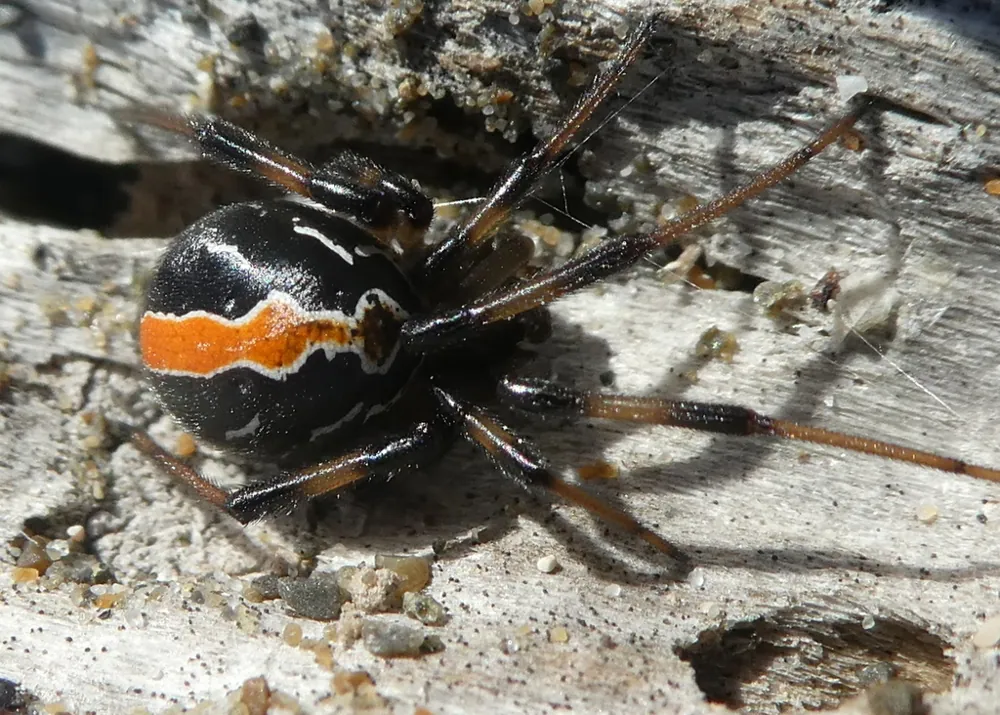
- Adult females have a body length of 8–10 mm (about 0.3–0.4 in).1
- The red katipō, found in the South Island and lower North Island, has a large black, shiny abdomen with a white-bordered orange or red stripe on top, and a red hourglass-shaped marking underneath.1
- The black katipō, found in the upper North Island, has no upper red or orange stripe and is somewhat lighter in colour.1
- Males are 4–5 mm long, white with black stripes and red hourglass-shaped markings.1
Dažnai painiojamas su: Steatoda species, which share the same habitat, are very similar and are called "false katipō" in New Zealand. The katipō has a less shiny, more tapered abdomen, and its side eyes are further apart. It is also similar to the redback, but the katipō has only short hair-like spines on its abdomen, while the redback has a mix of long and short ones.1
Nuodų galia
Nuodai išeina per iltis ar dantis, kai jis įkanda.
Ką daro jo nuodai?
The bite can cause latrodectism, a toxic syndrome that affects the nerves and body. Symptoms include extreme pain and, potentially, high blood pressure (hypertension) or seizures.1
Koks jis pavojingas žmonėms?
Pavojus žmonėms: RimtasPo įkandimo reikia pas gydytoją. Mirties atvejai labai reti.Katipō are venomous to humans, but bites are described as rare. Serious symptoms are possible, including extreme pain, high blood pressure and seizures.1
 Gera žinia: gydytojai turi vaistų (priešnuodį) arba gydymą nuo to.1
 Jei jis įkanda
- Nuplauk įkandimą ir nuo skausmo uždėk ledo maišelį. Kreipkis medicininės pagalbos, jei skausmas stiprus, plinta arba žmogus jaučiasi blogai.
Visada pirmiausia skambink pagalbos numeriu (112, 000, 911). Tai bendri pirmosios pagalbos patarimai, o ne medicininė konsultacija. Pirmosios pagalbos pagrindai
 Būk saugus
- Niekada neliesk, negaudyk ir neerzink laukinio gyvūno, net mažo, ir net jei jis atrodo miegantis ar negyvas.
- Palik jam vietos. Jei tokį sutiksi, išlik ramus, lėtai atsitrauk ir leisk jam eiti savo keliu.
- Jei toks tau įkando: išlik ramus, nejudėk, skambink pagalbos numeriu (112, 000, 911) arba greitai vyk į ligoninę. Įsimink, kaip jis atrodė, nuotrauka padeda.
Jis nesiruošia tavęs medžioti. Nuodus jis naudoja maistui sugauti arba apsiginti ir daug mieliau pasislėptų. Daugiau apie saugumą
Koks jis didelis?
Koks jis ilgas?
 toks mažas, kad tilptų ant tavo nago
Koks didelis Katipo, palyginti su TAVIMI?
Tik matematika tavo naršyklėje. Niekas neišsaugoma ir niekur nesiunčiama.
Koks jis greitas?


Faktai
In one 24-hour study of young spiders, 28% left the web by ballooning, carried by air currents.1
Katipō is one of the few Māori words that refers to a specific species of spider.1
The female does not usually eat the male after mating, unlike some other widow spiders.1
Females cover their egg sacs with silk and sand, which partly hides them in the web.1
The katipō is found only in New Zealand.1
Mitų griovėjas
Mitas: The katipō is just a form of the redback spider.
Tiesa: The katipō is genetically and physically distinct from the redback, even though the two are closely related. It was once thought to be a subspecies of the redback.1
Nuodų ekspertams
- Mokslinis pavadinimas
- Latrodectus katipo
- Grupė
- Vorai
- Šeima
- Theridiidae2
- Tvarka
- Araneae
- Žemynai
- Australija ir Okeanija
- Mažyliai
- The female lays five or six egg sacs in November or December, with about 70 to 90 eggs in each. The young hatch after 20–25 days and leave the egg sac in January and February.1
- Kaip jam sekasi gamtoje
- In serious decline (New Zealand Threat Classification System)1
- Pavojus žmonėms
- 3 / 5: Rimtas3
Iš kur faktai
- Katipō (Wikipedia (CC BY-SA 4.0))
- Latrodectus katipo (iNaturalist): pavadinimai ir klasifikacija.
- Venom Wiki: pavojaus lygis, tipiškas dydis ir greičio spėjimas yra mūsų pačių. Pažiūrėk, kaip juos apskaičiuojame: Kaip vertiname pavojų.
Kiekvienas faktas šiame puslapyje turi numerį, rodantį į jo šaltinį. Jei kažką supainiojome, atsiprašome, mes gyvūnų gerbėjai, o ne mokslo žurnalas. Parašyk mums [email protected] ir mes ištaisysime.
 Skorpionas alkanas! Venom Wiki yra vieno žmogaus projektas: nemokamas, be reklamų ir be sekiklių. Maži arbatpinigiai padeda jam išlikti internete.Pamaitink skorpioną
 Redback spider
 White-tailed spider
 Peacock spider
 Badge huntsman spider
 Black house spider
 Eastern white-tailed spider
 Coastal taipan
 Common death adder
 Eastern brown snake
 Vidurinis taipanas
 Sydney funnel-web spider
 Tigrinė gyvatė