
 Afrika
 Azija
Azija Europa
 Pietų Amerika
 Australija ir Okeanija
 Antarktida
 Ramusis vandenynas
 Atlanto vandenynas
 Indijos vandenynas
 Arkties vandenynas
 Viduržemio jūra
 Raudonoji jūra
 Karibų jūra
 Koralų jūra
 Pietų Kinijos jūra
 Filipinų jūra
 Andamanų jūra
 Šiaurės jūra
 Timoro ir Arafūros jūros
 Bengalijos įlanka
 Kalifornijos įlanka
Lace monitor
 Įkandimai
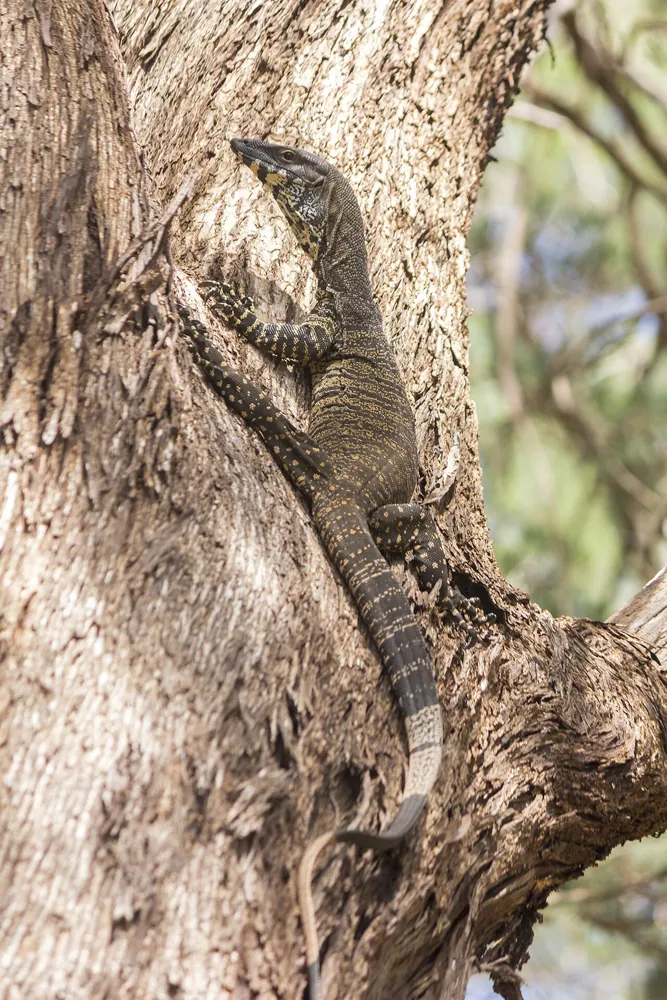
The lace monitor is a large lizard that lives in eastern Australia, and it can grow up to 2 metres long. It is a skilled climber that often lives in trees, and it is one of the country's biggest monitor lizards. It is also known as the tree goanna.1



 Kaip jį atpažinti
- The main form is dark grey to dull bluish-black with scattered cream-coloured spots.1
- The head is black, and the snout has prominent black and yellow bands that extend under the chin and neck.1
- The tail has narrow black and cream bands that get wider towards the tip.1
- Bell's form has a yellow-brown or yellow base colour with fine black mottling and broad black or dark brown bands from the shoulders to the tail.1
- Juveniles have more defined banding, with five narrow black bands on the neck and eight on the body.1
Nuodų galia
Nuodai išeina per iltis ar dantis, kai jis įkanda.
Ką daro jo nuodai?
Lace monitors have venom glands, and their venom is similar to snake venom, but it is not strong enough to cause serious harm. A bite on the hand can cause swelling within minutes, localised disruption of blood clotting (the blood clots less well in that area), and shooting pain up to the elbow. This pain can often last for several hours.1
Koks jis pavojingas žmonėms?
Pavojus žmonėms: SkausmingasGali labai skaudėti, bet beveik niekada nebūna rimta.Its venom is not enough to cause serious harm. Scientists have cautioned that calling these lizards venomous overestimates the medical risk to bite victims.1
Ką jis daro, kai išsigąsta?
When disturbed, lace monitors retreat to a nearby tree.1
 Jei jis įkanda
- Nuplauk žaizdą, laikyk žmogų ramų ir kreipkis medicininės pagalbos.
Visada pirmiausia skambink pagalbos numeriu (112, 000, 911). Tai bendri pirmosios pagalbos patarimai, o ne medicininė konsultacija. Pirmosios pagalbos pagrindai
 Būk saugus
- Niekada neliesk, negaudyk ir neerzink laukinio gyvūno, net mažo, ir net jei jis atrodo miegantis ar negyvas.
- Palik jam vietos. Jei tokį sutiksi, išlik ramus, lėtai atsitrauk ir leisk jam eiti savo keliu.
- Jei toks tau įkando: išlik ramus, nejudėk, skambink pagalbos numeriu (112, 000, 911) arba greitai vyk į ligoninę. Įsimink, kaip jis atrodė, nuotrauka padeda.
Jis nesiruošia tavęs medžioti. Nuodus jis naudoja maistui sugauti arba apsiginti ir daug mieliau pasislėptų. Daugiau apie saugumą
Koks jis didelis?
Koks jis ilgas?
Koks jis sunkus?
 ilgas kaip 4 naminės katės nuo nosies iki uodegos
 ilgas kaip 11 bananai, sudėti vienas po kito
 galėtų nubėgti 100 metrų per 22 sekundžių (greičiausiam žmogui reikia 9,6)
Koks didelis Lace monitor, palyginti su TAVIMI?
Tik matematika tavo naršyklėje. Niekas neišsaugoma ir niekur nesiunčiama.
Koks jis greitas?

Faktai
Populations near rubbish tips were thirty five times greater than in natural forest, and individuals were around twice as heavy.1
Lace monitors quickly learned to avoid cane toads after they had been poisoned by them.1
One lace monitor was recorded climbing a brick wall to find shelter during a thunderstorm.1
Its closest living relative is the Komodo dragon.1
Mitų griovėjas
Mitas: Bites from monitors were thought to be dangerous mainly because of infection from bacteria in their mouths.
Tiesa: Researchers found in 2005 that the immediate effects of bites were more likely caused by venom.1
Nuodų ekspertams
- Mokslinis pavadinimas
- Varanus varius
- Grupė
- Nuodingi driežai
- Šeima
- Varanidae2
- Tvarka
- Squamata
- Žemynai
- Australija ir Okeanija
- Mažyliai
- Females lay an average of eight eggs, and up to 12, in active termite nests on the ground or in trees. The eggs hatch 6 to 7 months later.1
- Gyvenimo trukmė
- apie 20 metų1
- Kaip jam sekasi gamtoje
- Least Concern1
- Pavojus žmonėms
- 2 / 5: Skausmingas3
Iš kur faktai
- Lace monitor (Wikipedia (CC BY-SA 4.0))
- Varanus varius (iNaturalist): pavadinimai ir klasifikacija.
- Venom Wiki: pavojaus lygis, tipiškas dydis ir greičio spėjimas yra mūsų pačių. Pažiūrėk, kaip juos apskaičiuojame: Kaip vertiname pavojų.
Kiekvienas faktas šiame puslapyje turi numerį, rodantį į jo šaltinį. Jei kažką supainiojome, atsiprašome, mes gyvūnų gerbėjai, o ne mokslo žurnalas. Parašyk mums [email protected] ir mes ištaisysime.
 Skorpionas alkanas! Venom Wiki yra vieno žmogaus projektas: nemokamas, be reklamų ir be sekiklių. Maži arbatpinigiai padeda jam išlikti internete.Pamaitink skorpioną
 Perentie
 Spiny-tailed monitor
 Yellow-spotted monitor
 Mitchell's water monitor
 Komodo dragon
 Gila monster
 Pakrančių taipanas
 Paprastoji mirtinoji angis
 Rytinė rudoji gyvatė
 Vidurinis taipanas
 Sidnėjaus piltuvinis voras
 Tigrinė gyvatė
,_photographed_in_the_Kindra_State_Forest.jpg)