
 Afrika
 Azija
Azija Europa
 Pietų Amerika
 Australija ir Okeanija
 Antarktida
 Ramusis vandenynas
 Atlanto vandenynas
 Indijos vandenynas
 Arkties vandenynas
 Viduržemio jūra
 Raudonoji jūra
 Karibų jūra
 Koralų jūra
 Pietų Kinijos jūra
 Filipinų jūra
 Andamanų jūra
 Šiaurės jūra
 Timoro ir Arafūros jūros
 Bengalijos įlanka
 Kalifornijos įlanka
West African carpet viper
 Įkandimai
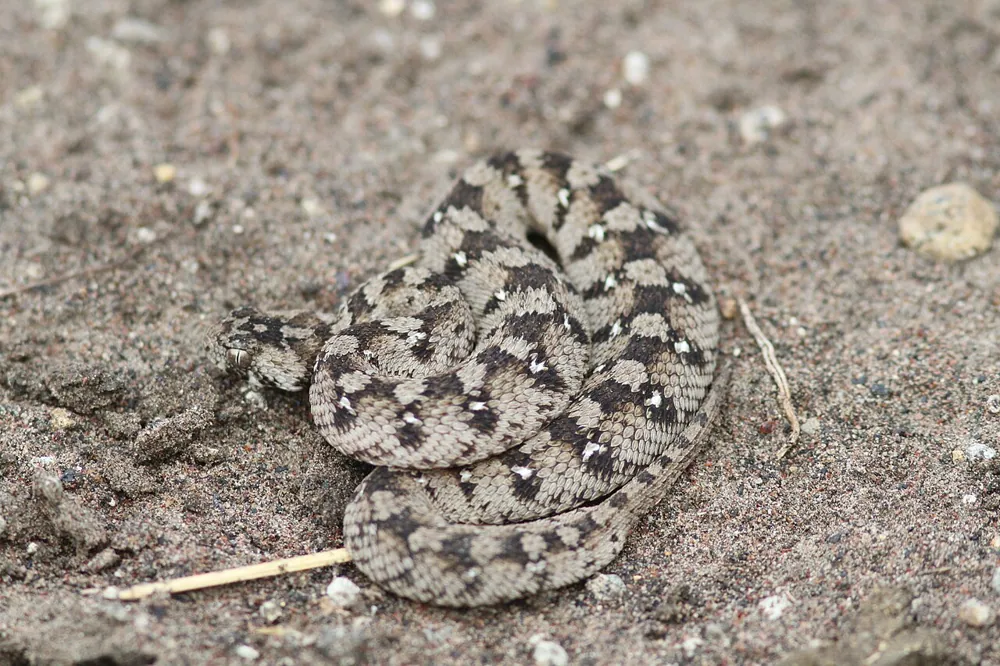
The West African carpet viper is a small, highly venomous snake that lives in the savanna of West Africa. Its bite is one of the most dangerous of any snake in Africa. It is known for its row of eye-spots and its aggressive, alarm-like behaviour when threatened.1



 Kaip jį atpažinti
- It has bulging eyes and a short snout, typical of vipers in the genus Echis.1
- A distinctive series of eye-spots, called ocelli, runs the length of its body.1
- It is terrestrial, so it lives on the ground rather than in trees.1
- It is mostly active at night and at dusk (nocturnal and crepuscular).1
Dažnai painiojamas su: Older records from Senegal, Guinea-Bissau and Guinea refer to Echis jogeri, and those from eastern Nigeria, Cameroon and southern Chad refer to Echis romani. These are now recognised as separate species. Echis leucogaster is more common north of the 15th parallel, where this snake is rarely found.1
Nuodų galia
Nuodai išeina per iltis ar dantis, kai jis įkanda.
Ką daro jo nuodai?
Its venom is a mix of procoagulants, anticoagulants, haemorrhagins, nephrotoxins and necrotoxins. Procoagulants make blood clot, while anticoagulants stop it clotting, so bleeding can occur. Nephrotoxins damage the kidneys, and necrotoxins kill tissue around the bite. Local symptoms include pain, swelling, bleeding, tissue death (necrosis) and disfigurement, which may lead to amputation. Whole-body symptoms include coagulopathy (blood clotting problems), haemorrhages, shock, kidney failure and blindness.1
Koks jis pavojingas žmonėms?
Pavojus žmonėms: MirtinasVienas pavojingiausių gyvūnų pasaulyje.The West African carpet viper causes more human deaths from snakebite than all other African snakes combined. The envenoming rate is 80%, and the lethality rate is 10–20%.1
 Gera žinia: gydytojai turi vaistų (priešnuodį) arba gydymą nuo to.1
Ką jis daro, kai išsigąsta?
When threatened, it forms its body into an S shape and rubs its scales together to make an alert sound.1
 Jei jis įkanda
- Laikyk žmogų nejudantį ir ramų, įkąstą galūnę laikyk širdies lygyje, nuimk žiedus ir kitus veržiančius daiktus ir greitai nugabenk į ligoninę.
Visada pirmiausia skambink pagalbos numeriu (112, 000, 911). Tai bendri pirmosios pagalbos patarimai, o ne medicininė konsultacija. Pirmosios pagalbos pagrindai
 Būk saugus
- Niekada neliesk, negaudyk ir neerzink laukinio gyvūno, net mažo, ir net jei jis atrodo miegantis ar negyvas.
- Palik jam vietos. Jei tokį sutiksi, išlik ramus, lėtai atsitrauk ir leisk jam eiti savo keliu.
- Jei toks tau įkando: išlik ramus, nejudėk, skambink pagalbos numeriu (112, 000, 911) arba greitai vyk į ligoninę. Įsimink, kaip jis atrodė, nuotrauka padeda.
Jis nesiruošia tavęs medžioti. Nuodus jis naudoja maistui sugauti arba apsiginti ir daug mieliau pasislėptų. Daugiau apie saugumą
Koks jis didelis?
Koks jis ilgas?
 ilgas kaip 4 bananai, sudėti vienas po kito
 galėtų nubėgti 100 metrų per 110 sekundžių (greičiausiam žmogui reikia 9,6)
Koks didelis West African carpet viper, palyginti su TAVIMI?
Tik matematika tavo naršyklėje. Niekas neišsaugoma ir niekur nesiunčiama.
Koks jis greitas?


Faktai
It makes an alert sound by rubbing its scales together while in an S-shaped posture.1
Hatchlings are already 10–12 cm long, which is a sizeable fraction of an adult's average length.1
Its scientific name, ocellatus, comes from the row of eye-spots, called ocelli, that runs along its body.1
Some individual snakes have been found far from its main range, including in the Central African Republic and central Sudan.1
Nuodų ekspertams
Iš kur faktai
- Echis ocellatus (Wikipedia (CC BY-SA 4.0))
- Echis ocellatus (iNaturalist): pavadinimai ir klasifikacija.
- Venom Wiki: pavojaus lygis, tipiškas dydis ir greičio spėjimas yra mūsų pačių. Pažiūrėk, kaip juos apskaičiuojame: Kaip vertiname pavojų.
Kiekvienas faktas šiame puslapyje turi numerį, rodantį į jo šaltinį. Jei kažką supainiojome, atsiprašome, mes gyvūnų gerbėjai, o ne mokslo žurnalas. Parašyk mums [email protected] ir mes ištaisysime.
 Skorpionas alkanas! Venom Wiki yra vieno žmogaus projektas: nemokamas, be reklamų ir be sekiklių. Maži arbatpinigiai padeda jam išlikti internete.Pamaitink skorpioną
Daugiau iš tos pačios grupės: Angys ir jų giminaitės
 Šnypščiančioji angisAngys ir jų giminaitėsMirtinas
 Gaboon viperAngys ir jų giminaitėsGali nužudyti
 Northeast African carpet viperAngys ir jų giminaitėsMirtinas
 Rhinoceros viperAngys ir jų giminaitėsGali nužudyti
 West African Gaboon viperAngys ir jų giminaitėsGali nužudyti
 Horned adderAngys ir jų giminaitėsReikia gydytojo
 Juodoji mamba
 Penkiadryžis leiuras
 Egipto kobra
 Boomslang
 Fat-tailed scorpion
 Western honey bee