
 Āfrika
 Āzija
Āzija Eiropa
 Dienvidamerika
 Austrālija un Okeānija
 Antarktīda
 Klusais okeāns
 Atlantijas okeāns
 Indijas okeāns
 Ziemeļu Ledus okeāns
 Vidusjūra
 Sarkanā jūra
 Karību jūra
 Koraļļu jūra
 Dienvidķīnas jūra
 Filipīnu jūra
 Andamanu jūra
 Ziemeļjūra
 Timoras jūra un Arafuras jūra
 Bengālijas līcis
 Kalifornijas līcis
By-the-wind sailor
 Dzeļoši taustekļi
The by-the-wind sailor is a small, deep blue animal that floats on the surface of the open ocean. It is not a single creature but a colony of tiny linked animals, and it moves by catching the wind with a small stiff sail. Its stinging tentacles are generally harmless to people, but they can irritate the skin.1

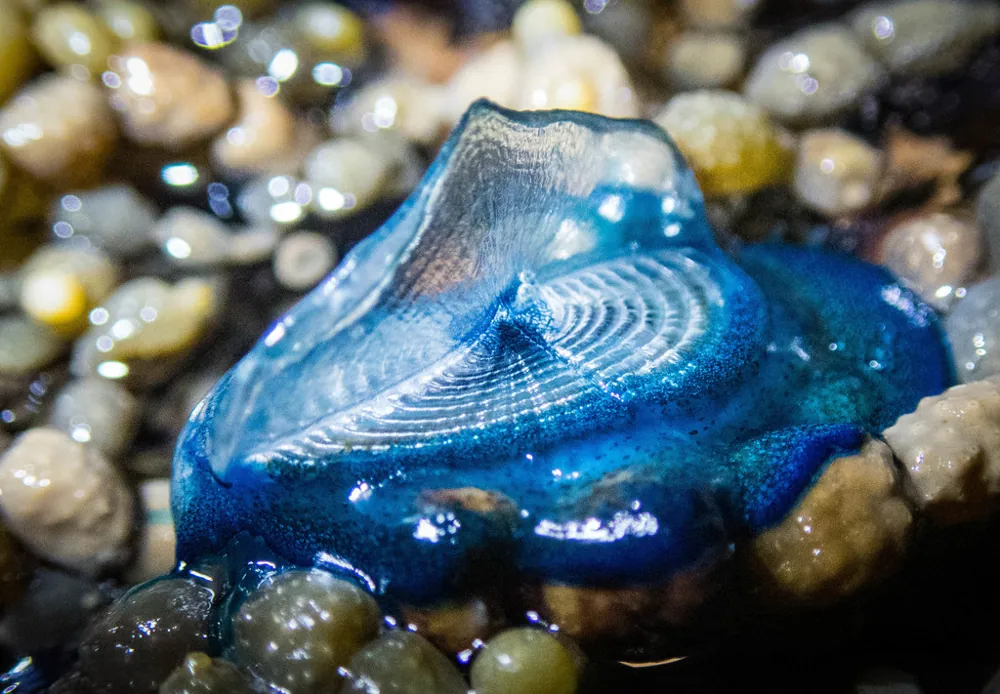
 Kā to atpazīt
Indes spēks
Tūkstošiem sīku dzeļšūnu izšaujas, kad tām kaut kas pieskaras.
Ko nodara tā inde?
Its nematocysts contain toxins that are effective against its prey, which are mostly plankton. The nematocysts are relatively benign to humans, but each person may respond differently to the toxin. Contact may cause irritation to exposed skin.1
Cik bīstams tas ir cilvēkiem?
Bīstamība cilvēkiem: VieglsKā bites dzēliens vai mazāk. Cilvēkiem praktiski nekaitīgs.It is relatively harmless to humans. Its main effect is possible skin irritation after contact. Mass strandings can leave large numbers of dying and rotting animals on beaches.1
 Ja tas iedzeļ
- Izkāp no ūdens un noņem visus taustekļus (ar cimdiem vai drānu).
- Tropu kastveida medūzām: lej etiķi uz dzēlieniem vismaz 30 sekundes, sauc palīdzību un esi gatavs veikt atdzīvināšanu (KPR). Fizālijām un vairumam citu: noskalo ar jūras ūdeni, tad ar karstu ūdeni pret sāpēm.
Vienmēr vispirms zvani uz savu ārkārtas numuru (112, 000, 911). Tie ir vispārīgi pirmās palīdzības padomi, nevis medicīniska konsultācija. Pirmās palīdzības pamati
 Esi drošībā
- Nekad neaiztiec, neķer un neķircini savvaļas dzīvnieku, pat mazu, un pat ja tas izskatās aizmidzis vai miris.
- Dod tam vietu. Ja tādu satiec, saglabā mieru, lēnām atkāpies un ļauj tam iet savu ceļu.
- Ja tāds tev iedzeļ: saglabā mieru, nekusties, zvani uz savu ārkārtas numuru (112, 000, 911) vai ātri dodies uz slimnīcu. Atceries, kā tas izskatījās, foto palīdz.
Tas nav nolēmis tevi medīt. Tas izmanto indi, lai noķertu barību vai aizsargātos, un daudz labprātāk paslēptos. Vairāk par drošību
Kur pasaulē?
Cik tas ir liels?
Cik tas ir garš?
 tikpat garš kā 2 rotaļu klucīši rindā
 varētu nopeldēt liela peldbaseina garumu (50 m) 180 sekundēs
Cik liels ir By-the-wind sailor salīdzinājumā ar TEVI?
Tikai matemātika tavā pārlūkā. Nekas netiek saglabāts vai kaut kur nosūtīts.
Cik tas ir ātrs?

Fakti
Its floating colonies are mirror images of each other, either 'left-handed' or 'right-handed', and this affects where they drift. In the northern Pacific, one form tends to drift to North America and the other to eastern Asia, such as Japan.1
Each blue 'animal' with a sail is really a colony of linked polyps that share food through a canal system.1
Each colony is either all male or all female.1
Its sail is not a fin. It works like a sail, so the animal tends to drift downwind at a small angle to the wind.1
Its tiny jellyfish carry zooxanthellae, single-celled organisms that use sunlight to provide energy, a feature also found in corals.1
It has no means of moving other than its sail, so it depends on prevailing winds, and mass strandings on beaches happen in many parts of the world.1
Mītu grāvējs
Mīts: Each blue sail is a single, simple animal.
Patiesība: Each apparent individual is a colony of many connected polyps that share food and divide the work between feeding, reproductive and protective polyps.1
Indes ekspertiem
- Zinātniskais nosaukums
- Velella velella
- Grupa
- Medūzas un jūras dzēlēji
- Ģimene
- Porpitidae2
- Secība
- Anthoathecata
- Kontinenti
- Klusais okeāns, Atlantijas okeāns, Indijas okeāns, Vidusjūra, Dienvidu okeāns, Antarktīda, Okeāni
- Mazuļi
- Each colony's feeding polyps (gonozooids) bud off thousands of tiny jellyfish, each about 1 mm wide, over several weeks. These develop into a free-swimming larva called a conaria, which grows into a new floating colony.1
- Bīstamība cilvēkiem
- 1 / 5: Viegls3
No kurienes nāk fakti
- Velella (Wikipedia (CC BY-SA 4.0))
- Velella velella (iNaturalist): nosaukumi un klasifikācija.
- Venom Wiki: bīstamības līmenis, tipiskais izmērs un ātruma minējums ir mūsu pašu. Paskaties, kā mēs tos aprēķinām: Kā mēs vērtējam bīstamību.
Katram faktam šajā lapā ir numurs, kas norāda uz tā avotu. Ja mēs kaut ko esam sajaukuši, piedod, mēs esam dzīvnieku fani, nevis zinātnisks žurnāls. Uzraksti mums uz [email protected], un mēs to izlabosim.
 Skorpions ir izsalcis! Venom Wiki ir viena cilvēka projekts: bezmaksas, bez reklāmām un bez izsekotājiem. Neliels ziedojums palīdz to uzturēt tiešsaistē.Pabaro skorpionu
Vairāk no tās pašas grupas: Medūzas un jūras dzēlēji
 Austrālijas kastveida medūzaMedūzas un jūras dzēlējiNāvējošsNeaiztikt
 Irukandji jellyfishMedūzas un jūras dzēlējiVar nogalinātNeaiztikt
 Portuguese man o' warMedūzas un jūras dzēlējiVajag ārstuNeaiztikt
 Lion's mane jellyfishMedūzas un jūras dzēlējiTikai sāpNeaiztikt
 Moon jellyfishMedūzas un jūras dzēlējiNekaitīgs
 Common kingslayerMedūzas un jūras dzēlējiVar nogalinātNeaiztikt
Dzīvo arī: Klusais okeāns
 Ģeogrāfiskais konusgliemezisKonusgliemeži un astoņkājiNāvējošs
 Lielais zilgredzenu astoņkājisKonusgliemeži un astoņkājiNāvējošs
 Japānas pūšļzivsCiti toksiski dzīvniekiNāvējošs
 Dienvidu zilgredzenu astoņkājisKonusgliemeži un astoņkājiNāvējošs
 Hawksbill sea turtleCiti toksiski dzīvniekiVar nogalināt
 Reef stonefishIndīgās zivisVar nogalinātNeaiztikt