
 Āfrika
 Āzija
Āzija Eiropa
 Dienvidamerika
 Austrālija un Okeānija
 Antarktīda
 Klusais okeāns
 Atlantijas okeāns
 Indijas okeāns
 Ziemeļu Ledus okeāns
 Vidusjūra
 Sarkanā jūra
 Karību jūra
 Koraļļu jūra
 Dienvidķīnas jūra
 Filipīnu jūra
 Andamanu jūra
 Ziemeļjūra
 Timoras jūra un Arafuras jūra
 Bengālijas līcis
 Kalifornijas līcis
Clinging jellyfish
 Dzeļoši taustekļi
The clinging jellyfish is a small jellyfish, with a bell only 1 to 3 cm across. It lives in shallow coastal waters across much of the Northern Hemisphere. Its sting can be strong in some areas, so it is worth knowing what it looks like.1



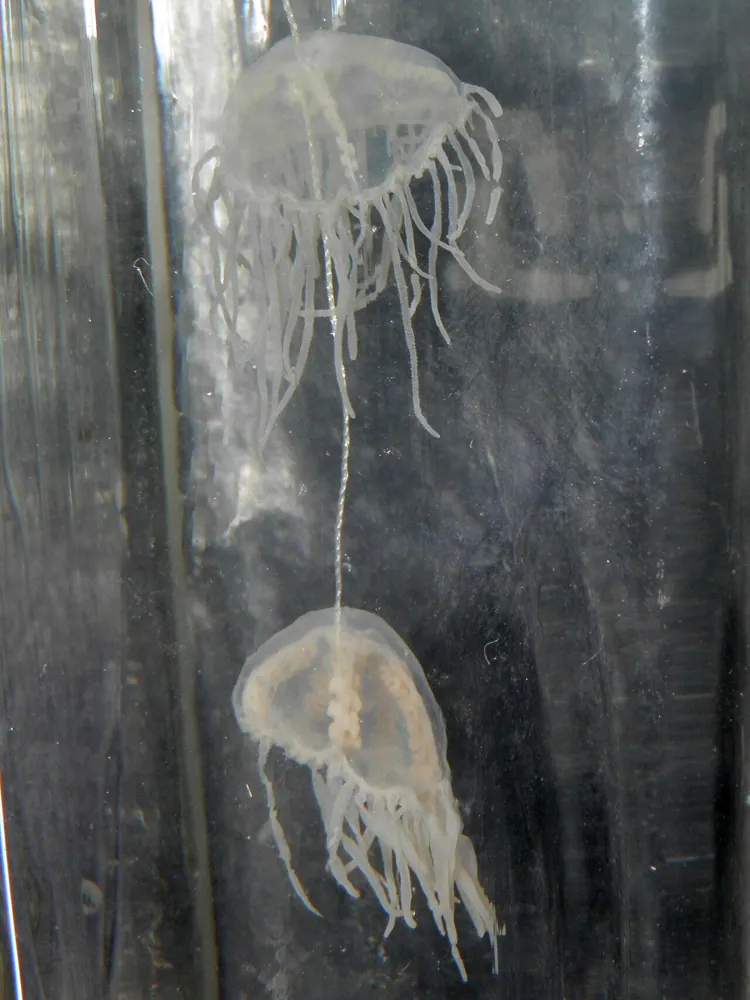
 Kā to atpazīt
- Has a transparent bell lined with about 60 to 80 tentacles1
- Gonads are orange, red or violet in females and yellow-brown in males1
- The tan manubrium (mouth structure) hangs down in the middle of the bell1
- Bell is usually 1 to 3 cm across; a tentacle can be twice the bell's diameter when fully extended1
Indes spēks
Tūkstošiem sīku dzeļšūnu izšaujas, kad tām kaut kas pieskaras.
Ko nodara tā inde?
Its sting can cause pain, a swollen throat, chest tightness, muscle cramps, neuropsychiatric changes (effects on mood, thinking or behaviour) and anaphylactic shock, a severe allergic reaction.1
Cik bīstams tas ir cilvēkiem?
Bīstamība cilvēkiem: NopietnsDzēliens jārāda ārstam. Nāves gadījumi ir ļoti reti.In much of its range the sting is strong enough to cause serious symptoms. Stinging incidents have been reported from East Asia, Europe and the Atlantic coast of the United States. Off North America's northeast Pacific coast, its sting cannot be felt and it is considered harmless to people.1
 Ja tas iedzeļ
- Izkāp no ūdens un noņem visus taustekļus (ar cimdiem vai drānu).
- Tropu kastveida medūzām: lej etiķi uz dzēlieniem vismaz 30 sekundes, sauc palīdzību un esi gatavs veikt atdzīvināšanu (KPR). Fizālijām un vairumam citu: noskalo ar jūras ūdeni, tad ar karstu ūdeni pret sāpēm.
Vienmēr vispirms zvani uz savu ārkārtas numuru (112, 000, 911). Tie ir vispārīgi pirmās palīdzības padomi, nevis medicīniska konsultācija. Pirmās palīdzības pamati
 Esi drošībā
- Nekad neaiztiec, neķer un neķircini savvaļas dzīvnieku, pat mazu, un pat ja tas izskatās aizmidzis vai miris.
- Dod tam vietu. Ja tādu satiec, saglabā mieru, lēnām atkāpies un ļauj tam iet savu ceļu.
- Ja tāds tev iedzeļ: saglabā mieru, nekusties, zvani uz savu ārkārtas numuru (112, 000, 911) vai ātri dodies uz slimnīcu. Atceries, kā tas izskatījās, foto palīdz.
Tas nav nolēmis tevi medīt. Tas izmanto indi, lai noķertu barību vai aizsargātos, un daudz labprātāk paslēptos. Vairāk par drošību
Kur pasaulē?
Cik tas ir liels?
Cik tas ir garš?
 apmēram tikpat garš kā saspraude
Cik liels ir Clinging jellyfish salīdzinājumā ar TEVI?
Tikai matemātika tavā pārlūkā. Nekas netiek saglabāts vai kaut kur nosūtīts.
Cik tas ir ātrs?


Fakti
Some scientists think the clinging jellyfish may be a group of closely related species, because its sting and body shape vary from place to place.1
The jellyfish appear once the water warms to about 17 to 18 °C, so they follow a yearly pattern and sometimes appear in large numbers at once.1
The medusa (jellyfish) stage usually lasts no more than three months, but the polyp stage can last for years.1
Polyps can split into several new polyps by budding.1
In Europe, the species is non-native and has been found in the Mediterranean and along the Atlantic coast from Portugal to Norway and Sweden.1
Mītu grāvējs
Mīts: The clinging jellyfish is harmless everywhere.
Patiesība: Its sting is harmless off the northeast Pacific coast of North America, but it can be strong and dangerous in East Asia, Europe and the Atlantic coast of the United States.1
Indes ekspertiem
- Zinātniskais nosaukums
- Gonionemus vertens
- Grupa
- Medūzas un jūras dzēlēji
- Ģimene
- Olindiidae2
- Secība
- Limnomedusae
- Kontinenti
- Klusais okeāns, Atlantijas okeāns, Okeāni
- Mazuļi
- Medusae release tens of thousands of eggs and sperm into the sea. The fertilised young become planula larvae, which settle on the seabed as tiny polyps.1
- Bīstamība cilvēkiem
- 3 / 5: Nopietns3
No kurienes nāk fakti
- Gonionemus vertens (Wikipedia (CC BY-SA 4.0))
- Gonionemus vertens (iNaturalist): nosaukumi un klasifikācija.
- Venom Wiki: bīstamības līmenis, tipiskais izmērs un ātruma minējums ir mūsu pašu. Paskaties, kā mēs tos aprēķinām: Kā mēs vērtējam bīstamību.
Katram faktam šajā lapā ir numurs, kas norāda uz tā avotu. Ja mēs kaut ko esam sajaukuši, piedod, mēs esam dzīvnieku fani, nevis zinātnisks žurnāls. Uzraksti mums uz [email protected], un mēs to izlabosim.
 Skorpions ir izsalcis! Venom Wiki ir viena cilvēka projekts: bezmaksas, bez reklāmām un bez izsekotājiem. Neliels ziedojums palīdz to uzturēt tiešsaistē.Pabaro skorpionu
Vairāk no tās pašas grupas: Medūzas un jūras dzēlēji
 Austrālijas kastveida medūzaMedūzas un jūras dzēlējiNāvējošsNeaiztikt
 Irukandji jellyfishMedūzas un jūras dzēlējiVar nogalinātNeaiztikt
 Portuguese man o' warMedūzas un jūras dzēlējiVajag ārstuNeaiztikt
 Lion's mane jellyfishMedūzas un jūras dzēlējiTikai sāpNeaiztikt
 Moon jellyfishMedūzas un jūras dzēlējiNekaitīgs
 Common kingslayerMedūzas un jūras dzēlējiVar nogalinātNeaiztikt
Dzīvo arī: Klusais okeāns
 Ģeogrāfiskais konusgliemezisKonusgliemeži un astoņkājiNāvējošs
 Lielais zilgredzenu astoņkājisKonusgliemeži un astoņkājiNāvējošs
 Japānas pūšļzivsCiti toksiski dzīvniekiNāvējošs
 Dienvidu zilgredzenu astoņkājisKonusgliemeži un astoņkājiNāvējošs
 Hawksbill sea turtleCiti toksiski dzīvniekiVar nogalināt
 Reef stonefishIndīgās zivisVar nogalinātNeaiztikt