
 Āfrika
 Āzija
Āzija Eiropa
 Dienvidamerika
 Austrālija un Okeānija
 Antarktīda
 Klusais okeāns
 Atlantijas okeāns
 Indijas okeāns
 Ziemeļu Ledus okeāns
 Vidusjūra
 Sarkanā jūra
 Karību jūra
 Koraļļu jūra
 Dienvidķīnas jūra
 Filipīnu jūra
 Andamanu jūra
 Ziemeļjūra
 Timoras jūra un Arafuras jūra
 Bengālijas līcis
 Kalifornijas līcis
European purseweb spider
 Kodumi
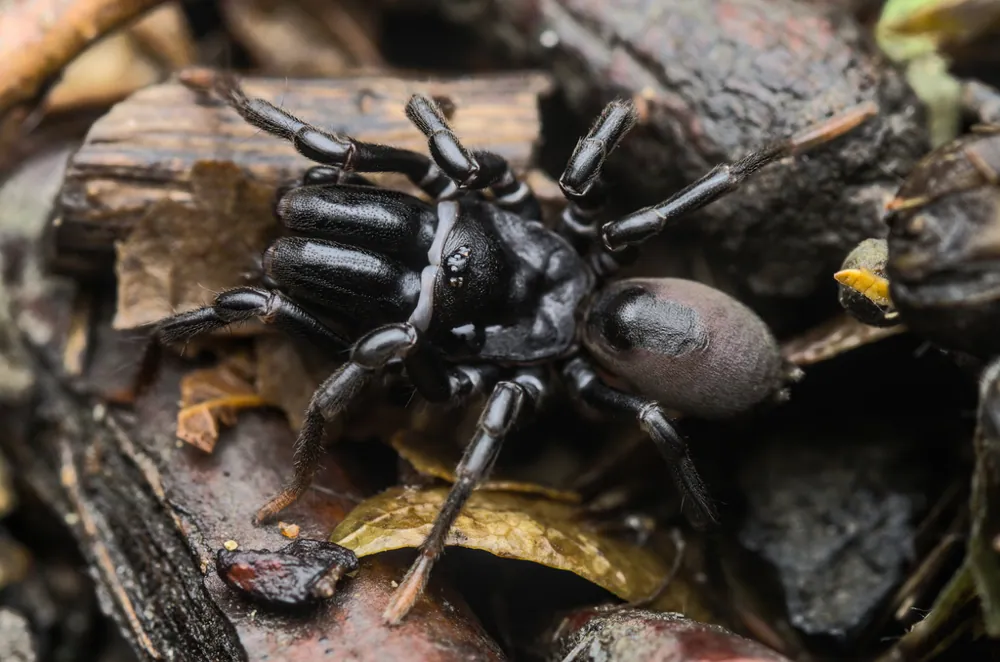
The European purseweb spider is a small, hidden spider that lives in the ground. It is found in mainland Europe, Great Britain and North Africa, and it is the only mygalomorph spider found in the Nordic countries and the United Kingdom. It is special because it builds a silk tube partly under the ground and catches insects that walk onto it.1

 Kā to atpazīt
- Black or brownish in colour1
- Not particularly large: males are 7–9 mm and females are 10–15 mm long1
- Builds a silk tube that is partly underground, with the part above ground covered in leaves and other debris1
- Usually stays inside its web and does not leave except to mate1
- Young spiderlings are often very lightly coloured1
Bieži jauc ar: It looks much like Atypus piceus. Spiderlings of the European purseweb spider are often very lightly coloured, and its three-part posterior spinnerets do not have a light blot, which helps tell them apart.1
Indes spēks
Inde iznāk caur ilkņiem vai zobiem, kad tas iekož.
Cik bīstams tas ir cilvēkiem?
Bīstamība cilvēkiem: VieglsKā bites dzēliens vai mazāk. Cilvēkiem praktiski nekaitīgs. Ja tas iekož
- Nomazgā kodumu un atvēsini to. Meklē medicīnisko palīdzību, ja sāpes ir stipras vai cilvēks jūtas slikti.
Vienmēr vispirms zvani uz savu ārkārtas numuru (112, 000, 911). Tie ir vispārīgi pirmās palīdzības padomi, nevis medicīniska konsultācija. Pirmās palīdzības pamati
 Esi drošībā
- Nekad neaiztiec, neķer un neķircini savvaļas dzīvnieku, pat mazu, un pat ja tas izskatās aizmidzis vai miris.
- Dod tam vietu. Ja tādu satiec, saglabā mieru, lēnām atkāpies un ļauj tam iet savu ceļu.
- Ja tāds tev iekož: saglabā mieru, nekusties, zvani uz savu ārkārtas numuru (112, 000, 911) vai ātri dodies uz slimnīcu. Atceries, kā tas izskatījās, foto palīdz.
Tas nav nolēmis tevi medīt. Tas izmanto indi, lai noķertu barību vai aizsargātos, un daudz labprātāk paslēptos. Vairāk par drošību
Cik tas ir liels?
Cik tas ir garš?
 īsāks par tavu mazo pirkstiņu
 varētu noskriet 100 metrus 330 sekundēs (ātrākajam cilvēkam vajag 9,6)
Cik liels ir European purseweb spider salīdzinājumā ar TEVI?
Tikai matemātika tavā pārlūkā. Nekas netiek saglabāts vai kaut kur nosūtīts.
Cik tas ir ātrs?


Fakti
Its fangs point straight down rather than crossing, as in other mygalomorph spiders.1
Autumn is its mating season. The male enters the female's burrow, where they live together until the male dies soon after mating.1
It is a mygalomorph spider, and it is the only mygalomorph spider found in the Nordic countries and the United Kingdom.1
It becomes sexually mature at about 4 years old.1
Mītu grāvējs
Mīts: The European purseweb spider lives in Ireland.
Patiesība: It was once listed for Ireland, based on a single silk tube found in 1896. This is now thought to be most likely from a plant nursery import, and the species is no longer recognised as living on the island.1
Indes ekspertiem
No kurienes nāk fakti
- Atypus affinis (Wikipedia (CC BY-SA 4.0))
- Atypus affinis (iNaturalist): nosaukumi un klasifikācija.
- Venom Wiki: bīstamības līmenis, tipiskais izmērs un ātruma minējums ir mūsu pašu. Paskaties, kā mēs tos aprēķinām: Kā mēs vērtējam bīstamību.
Katram faktam šajā lapā ir numurs, kas norāda uz tā avotu. Ja mēs kaut ko esam sajaukuši, piedod, mēs esam dzīvnieku fani, nevis zinātnisks žurnāls. Uzraksti mums uz [email protected], un mēs to izlabosim.
 Skorpions ir izsalcis! Venom Wiki ir viena cilvēka projekts: bezmaksas, bez reklāmām un bez izsekotājiem. Neliels ziedojums palīdz to uzturēt tiešsaistē.Pabaro skorpionu
Vairāk no tās pašas grupas: Tarantulas un piltuvtīklu zirnekļi
 Gibraltar funnel-web spiderTarantulas un piltuvtīklu zirnekļiTikai sāp
 Andalusian tarantulaTarantulas un piltuvtīklu zirnekļiNekaitīgs
 Sidnejas piltuvtīklu zirneklisTarantulas un piltuvtīklu zirnekļiNāvējošs
 Goliath birdeaterTarantulas un piltuvtīklu zirnekļiTikai sāp
 Mexican redknee tarantulaTarantulas un piltuvtīklu zirnekļiNekaitīgs
 Northern tree-dwelling funnel-web spiderTarantulas un piltuvtīklu zirnekļiNāvējošs
Dzīvo arī: Eiropa
 Common European adderOdzes un vīperasVajag ārstu
 Spanish flyCiti toksiski dzīvniekiVajag ārstuNeaiztikt
 Common waspBites, lapsenes un sirseņiTikai sāp
 European hornetBites, lapsenes un sirseņiTikai sāp
 Fire salamanderIndesvardes, krupji un tritoniTikai sāpNeaiztikt
 Western honey beeBites, lapsenes un sirseņiTikai sāp