
 Āfrika
 Āzija
Āzija Eiropa
 Dienvidamerika
 Austrālija un Okeānija
 Antarktīda
 Klusais okeāns
 Atlantijas okeāns
 Indijas okeāns
 Ziemeļu Ledus okeāns
 Vidusjūra
 Sarkanā jūra
 Karību jūra
 Koraļļu jūra
 Dienvidķīnas jūra
 Filipīnu jūra
 Andamanu jūra
 Ziemeļjūra
 Timoras jūra un Arafuras jūra
 Bengālijas līcis
 Kalifornijas līcis
Moses sole
 Inde ādā
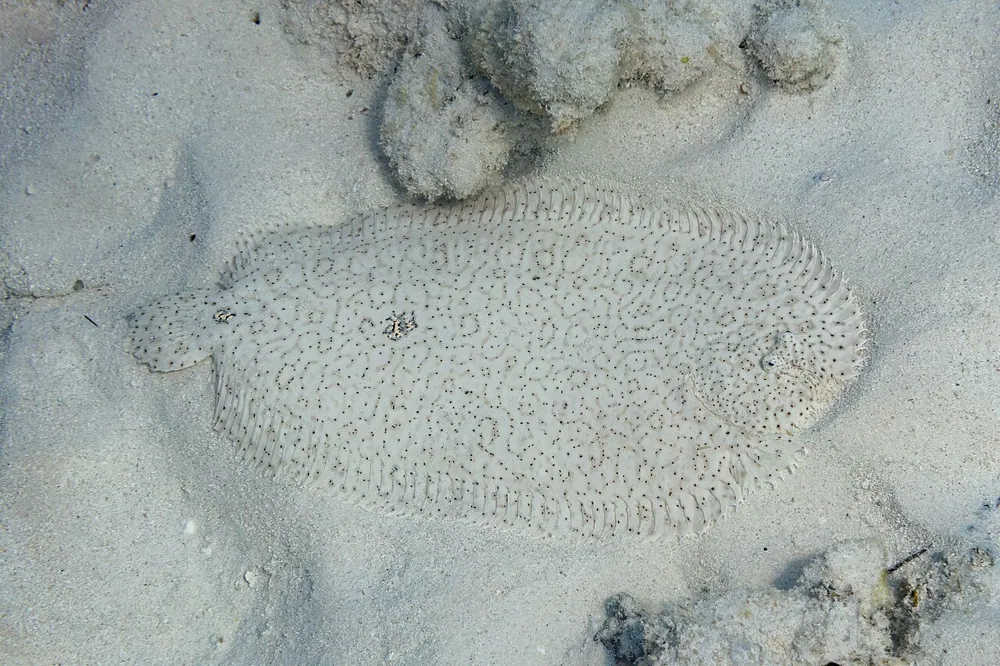
The Moses sole is a flatfish that lives in shallow coastal waters of the western Indian Ocean, from the Red Sea to Sri Lanka and along the east coast of Africa. It hides on the seabed and gives off a milky toxin from its fins to deter predators, including sharks.1

 Kā to atpazīt
- Colour is variable, often whitish, pale brown or pale grey, with irregular dark brown ring-shaped markings1
- Many dark brown spots cover the head, body and fins1
- Normally two brown dots containing yellow flecks sit along the lateral line1
- Adults have a highly compressed, flat-sided body, with both eyes on the right side of the head1
- The rounded tail fin is not joined to the dorsal or cloacal fin1
Bieži jauc ar: Mimic octopuses copy the finless sole by adapting their shape, colour and texture. They can also mimic venomous sea snakes and fish.1
Toksīnu spēks
Tā āda ir toksiska. To ir bīstami aizskart, laizīt vai ēst.
Ko nodara tā toksīni?
The finless sole releases a milky toxin called an ichthyotoxin from the base of its dorsal and cloacal fins. The main toxin, pardaxin, damages cell membranes so that cells leak their contents. It irritates the sensitive gills of predator fish.1
Cik bīstams tas ir cilvēkiem?
Bīstamība cilvēkiem: VieglsKā bites dzēliens vai mazāk. Cilvēkiem praktiski nekaitīgs.It is caught for food and sold fresh, even though its skin secretion is poisonous.1
Ko tas dara, kad ir nobijies?
When threatened, it releases its toxic milky secretion from its fins, and its colour helps it blend in with sandy or pebbled seabeds.1
 Ja kāds tam pieskārās vai to apēda
- Ja kāds to apēda vai pēc tā apēšanas viņam ir simptomi: nekavējoties zvani uz savu ārkārtas numuru vai saindēšanās centru.
Vienmēr vispirms zvani uz savu ārkārtas numuru (112, 000, 911). Tie ir vispārīgi pirmās palīdzības padomi, nevis medicīniska konsultācija. Pirmās palīdzības pamati
 Esi drošībā
- Nekad neaiztiec, neķer un neķircini savvaļas dzīvnieku, pat mazu, un pat ja tas izskatās aizmidzis vai miris.
- Dod tam vietu. Ja tādu satiec, saglabā mieru, lēnām atkāpies un ļauj tam iet savu ceļu.
- Ja tu tam pieskāries vai to apēdi: neberzē acis vai muti, nomazgā rokas un meklē medicīnisko palīdzību.
Tas nav nolēmis tevi medīt. Tā inde ir tikai tāpēc, lai neviens to neapēstu. Vairāk par drošību
Kur pasaulē?
Cik tas ir liels?
Cik tas ir garš?
 tikpat garš kā 6 rotaļu klucīši rindā
Cik liels ir Moses sole salīdzinājumā ar TEVI?
Tikai matemātika tavā pārlūkā. Nekas netiek saglabāts vai kaut kur nosūtīts.
Cik tas ir ātrs?


,_Zanz%C3%ADbar,_Tanzania,_2024-05-31,_DD_32.jpg)
Fakti
One of its toxins, pardaxin-1, is 5 to 10 times more toxic than pardaxin-2 and has unusual shark-repelling properties.1
Its toxin, pardaxin, is used by the fish as a defence against sharks.1
Mimic octopuses copy its shape, colour and texture, and can also copy venomous sea snakes and fish.1
Juveniles have one eye on each side of the head, but as they mature the left eye moves to the right side.1
Eugenie Clark carried out much of the early research on this species.1
No kurienes nāk fakti
- Pardachirus marmoratus (Wikipedia (CC BY-SA 4.0))
- Pardachirus marmoratus (iNaturalist): nosaukumi un klasifikācija.
- Venom Wiki: bīstamības līmenis, tipiskais izmērs un ātruma minējums ir mūsu pašu. Paskaties, kā mēs tos aprēķinām: Kā mēs vērtējam bīstamību.
Katram faktam šajā lapā ir numurs, kas norāda uz tā avotu. Ja mēs kaut ko esam sajaukuši, piedod, mēs esam dzīvnieku fani, nevis zinātnisks žurnāls. Uzraksti mums uz [email protected], un mēs to izlabosim.
 Skorpions ir izsalcis! Venom Wiki ir viena cilvēka projekts: bezmaksas, bez reklāmām un bez izsekotājiem. Neliels ziedojums palīdz to uzturēt tiešsaistē.Pabaro skorpionu
Vairāk no tās pašas grupas: Citi toksiski dzīvnieki
 Japanese pufferfishCiti toksiski dzīvniekiNāvējošs
 Hawksbill sea turtleCiti toksiski dzīvniekiVar nogalināt
 Greenland sharkCiti toksiski dzīvniekiTikai sāp
 Silver-cheeked toadfishCiti toksiski dzīvniekiNāvējošs
 Blackspotted pufferCiti toksiski dzīvniekiVar nogalināt
 White-spotted pufferCiti toksiski dzīvniekiVar nogalināt
Dzīvo arī: Klusais okeāns
 Australian box jellyfishMedūzas un jūras dzēlējiNāvējošsNeaiztikt
 Geography coneKonusgliemeži un astoņkājiNāvējošs
 Greater blue-ringed octopusKonusgliemeži un astoņkājiNāvējošs
 Southern blue-ringed octopusKonusgliemeži un astoņkājiNāvējošs
 Irukandji jellyfishMedūzas un jūras dzēlējiVar nogalinātNeaiztikt
 Reef stonefishIndīgās zivisVar nogalinātNeaiztikt