
 Āfrika
 Āzija
Āzija Eiropa
 Dienvidamerika
 Austrālija un Okeānija
 Antarktīda
 Klusais okeāns
 Atlantijas okeāns
 Indijas okeāns
 Ziemeļu Ledus okeāns
 Vidusjūra
 Sarkanā jūra
 Karību jūra
 Koraļļu jūra
 Dienvidķīnas jūra
 Filipīnu jūra
 Andamanu jūra
 Ziemeļjūra
 Timoras jūra un Arafuras jūra
 Bengālijas līcis
 Kalifornijas līcis
Spotted ratfish
 Indīgi dzeloņi
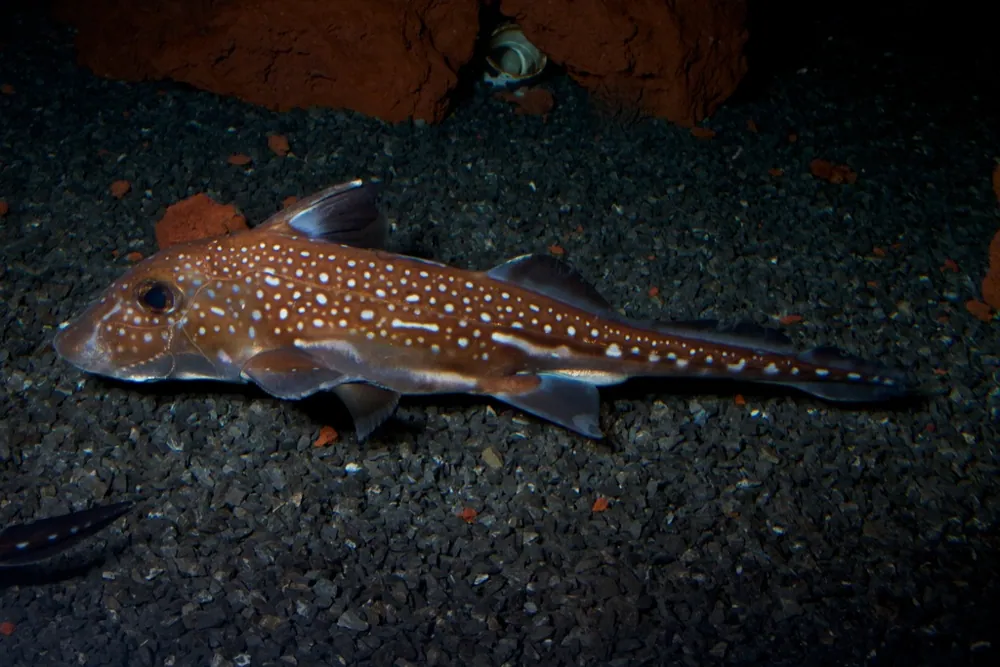
The spotted ratfish is a chimaera, a cartilage fish related to sharks and rays. It lives in the northeastern Pacific Ocean, and divers often see it at night in the Pacific Northwest. It gets its name from its pointed, rat-like tail.1



 Kā to atpazīt
- Smooth, scaleless skin that is silvery-bronze, often with gold, blue and green shine1
- Speckled white spots along the back1
- Large, triangular pectoral fins that stick straight out from the sides, like airplane wings1
- A pointed, rat-like tail that makes up almost half of its total length1
- Large emerald green eyes and a duckbill-shaped snout1
Indes spēks
Indi nes asi dzeloņi. Ja tam uzkāp vai to satver, sāp.
Ko nodara tā inde?
The spine on the leading edge of its dorsal fin is grooved and connected to a venom gland at its base. The venom is mildly toxic. A sting from the spine causes a painful wound.1
Cik bīstams tas ir cilvēkiem?
Bīstamība cilvēkiem: SāpīgsTas var ļoti sāpēt, bet gandrīz nekad nav nopietni.It does not present a serious danger to humans, but its spines can cause painful wounds. Harbor seals have been known to die after swallowing spotted ratfish, when a spine pierced the stomach or esophagus.1
Ko tas dara, kad ir nobijies?
It usually keeps a safe distance from divers and is not aggressive, but it will defend its territory with the spine on its dorsal fin if it feels invaded.1
 Ja tā dzeloņi tevi sadur
- Ieliec brūci karstā ūdenī, tik karstā, cik cilvēks var izturēt, neapdedzinoties (pārbaudi ar savu roku), uz 30 līdz 90 minūtēm. Meklē medicīnisko palīdzību, īpaši pēc akmeņzivīm un dzeloņrajām.
Vienmēr vispirms zvani uz savu ārkārtas numuru (112, 000, 911). Tie ir vispārīgi pirmās palīdzības padomi, nevis medicīniska konsultācija. Pirmās palīdzības pamati
 Esi drošībā
- Nekad neaiztiec, neķer un neķircini savvaļas dzīvnieku, pat mazu, un pat ja tas izskatās aizmidzis vai miris.
- Dod tam vietu. Ja tādu satiec, saglabā mieru, lēnām atkāpies un ļauj tam iet savu ceļu.
- Ja tā dzeloņi tevi sadur: saglabā mieru, nekusties, zvani uz savu ārkārtas numuru (112, 000, 911) vai ātri dodies uz slimnīcu. Atceries, kā tas izskatījās, foto palīdz.
Tas nav nolēmis tevi medīt. Tas izmanto indi, lai noķertu barību vai aizsargātos, un daudz labprātāk paslēptos. Vairāk par drošību
Kur pasaulē?
Cik tas ir liels?
Cik tas ir garš?
 tikpat garš kā 2 mājas kaķi no deguna līdz astei
 tikpat garš kā 5 banāni rindā viens aiz otra
 varētu nopeldēt liela peldbaseina garumu (50 m) 12 sekundēs
Cik liels ir Spotted ratfish salīdzinājumā ar TEVI?
Tikai matemātika tavā pārlūkā. Nekas netiek saglabāts vai kaut kur nosūtīts.
Cik tas ir ātrs?

Fakti
Adult males have a club-like cephalic clasper on the head, an organ not found in any other vertebrate, which they use to hold on to females during courtship.1
Its large eyes reflect light, much like the eyes of a cat.1
It swims with its large pectoral fins, and its barrel rolls and corkscrew turns have been described as aquatic flight.1
Its teeth are plate-shaped, mineralised and permanent, unlike the easily replaced teeth of sharks, and they help it grind prey.1
Its ampullary organs on the head detect electric fields, and they are homologous to the ampullae of Lorenzini found in sharks and rays.1
Its meat is not typically eaten by humans and it is not commercially caught.1
Indes ekspertiem
- Zinātniskais nosaukums
- Hydrolagus colliei
- Grupa
- Indīgās zivis
- Ģimene
- Chimaeridae2
- Secība
- Chimaeriformes
- Kontinenti
- Klusais okeāns, Kalifornijas līcis, Okeāni
- Mazuļi
- Like some sharks, it lays eggs; the female releases up to two fertilised eggs every 10–14 days in spring to autumn, and development can take up to a year.1
- Bīstamība cilvēkiem
- 2 / 5: Sāpīgs3
No kurienes nāk fakti
- Spotted ratfish (Wikipedia (CC BY-SA 4.0))
- Hydrolagus colliei (iNaturalist): nosaukumi un klasifikācija.
- Venom Wiki: bīstamības līmenis, tipiskais izmērs un ātruma minējums ir mūsu pašu. Paskaties, kā mēs tos aprēķinām: Kā mēs vērtējam bīstamību.
Katram faktam šajā lapā ir numurs, kas norāda uz tā avotu. Ja mēs kaut ko esam sajaukuši, piedod, mēs esam dzīvnieku fani, nevis zinātnisks žurnāls. Uzraksti mums uz [email protected], un mēs to izlabosim.
 Skorpions ir izsalcis! Venom Wiki ir viena cilvēka projekts: bezmaksas, bez reklāmām un bez izsekotājiem. Neliels ziedojums palīdz to uzturēt tiešsaistē.Pabaro skorpionu
Vairāk no tās pašas grupas: Indīgās zivis
 Reef stonefish
 Red lionfish
 Estuarine stonefish
 Short-tail stingray
 Striped eel catfish
 Bluespotted ribbontail ray
Dzīvo arī: Klusais okeāns
 Australian box jellyfishMedūzas un jūras dzēlējiNāvējošsNeaiztikt
 Geography coneKonusgliemeži un astoņkājiNāvējošs
 Greater blue-ringed octopusKonusgliemeži un astoņkājiNāvējošs
 Japanese pufferfishCiti toksiski dzīvniekiNāvējošs
 Southern blue-ringed octopusKonusgliemeži un astoņkājiNāvējošs
 Hawksbill sea turtleCiti toksiski dzīvniekiVar nogalināt