
 Āfrika
 Āzija
Āzija Eiropa
 Dienvidamerika
 Austrālija un Okeānija
 Antarktīda
 Klusais okeāns
 Atlantijas okeāns
 Indijas okeāns
 Ziemeļu Ledus okeāns
 Vidusjūra
 Sarkanā jūra
 Karību jūra
 Koraļļu jūra
 Dienvidķīnas jūra
 Filipīnu jūra
 Andamanu jūra
 Ziemeļjūra
 Timoras jūra un Arafuras jūra
 Bengālijas līcis
 Kalifornijas līcis
West African carpet viper
 Kodumi
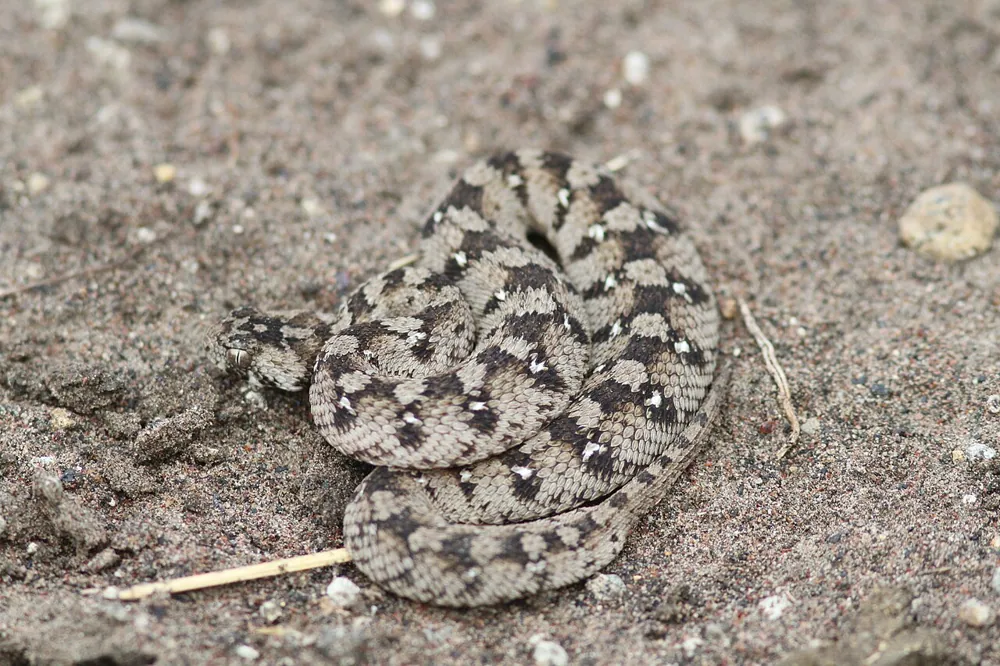
The West African carpet viper is a small, highly venomous snake that lives in the savanna of West Africa. Its bite is one of the most dangerous of any snake in Africa. It is known for its row of eye-spots and its aggressive, alarm-like behaviour when threatened.1



 Kā to atpazīt
- It has bulging eyes and a short snout, typical of vipers in the genus Echis.1
- A distinctive series of eye-spots, called ocelli, runs the length of its body.1
- It is terrestrial, so it lives on the ground rather than in trees.1
- It is mostly active at night and at dusk (nocturnal and crepuscular).1
Bieži jauc ar: Older records from Senegal, Guinea-Bissau and Guinea refer to Echis jogeri, and those from eastern Nigeria, Cameroon and southern Chad refer to Echis romani. These are now recognised as separate species. Echis leucogaster is more common north of the 15th parallel, where this snake is rarely found.1
Indes spēks
Inde iznāk caur ilkņiem vai zobiem, kad tas iekož.
Ko nodara tā inde?
Its venom is a mix of procoagulants, anticoagulants, haemorrhagins, nephrotoxins and necrotoxins. Procoagulants make blood clot, while anticoagulants stop it clotting, so bleeding can occur. Nephrotoxins damage the kidneys, and necrotoxins kill tissue around the bite. Local symptoms include pain, swelling, bleeding, tissue death (necrosis) and disfigurement, which may lead to amputation. Whole-body symptoms include coagulopathy (blood clotting problems), haemorrhages, shock, kidney failure and blindness.1
Cik bīstams tas ir cilvēkiem?
Bīstamība cilvēkiem: NāvējošsViens no bīstamākajiem dzīvniekiem pasaulē.The West African carpet viper causes more human deaths from snakebite than all other African snakes combined. The envenoming rate is 80%, and the lethality rate is 10–20%.1
 Labas ziņas: ārstiem pret šo ir zāles (pretinde) vai ārstēšana.1
Ko tas dara, kad ir nobijies?
When threatened, it forms its body into an S shape and rubs its scales together to make an alert sound.1
 Ja tas iekož
- Turi cilvēku nekustīgu un mierīgu, turi iekosto ekstremitāti sirds augstumā, novelc gredzenus un visu, kas cieši spiež, un ātri nogādā slimnīcā.
Vienmēr vispirms zvani uz savu ārkārtas numuru (112, 000, 911). Tie ir vispārīgi pirmās palīdzības padomi, nevis medicīniska konsultācija. Pirmās palīdzības pamati
 Esi drošībā
- Nekad neaiztiec, neķer un neķircini savvaļas dzīvnieku, pat mazu, un pat ja tas izskatās aizmidzis vai miris.
- Dod tam vietu. Ja tādu satiec, saglabā mieru, lēnām atkāpies un ļauj tam iet savu ceļu.
- Ja tāds tev iekož: saglabā mieru, nekusties, zvani uz savu ārkārtas numuru (112, 000, 911) vai ātri dodies uz slimnīcu. Atceries, kā tas izskatījās, foto palīdz.
Tas nav nolēmis tevi medīt. Tas izmanto indi, lai noķertu barību vai aizsargātos, un daudz labprātāk paslēptos. Vairāk par drošību
Cik tas ir liels?
Cik tas ir garš?
 tikpat garš kā 4 banāni rindā viens aiz otra
 varētu noskriet 100 metrus 110 sekundēs (ātrākajam cilvēkam vajag 9,6)
Cik liels ir West African carpet viper salīdzinājumā ar TEVI?
Tikai matemātika tavā pārlūkā. Nekas netiek saglabāts vai kaut kur nosūtīts.
Cik tas ir ātrs?


Fakti
It makes an alert sound by rubbing its scales together while in an S-shaped posture.1
Hatchlings are already 10–12 cm long, which is a sizeable fraction of an adult's average length.1
Its scientific name, ocellatus, comes from the row of eye-spots, called ocelli, that runs along its body.1
Some individual snakes have been found far from its main range, including in the Central African Republic and central Sudan.1
Indes ekspertiem
No kurienes nāk fakti
- Echis ocellatus (Wikipedia (CC BY-SA 4.0))
- Echis ocellatus (iNaturalist): nosaukumi un klasifikācija.
- Venom Wiki: bīstamības līmenis, tipiskais izmērs un ātruma minējums ir mūsu pašu. Paskaties, kā mēs tos aprēķinām: Kā mēs vērtējam bīstamību.
Katram faktam šajā lapā ir numurs, kas norāda uz tā avotu. Ja mēs kaut ko esam sajaukuši, piedod, mēs esam dzīvnieku fani, nevis zinātnisks žurnāls. Uzraksti mums uz [email protected], un mēs to izlabosim.
 Skorpions ir izsalcis! Venom Wiki ir viena cilvēka projekts: bezmaksas, bez reklāmām un bez izsekotājiem. Neliels ziedojums palīdz to uzturēt tiešsaistē.Pabaro skorpionu
 Pūšodze
 Gaboon viper
 Northeast African carpet viper
 Rhinoceros viper
 West African Gaboon viper
 Horned adder
 Melnā mamba
 Palestīnas dzeltenais skorpions
 Ēģiptes kobra
 Boomslang
 Fat-tailed scorpion
 Western honey bee