
 आफ्रिका
 आशिया
आशिया युरोप
युरोप दक्षिण अमेरिका
 ऑस्ट्रेलिया आणि ओशनिया
 अंटार्क्टिका
 प्रशांत महासागर
 अटलांटिक महासागर
 हिंदी महासागर
 आर्क्टिक महासागर
 भूमध्य समुद्र
 तांबडा समुद्र
 कॅरिबियन समुद्र
 कोरल समुद्र
 दक्षिण चीन समुद्र
 फिलिपीन समुद्र
 अंदमान समुद्र
 उत्तर समुद्र
 तिमोर आणि अराफुरा समुद्र
 बंगालचा उपसागर
 कॅलिफोर्नियाचे आखात
Greater blue-ringed octopus
 चावा
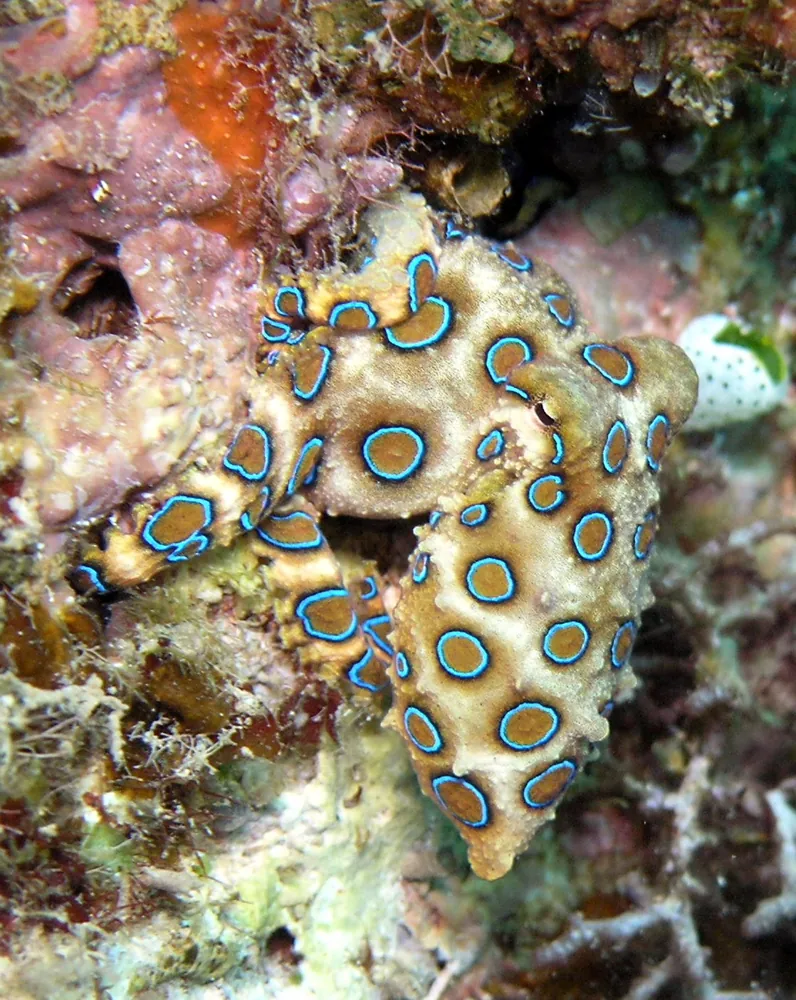
चावाThe greater blue-ringed octopus is a small sea creature that lives in the warm shallow waters of the Indo-West Pacific, including around Australia. It is one of the most venomous marine animals in the world, so knowing what it looks like matters.1



 त्याला कसं ओळखायचं
- A small octopus, up to 10 cm with its arms included, weighing about 80 grams on average.1
- Electric blue rings, about 7 to 8 mm across, roughly 60 of them, spread over its whole skin.1
- The rings flash iridescent blue as a warning signal, each flash lasting about a third of a second.1
- Its body colour varies from yellow ochre to light brown, or whitish when inactive.1
- Blue lines run through its eyes.1
विषाची ताकद
चावताना विष त्याच्या विषदंतांतून किंवा दातांतून बाहेर येतं.
त्याच्या दंशातलं विष काय करतं?
Its venom contains tetrodotoxin (TTX), a powerful neurotoxin, which is a poison that attacks the nerves. It paralyses the muscles needed for movement, and in people it can lead to death through respiratory paralysis, which means the breathing muscles stop working. Symptoms include tingling and numbness of the face and lips, sweating, severe headaches, dizziness, speech problems, weakness and vomiting. Symptoms can appear between 15 minutes and four hours after a bite, and the victim stays conscious throughout.1
तो माणसांसाठी किती धोकादायक आहे?
माणसांना धोका: प्राणघातकजगातल्या सगळ्यात धोकादायक प्राण्यांपैकी एक.The bite is capable of being fatal to humans. The bite is painless, so a person may not notice it. Children are more sensitive to the toxin. Death can occur between 20 minutes and 24 hours after symptoms begin.1
घाबरल्यावर तो काय करतो?
It flashes its blue rings as a warning to predators, and it uses its venom to defend itself.1
 जर तो चावला तर
- दाब देऊन हालचालबंदी (प्रेशर इमोबिलायझेशन): चाव्यावर घट्ट लवचिक पट्टी (इलॅस्टिक बँडेज) गुंडाळ आणि मग संपूर्ण हात किंवा पाय वरपर्यंत गुंडाळ, फळी (स्प्लिंट) लावून त्याला आधार दे, आणि मदत येईपर्यंत व्यक्तीला पूर्णपणे स्थिर ठेव.
- ब्लू-रिंग्ड ऑक्टोपस किंवा कोन शंख माणूस शुद्धीवर असतानाच त्याचा श्वास थांबवू शकतो: मदतीसाठी हाक मार आणि रुग्णवाहिका येऊन ताबा घेईपर्यंत कृत्रिम श्वास द्यायला तयार राहा.
नेहमी आधी तुझा आपत्कालीन क्रमांक (112, 000, 911) लाव. ही प्रथमोपचाराची सर्वसाधारण माहिती आहे, वैद्यकीय सल्ला नाही. प्रथमोपचाराच्या मूलभूत गोष्टी
 सुरक्षित राहा
- जंगली प्राण्याला कधीही हात लावू नकोस, पकडू नकोस किंवा छेडू नकोस, अगदी लहान असला तरी, आणि झोपलेला किंवा मेलेला दिसत असला तरी.
- त्याला जागा दे. तो समोर आला तर शांत राहा, हळूहळू मागे हो आणि त्याला त्याच्या वाटेने जाऊ दे.
- जर एखादा तुला चावला: शांत राहा, हालचाल करू नकोस, तुझा आपत्कालीन क्रमांक (112, 000, 911) लाव किंवा पटकन रुग्णालयात पोहोच. तो कसा दिसत होता ते लक्षात ठेव, फोटो उपयोगी पडतो.
तो तुझ्या मागे लागलेला नाही. तो विषाचा वापर अन्न पकडण्यासाठी किंवा स्वतःच्या बचावासाठी करतो, आणि त्याला लपून राहणंच जास्त आवडतं. सुरक्षित राहण्याबद्दल आणखी
जगात कुठे?
तो किती मोठा आहे?
तो किती लांब आहे?
 रांगेत ठेवलेल्या 3 खेळण्यातल्या ठोकळ्यांइतका लांब
 7.2 सेकंदांत मोठ्या जलतरण तलावाची लांबी (50 मी) पोहू शकेल
Greater blue-ringed octopus तुझ्या तुलनेत किती मोठा आहे?
तुझ्या ब्राउझरमधलं फक्त गणित. काहीही सेव्ह होत नाही किंवा कुठेही पाठवलं जात नाही.
तो किती वेगवान आहे?

माहिती
The greater blue-ringed octopus is one of the most venomous marine animals in the world, despite being small.1
Its venom contains tetrodotoxin, the same toxin found in pufferfish.1
There is no known antidote or antitoxin for tetrodotoxin, and the toxin does not break down when heated or boiled.1
Its blue rings are a warning signal to predators, showing that it is highly venomous.1
Males die after mating, and females die after guarding their eggs because they refuse to eat.1
गैरसमज मोडणारा
गैरसमज: A small octopus is harmless.
खरं: Despite its small size, its bite can be deadly to humans.1
विषतज्ज्ञांसाठी
- शास्त्रीय नाव
- Hapalochlaena lunulata
- गट
- कोन शंख आणि ऑक्टोपस
- कुटुंब
- Octopodidae2
- क्रम
- Octopoda
- खंड
- हिंदी महासागर, प्रशांत महासागर, कोरल समुद्र, फिलिपीन समुद्र, तिमोर आणि अराफुरा समुद्र, महासागर
- पिल्लं
- The female lays 50 to 100 eggs, which she carries under her arms for about a month. The young hatch as tiny planktonic paralarvae, about the size of a pea.1
- आयुर्मान
- सुमारे 2 वर्षे1
- माणसांना धोका
- 5 / 5: प्राणघातक3
माहिती कुठून येते
- Greater blue-ringed octopus (Wikipedia (CC BY-SA 4.0))
- Hapalochlaena lunulata (iNaturalist): नावे आणि वर्गीकरण.
- Venom Wiki: धोक्याची पातळी, सामान्य आकार आणि वेगाचा अंदाज हे आमचे स्वतःचे आहेत. आम्ही ते कसे ठरवतो ते बघ: आम्ही धोका कसा ठरवतो.
या पानावरच्या प्रत्येक माहितीसोबत एक क्रमांक आहे जो तिच्या स्रोताकडे निर्देश करतो. आमचं काही चुकलं असेल तर माफ कर, आम्ही प्राणीप्रेमी आहोत, विज्ञान नियतकालिक नाही. आम्हाला [email protected] वर कळव, आम्ही दुरुस्त करू.
 विंचवाला भूक लागली आहे! Venom Wiki हा एका माणसाचा प्रकल्प आहे: मोफत, जाहिराती नाहीत आणि ट्रॅकर नाहीत. एक छोटीशी टिप तो ऑनलाइन ठेवायला मदत करते.विंचवाला खायला दे
याच गटातले आणखी: कोन शंख आणि ऑक्टोपस
 Geography cone
 Southern blue-ringed octopus
 Blue sea dragon
 Common octopus
 Giant Pacific octopus
 Blue-lined octopus
इथेही राहतो: हिंदी महासागर
 Australian box jellyfishजेलीफिश आणि डंख मारणारे समुद्री जीवप्राणघातकहात लावू नकोस
 Hawksbill sea turtleइतर विषयुक्त प्राणीजीव घेऊ शकतो
 Irukandji jellyfishजेलीफिश आणि डंख मारणारे समुद्री जीवजीव घेऊ शकतोहात लावू नकोस
 Reef stonefishविषारी मासेजीव घेऊ शकतोहात लावू नकोस
 Crown-of-thorns starfishसमुद्री अर्चिन, तारामासे आणि वर्मडॉक्टरची गरजहात लावू नकोस
 Portuguese man o' warजेलीफिश आणि डंख मारणारे समुद्री जीवडॉक्टरची गरजहात लावू नकोस