
 Afrika
 Asia
Asia Eropah
 Amerika Selatan
 Australia & Oceania
 Antartika
 Lautan Pasifik
 Lautan Atlantik
 Lautan Hindi
 Lautan Artik
 Laut Mediterranean
 Laut Merah
 Laut Caribbean
 Laut Karang
 Laut China Selatan
 Laut Filipina
 Laut Andaman
 Laut Utara
 Laut Timor & Laut Arafura
 Teluk Benggala
 Teluk California
Dugite
 Gigitan
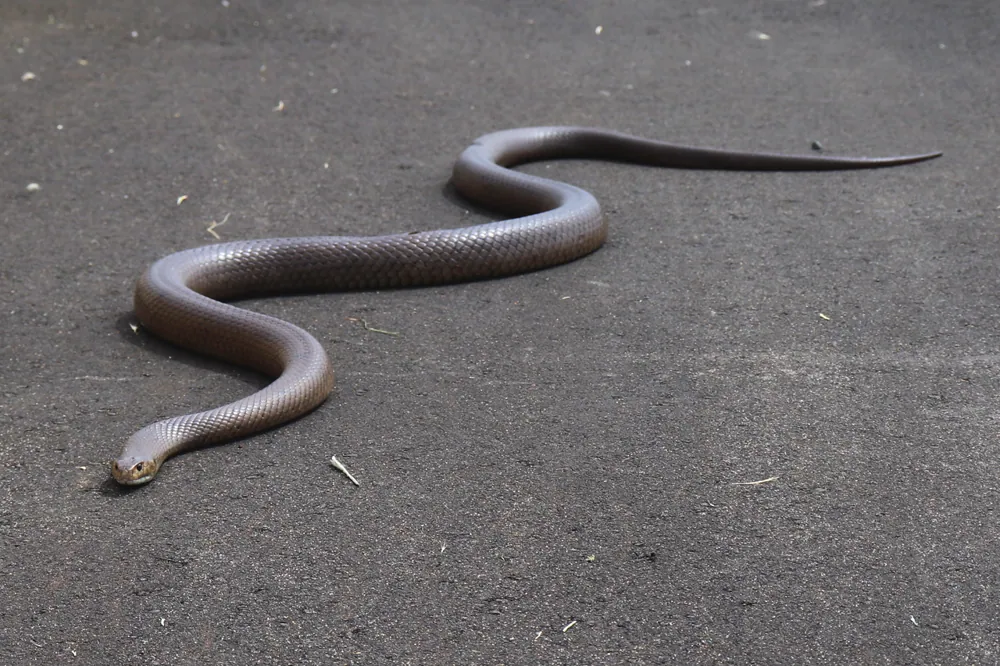
The dugite is a highly venomous snake found in southern Western Australia and in remote coastal parts of western South Australia. Its venom is potentially one of the most lethal in the world, so it is a snake to treat with great respect. It is common in and around Perth, where it often shelters near buildings.1



 Cara mengenalinya
- Coloured grey, green or brown, but the colours vary widely between individuals, so colour alone is not a reliable guide.1
- Black scales may be scattered over the body.1
- Relatively large scales with a semi-glossy look.1
- The head is rather small and not clearly separate from the neck.1
- Long and slender body, typically about 1.5 metres in total length.1
Kuasa bisa
Bisa keluar melalui taring atau giginya apabila ia menggigit.
Apa kesan bisanya?
The venom has coagulopathic and procoagulant effects, meaning it disturbs the way blood clots. It is potentially one of the most lethal venoms in the world. In a 2011 case, a boy bitten by a dugite was temporarily paralysed, showing that the venom can affect the nerves and muscles as well as the blood.1
Berapa bahaya ia kepada manusia?
Bahaya kepada manusia: Sangat berbahayaIa boleh membunuh orang yang tidak mendapat rawatan.Dugites are potentially lethal. They generally avoid biting people, but the risk of encounters rises during the mating season in October and November. The last recorded human death attributed to a dugite was in August 2015 in South Fremantle. In 2011 a seven-year-old boy was bitten and temporarily paralysed, and he made a full recovery.1
 Berita baik: doktor ada ubat (antibisa) atau rawatan untuk ini.1
Apa yang ia buat apabila takut?
When disturbed they are very shy and often slither away, but they will defend themselves if cornered.1
 Jika ia menggigit
- Prompt medical attention is essential after a bite. In a December 2020 case, a three-year-old girl bitten by a snake believed to be a dugite was quickly immobilised by her grandmother, who wrapped her legs in pressure bandages. She was treated with antivenom in hospital and made a full recovery.1
- Imobilisasi tekanan: balut tempat gigitan dengan pembalut elastik secara kukuh, kemudian teruskan ke atas sepanjang seluruh anggota, pasang bidai, dan pastikan orang itu langsung tidak bergerak sehingga bantuan tiba.
- Jangan basuh tempat gigitan: hospital boleh menguji bisa yang tertinggal pada kulit untuk memilih antibisa yang betul.
Sentiasa hubungi nombor kecemasan dahulu (112, 000, 911). Ini panduan pertolongan cemas umum, bukan nasihat perubatan. Asas pertolongan cemas
 Kekal selamat
- Jangan sesekali sentuh, tangkap atau usik haiwan liar, walaupun yang kecil, dan walaupun ia nampak tidur atau mati.
- Beri ia ruang. Jika kamu terjumpa, bertenang, undur perlahan-lahan dan biarkan ia pergi.
- Jika ia menggigit kamu: bertenang, jangan bergerak, hubungi nombor kecemasan (112, 000, 911) atau pergi ke hospital dengan segera. Ingat rupanya, gambar boleh membantu.
Ia bukan mahu memburu kamu. Ia guna bisanya untuk menangkap makanan atau melindungi diri, dan ia lebih suka bersembunyi. Lagi tentang keselamatan
Di mana di dunia?
Berapa besar ia?
Berapa panjang ia?
 sepanjang 4 ekor kucing rumah dari hidung ke ekor
 sepanjang 11 biji pisang disusun hujung ke hujung
 boleh melepasi 100 meter dalam 46 saat (manusia paling laju perlukan 9.6)
Berapa besar Dugite berbanding KAMU?
Hanya matematik dalam pelayar kamu. Tiada apa yang disimpan atau dihantar ke mana-mana.
Berapa laju ia?


Fakta
Its venom is potentially one of the most lethal in the world.1
Dugites have become more common because of the house mouse, which is one of their main foods.1
Dugites can lay two clutches of eggs in the same season when conditions are good.1
The Irish activist John Boyle O'Reilly wrote a poem called The Dukite Snake, published in his 1878 collection Songs, Legends and Ballads, based on a bushman's myth.1
In winter, dugites burrow.1
Pemecah mitos
Mitos: Dugites are aggressive and will chase people.
Hakikat: Dugites are very shy and usually slither away when disturbed. They generally avoid biting people, but they will defend themselves if cornered.1
Untuk pakar bisa
- Nama saintifik
- Pseudonaja affinis
- Kumpulan
- Ular Australia
- Keluarga
- Elapidae2
- Susunan
- Squamata
- Benua-benua
- Australia & Oceania
- Anak
- Dugites lay eggs, typically around 30 at a time, and leave them to hatch on their own after about 65 days. Under good conditions, they can lay two clutches in one season.1
- Bahaya kepada manusia
- 4 / 5: Sangat berbahaya3
Dari mana fakta datang
- Dugite (Wikipedia (CC BY-SA 4.0))
- Pseudonaja affinis (iNaturalist): nama dan pengelasan.
- Venom Wiki: tahap bahaya, saiz biasa dan anggaran kelajuan adalah penilaian kami sendiri. Lihat cara kami mengiranya: Cara kami menilai bahaya.
Setiap fakta di halaman ini ada nombor yang menunjuk kepada sumbernya. Jika kami tersilap, maaf, kami peminat haiwan, bukan jurnal sains. Beritahu kami di [email protected] dan kami akan betulkan.
 Kala jengking lapar! Venom Wiki ialah projek seorang lelaki: percuma, tanpa iklan dan tanpa penjejak. Sedikit sumbangan membantu memastikannya terus dalam talian.Beri kala jengking makan
Lagi dari kumpulan yang sama: Ular Australia
 Coastal taipan
 Common death adder
 Eastern brown snake
 Taipan pedalaman
 Ular harimau
 Collett's snake
.png)
Juga hidup di: Australia & Oceania
 Sydney funnel-web spiderTarantula & labah-labah corongMembawa maut
 Redback spiderLabah-labahPerlu jumpa doktor
 Brown tree snakeUlar bertaring belakangSakit sahaja
 Hooded pitohuiHaiwan beracun lainSakit sahajaJangan sentuh
 PlatypusMamalia berbisaSakit sahaja
 Northern tree-dwelling funnel-web spiderTarantula & labah-labah corongMembawa maut