
 Afrika
 Asia
Asia Eropah
 Amerika Selatan
 Australia & Oceania
 Antartika
 Lautan Pasifik
 Lautan Atlantik
 Lautan Hindi
 Lautan Artik
 Laut Mediterranean
 Laut Merah
 Laut Caribbean
 Laut Karang
 Laut China Selatan
 Laut Filipina
 Laut Andaman
 Laut Utara
 Laut Timor & Laut Arafura
 Teluk Benggala
 Teluk California
Greenland shark
 Beracun jika dimakan
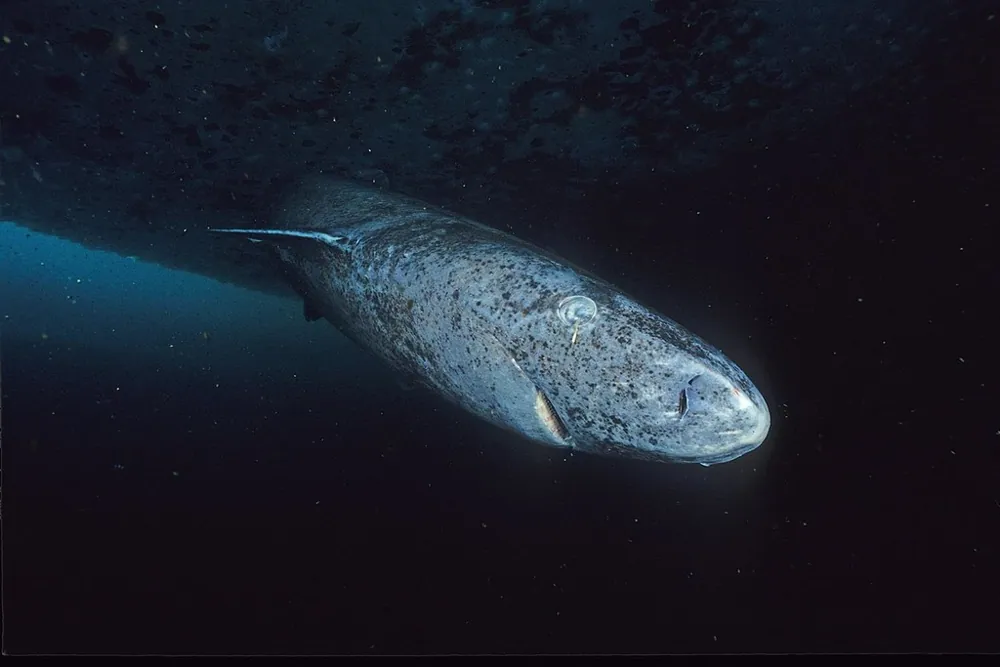
The Greenland shark is a huge, slow shark that lives in the cold, deep waters of the North Atlantic and Arctic Oceans. It is famous for living longer than any known vertebrate (animal with a backbone). Its flesh is poisonous to eat unless it is specially prepared.1



 Cara mengenalinya
- A thickset, heavy body with a short, rounded snout1
- Small eyes and small dorsal and pectoral fins1
- Five very small gill openings for its size1
- Colour ranges from pale creamy-grey to blackish-brown, usually uniform, sometimes with whitish spots or faint dark streaks on the back1
- Often has small parasitic copepods (crustaceans) attached to its eyes1
Kuasa racun
Ia hanya berbahaya jika ada yang memakannya.
Apa kesan racunnya?
The shark is not venomous. Its meat is poisonous to mammals because it contains high levels of trimethylamine N-oxide (TMAO), a natural chemical that makes the flesh toxic.1
Berapa bahaya ia kepada manusia?
Bahaya kepada manusia: MenyakitkanIa boleh jadi sangat sakit, tetapi hampir tidak pernah serius.Greenland sharks are not considered a threat to people, because they live deep in remote, cold waters. Only one possible attack is recorded, in 1936, and it was never linked to this species. One unverified report from around 1859 describes a human leg found in a shark's stomach.1
Apa yang ia buat apabila takut?
When hauled onto a boat, it thrashes its tail so violently that it is dangerous to stand near it, and its muscles can still twitch after death.1
 Jika seseorang menyentuh atau memakannya
- Jika seseorang memakannya atau ada simptom selepas memakannya: hubungi nombor kecemasan atau pusat racun dengan segera.
Sentiasa hubungi nombor kecemasan dahulu (112, 000, 911). Ini panduan pertolongan cemas umum, bukan nasihat perubatan. Asas pertolongan cemas
 Kekal selamat
- Jangan sesekali sentuh, tangkap atau usik haiwan liar, walaupun yang kecil, dan walaupun ia nampak tidur atau mati.
- Beri ia ruang. Jika kamu terjumpa, bertenang, undur perlahan-lahan dan biarkan ia pergi.
- Jika kamu menyentuh atau memakannya: jangan gosok mata atau mulut, basuh tangan dan dapatkan bantuan perubatan.
Ia bukan mahu memburu kamu. Racunnya ada hanya supaya tiada apa yang memakannya. Lagi tentang keselamatan
Di mana di dunia?
Berapa besar ia?
Berapa panjang ia?
Berapa berat ia?
 sepanjang 6 ekor anjing dari hidung ke ekor
 sepanjang 36 biji pisang disusun hujung ke hujung
 boleh berenang sepanjang kolam renang besar (50 m) dalam 69 saat
Berapa besar Greenland shark berbanding KAMU?
Hanya matematik dalam pelayar kamu. Tiada apa yang disimpan atau dihantar ke mana-mana.
Berapa laju ia?

Fakta
It is thought to have the longest lifespan of any known vertebrate, estimated at between 272 and 510 years.1
It is one of the slowest-swimming fish for its size, with a fastest cruising speed of about 2.7 km/h.1
Parasitic copepods often attach to its eyes and can damage them, but this does not seem to shorten its life, because it relies mainly on smell and hearing.1
It is one of the largest shark species alive, with the largest confirmed specimen weighing around 1,023 kg.1
In Iceland, a specially treated form of its meat is eaten as a pungent delicacy called kæstur hákarl.1
Its slow metabolism is thought to be linked to its very long life, although this is still a hypothesis.1
Pemecah mitos
Mitos: The Greenland shark is a dangerous threat to humans.
Hakikat: It is not considered a threat to people. It lives deep in cold, remote waters, and the only report of a possible attack was never confirmed as this species.1
Untuk pakar bisa
- Nama saintifik
- Somniosus microcephalus
- Kumpulan
- Haiwan beracun lain
- Keluarga
- Somniosidae2
- Susunan
- Squaliformes
- Benua-benua
- Lautan Artik, Lautan Atlantik, Lautan
- Anak
- Pups are born alive, after an estimated gestation period of 8 to 18 years. Females reach sexual maturity at around 150 years of age.1
- Bahaya kepada manusia
- 2 / 5: Menyakitkan3
Dari mana fakta datang
- Greenland shark (Wikipedia (CC BY-SA 4.0))
- Somniosus microcephalus (iNaturalist): nama dan pengelasan.
- Venom Wiki: tahap bahaya, saiz biasa dan anggaran kelajuan adalah penilaian kami sendiri. Lihat cara kami mengiranya: Cara kami menilai bahaya.
Setiap fakta di halaman ini ada nombor yang menunjuk kepada sumbernya. Jika kami tersilap, maaf, kami peminat haiwan, bukan jurnal sains. Beritahu kami di [email protected] dan kami akan betulkan.
 Kala jengking lapar! Venom Wiki ialah projek seorang lelaki: percuma, tanpa iklan dan tanpa penjejak. Sedikit sumbangan membantu memastikannya terus dalam talian.Beri kala jengking makan
Lagi dari kumpulan yang sama: Haiwan beracun lain
 Ikan buntal JepunHaiwan beracun lainMembawa maut
 Hawksbill sea turtleHaiwan beracun lainBoleh membunuh
 Silver-cheeked toadfishHaiwan beracun lainMembawa maut
 Blackspotted pufferHaiwan beracun lainBoleh membunuh
 White-spotted pufferHaiwan beracun lainBoleh membunuh
 Long-spine porcupinefishHaiwan beracun lainPerlu jumpa doktor
 Lion's mane jellyfish
 Moon jellyfish
 Spiny dogfish
 Bootlace worm