
 अफ्रिका
 एसिया
एसिया युरोप
युरोप दक्षिण अमेरिका
 अस्ट्रेलिया र ओसिनिया
 अन्टार्कटिका
 प्रशान्त महासागर
 एट्लान्टिक महासागर
 हिन्द महासागर
 आर्कटिक महासागर
 भूमध्य सागर
 लाल सागर
 क्यारिबियन सागर
 कोरल सागर
 दक्षिण चीन सागर
 फिलिपिन्स सागर
 अण्डमान सागर
 उत्तर सागर
 टिमोर र अराफुरा सागर
 बंगालको खाडी
 क्यालिफोर्नियाको खाडी
Mexican redknee tarantula
 टोकाइ
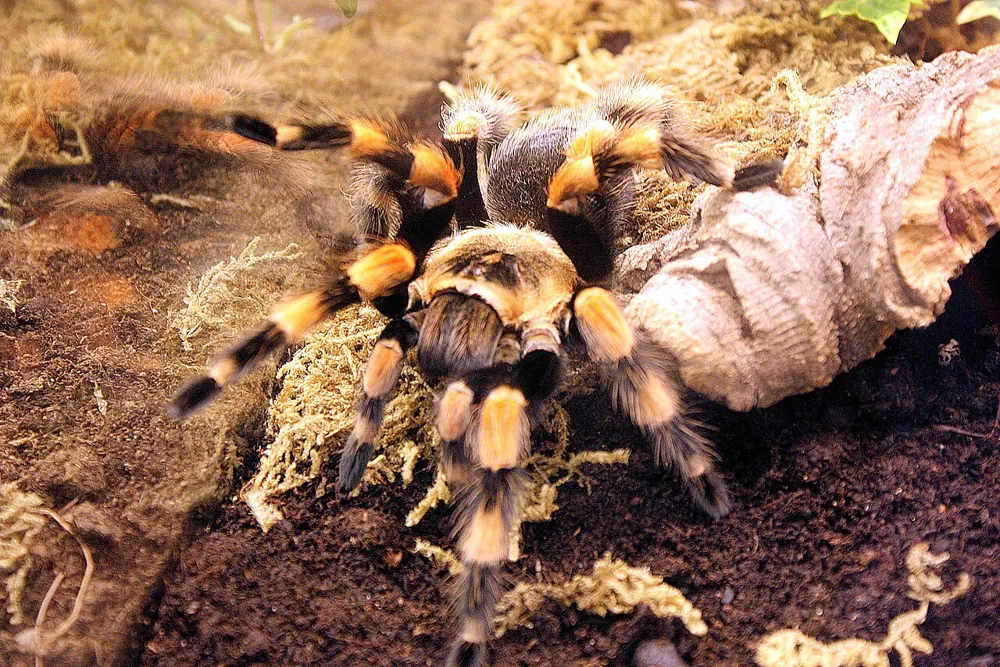
टोकाइThe Mexican redknee tarantula is a large, hairy spider from the Pacific coast of Mexico. It lives in burrows under rocks and tree roots, and it is a popular pet among tarantula keepers. Its name has caused confusion, because for many years it was mixed up with a very similar species.1



 यसलाई कसरी चिन्ने
- Males and females are large, with bodies about 4 to 6 cm long, not counting the fangs and spinnerets.1
- Legs and palps (the short leg-like parts near the mouth) are bluish black with reddish orange and pale pink rings.1
- Adult males have a yellowish brown carapace (the hard top of the front body) and a black upper abdomen.1
- Adult females vary more. The carapace may be mostly bluish black with a light brown border, or have a dark starburst pattern.1
प्रायः यससँग झुक्किइन्छ: It is often confused with Brachypelma hamorii, which has very similar colours. The two can be told apart by two brownish pink bands on the chelicerae (the fang-bearing parts), which are present in B. hamorii but absent in B. smithi. Mature males can also be told apart by the shape of the palpal bulb, which is straighter and spoon-shaped in B. smithi.1
विष शक्ति
टोक्दा यसको विषदन्त वा दाँतबाट विष निस्कन्छ।
यो मानिसका लागि कति खतरनाक छ?
मानिसलाई खतरा: हल्कामौरीको डसाइ जत्तिकै वा त्यसभन्दा कम। मानिसका लागि लगभग हानिरहित। यसले टोक्यो भने
- टोकेको ठाउँ धोऊ र चिसो पार। धेरै दुख्यो वा व्यक्तिलाई अस्वस्थ महसुस भयो भने चिकित्सकीय मद्दत लेऊ।
सधैँ पहिले आफ्नो आपतकालीन नम्बरमा फोन गर (112, 000, 911)। यो सामान्य प्राथमिक उपचार मार्गदर्शन हो, चिकित्सकीय सल्लाह होइन। प्राथमिक उपचारका आधारभूत कुरा
 सुरक्षित रहू
- जंगली जनावरलाई कहिल्यै नछोऊ, नसमात वा नजिस्काऊ, सानो भए पनि, र सुतेको वा मरेको जस्तो देखिए पनि।
- यसलाई ठाउँ देऊ। कुनै भेट्यौ भने शान्त रहू, बिस्तारै पछाडि हट र त्यसलाई आफ्नै बाटो जान देऊ।
- कुनैले तिमीलाई टोक्यो भने: शान्त रहू, नचलीकन बस, आफ्नो आपतकालीन नम्बरमा (112, 000, 911) फोन गर वा छिटो अस्पताल पुग। त्यो कस्तो देखिन्थ्यो सम्झ, फोटोले मद्दत गर्छ।
यो तिमीलाई खोज्दै हिँडेको होइन। यसले आफ्नो विष खाना समात्न वा आफूलाई बचाउन प्रयोग गर्छ, र यो त लुक्न नै रुचाउँछ। सुरक्षित रहने बारे थप
संसारको कुन ठाउँमा?
यो कति ठूलो छ?
यो कति लामो छ?
 तिम्रो कान्छी औँलाभन्दा छोटो
 १०० मिटर 200 सेकेन्डमा पार गर्न सक्छ (सबैभन्दा छिटो मान्छेलाई ९.६ सेकेन्ड लाग्छ)
तिमीसँग तुलना गर्दा Mexican redknee tarantula कति ठूलो छ?
तिम्रो ब्राउजरमा हिसाब मात्र। केही पनि सेभ हुँदैन, कतै पठाइँदैन।
यो कति छिटो छ?


तथ्यहरू
Large numbers of wild-caught Mexican redknee tarantulas are still smuggled out of Mexico. At least 3,000 Mexican tarantulas were sent to the United States or Europe a few years before 2017, most of them this species.1
Its burrow has a single entrance, a tunnel about three times the spider's leg span long, and one or two chambers, one for moulting and one for resting and eating.1
Males have shorter bodies than females but longer legs.1
भ्रम तोड्ने
भ्रम: The name Mexican redknee tarantula always refers to one single species.
सत्य: The name has been used for two very similar species, B. smithi and B. hamorii. Many older sources mixed them up, so earlier records may be about either species.1
तथ्यहरू कहाँबाट आए
- Brachypelma smithi (Wikipedia (CC BY-SA 4.0))
- Brachypelma smithi (iNaturalist): नाम र वर्गीकरण।
- Venom Wiki: खतरा स्तर, सामान्य आकार र गतिको अनुमान हाम्रा आफ्नै हुन्। हामी तिनलाई कसरी निकाल्छौँ हेर: हामी खतरा कसरी मूल्यांकन गर्छौँ.
यस पृष्ठको हरेक तथ्यमा त्यसको स्रोत देखाउने नम्बर छ। हामीले केही गलत भनेका छौँ भने माफ गर, हामी जनावरका फ्यान हौँ, विज्ञान पत्रिका होइनौँ। [email protected] मा हामीलाई भन, हामी सच्याउँछौँ।
 बिच्छीलाई भोक लाग्यो! Venom Wiki एक जना मान्छेको परियोजना हो: निःशुल्क, विज्ञापन र ट्र्याकर बिना। सानो टिपले यसलाई अनलाइन राख्न मद्दत गर्छ।बिच्छीलाई खुवाऊ
उही समूहका अरू: टारान्टुला र फनेल-वेब
 Arizona blond tarantulaटारान्टुला र फनेल-वेबहानिरहित
 Ravine trapdoor spiderटारान्टुला र फनेल-वेबहानिरहित
 Trinidad chevron tarantulaटारान्टुला र फनेल-वेबदुख्छ मात्र
 Antilles pinktoe tarantulaटारान्टुला र फनेल-वेबहानिरहित
 California trapdoor spiderटारान्टुला र फनेल-वेबहानिरहित
 Costa Rican zebra tarantulaटारान्टुला र फनेल-वेबहानिरहित
 Terciopelo
 Eastern coral snake
 Eastern diamondback rattlesnake
 Eyelash viper
 Timber rattlesnake
 Western diamondback rattlesnake