
 अफ्रिका
 एसिया
एसिया युरोप
युरोप दक्षिण अमेरिका
 अस्ट्रेलिया र ओसिनिया
 अन्टार्कटिका
 प्रशान्त महासागर
 एट्लान्टिक महासागर
 हिन्द महासागर
 आर्कटिक महासागर
 भूमध्य सागर
 लाल सागर
 क्यारिबियन सागर
 कोरल सागर
 दक्षिण चीन सागर
 फिलिपिन्स सागर
 अण्डमान सागर
 उत्तर सागर
 टिमोर र अराफुरा सागर
 बंगालको खाडी
 क्यालिफोर्नियाको खाडी
Rhodnius kissing bug
 टोकाइ
टोकाइThe Rhodnius kissing bug is a blood-feeding insect that feeds on the skin around people's mouths while they sleep. It lives in northern South America and Central America, and it matters because it spreads the parasite that causes Chagas disease.1



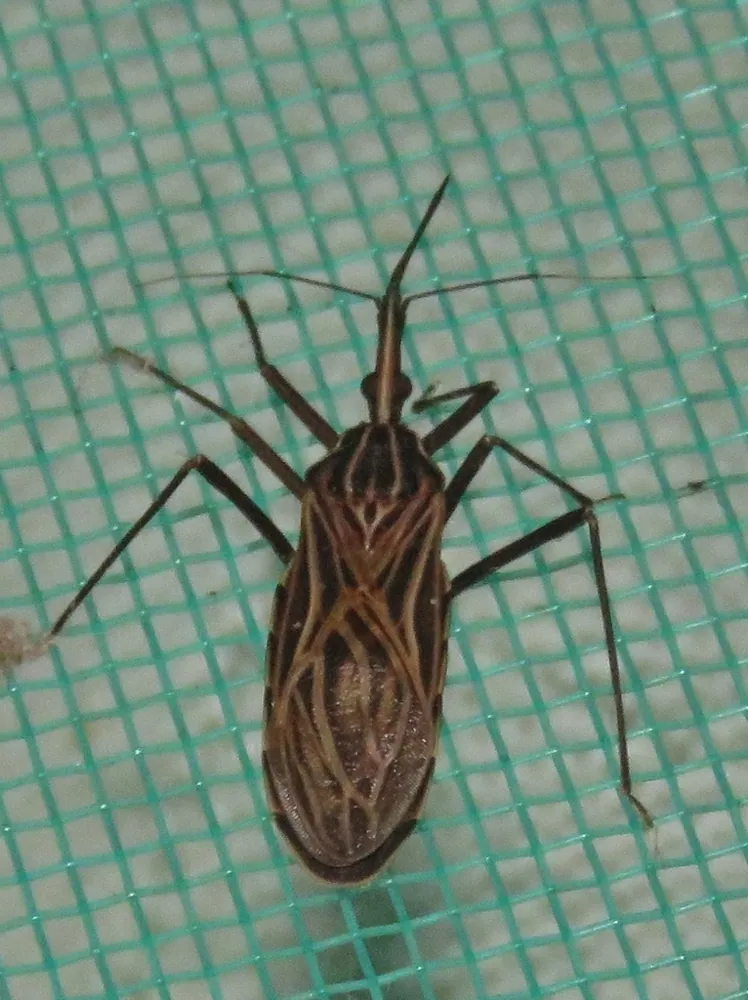
 यसलाई कसरी चिन्ने
विष शक्ति
टोक्दा यसको विषदन्त वा दाँतबाट विष निस्कन्छ।
यो मानिसका लागि कति खतरनाक छ?
मानिसलाई खतरा: गम्भीरटोकाइमा डाक्टर चाहिन्छ। मृत्यु धेरै कमै हुन्छ।It is the main carrier of the parasite that causes Chagas disease in northern South America, and the only carrier in Central America. The parasite is passed in the bug's faeces straight after a blood meal. People can become infected when they scratch the bite and rub the faeces into it, through a blood transfusion, or by eating food contaminated with the bug's faeces.1
 यसले टोक्यो भने
- डस्ने झुसिलकिराका रौँका लागि: टाँसिने टेपले उठाएर हटाऊ, त्यसपछि छाला धोऊ। नमल।
- टोकाइका लागि: धोऊ र चिसो पार। व्यक्तिलाई अस्वस्थ महसुस भयो वा सजिलै रगत बग्यो भने चिकित्सकीय मद्दत लेऊ।
सधैँ पहिले आफ्नो आपतकालीन नम्बरमा फोन गर (112, 000, 911)। यो सामान्य प्राथमिक उपचार मार्गदर्शन हो, चिकित्सकीय सल्लाह होइन। प्राथमिक उपचारका आधारभूत कुरा
 सुरक्षित रहू
- जंगली जनावरलाई कहिल्यै नछोऊ, नसमात वा नजिस्काऊ, सानो भए पनि, र सुतेको वा मरेको जस्तो देखिए पनि।
- यसलाई ठाउँ देऊ। कुनै भेट्यौ भने शान्त रहू, बिस्तारै पछाडि हट र त्यसलाई आफ्नै बाटो जान देऊ।
- कुनैले तिमीलाई टोक्यो भने: शान्त रहू, नचलीकन बस, आफ्नो आपतकालीन नम्बरमा (112, 000, 911) फोन गर वा छिटो अस्पताल पुग। त्यो कस्तो देखिन्थ्यो सम्झ, फोटोले मद्दत गर्छ।
यो तिमीलाई खोज्दै हिँडेको होइन। यसले आफ्नो विष खाना समात्न वा आफूलाई बचाउन प्रयोग गर्छ, र यो त लुक्न नै रुचाउँछ। सुरक्षित रहने बारे थप
संसारको कुन ठाउँमा?
यो कति ठूलो छ?
यो कति लामो छ?
 लगभग पेपर क्लिप जत्तिकै लामो
तिमीसँग तुलना गर्दा Rhodnius kissing bug कति ठूलो छ?
तिम्रो ब्राउजरमा हिसाब मात्र। केही पनि सेभ हुँदैन, कतै पठाइँदैन।
यो कति छिटो छ?


तथ्यहरू
Its saliva contains lipocalins, which bind the chemical serotonin. This helps stop the host's blood vessels from narrowing while the bug feeds.1
Sir Vincent Wigglesworth used this bug to study insect hormones. He showed that removing the head during a larval stage makes the insect develop into an adult early.1
Specimens from Venezuela escaped from a research laboratory in San Salvador in 1915 and then spread through Central America, probably helped by travellers carrying them.1
Its wild populations have been linked to the transfer of transposons, which are pieces of DNA that move around, between the bug and some of its hosts, such as squirrel monkeys and opossums.1
The insect goes through five larval stages, and each one ends in a moult about 12 to 15 days after a large blood meal.1
तथ्यहरू कहाँबाट आए
- Rhodnius prolixus (Wikipedia (CC BY-SA 4.0))
- Rhodnius prolixus (iNaturalist): नाम र वर्गीकरण।
- Venom Wiki: खतरा स्तर, सामान्य आकार र गतिको अनुमान हाम्रा आफ्नै हुन्। हामी तिनलाई कसरी निकाल्छौँ हेर: हामी खतरा कसरी मूल्यांकन गर्छौँ.
यस पृष्ठको हरेक तथ्यमा त्यसको स्रोत देखाउने नम्बर छ। हामीले केही गलत भनेका छौँ भने माफ गर, हामी जनावरका फ्यान हौँ, विज्ञान पत्रिका होइनौँ। [email protected] मा हामीलाई भन, हामी सच्याउँछौँ।
 बिच्छीलाई भोक लाग्यो! Venom Wiki एक जना मान्छेको परियोजना हो: निःशुल्क, विज्ञापन र ट्र्याकर बिना। सानो टिपले यसलाई अनलाइन राख्न मद्दत गर्छ।बिच्छीलाई खुवाऊ
उही समूहका अरू: झुसिलकिरा र कीराहरू
 Giant silkworm moth caterpillarझुसिलकिरा र कीराहरूमार्न सक्छनछोऊ
 Vinchuca kissing bugझुसिलकिरा र कीराहरूडाक्टर चाहिन्छ
 Giant water bugझुसिलकिरा र कीराहरूदुख्छ मात्र
 Puss caterpillarझुसिलकिरा र कीराहरूदुख्छ मात्रनछोऊ
 Saddleback caterpillarझुसिलकिरा र कीराहरूदुख्छ मात्रनछोऊ
 Wheel bugझुसिलकिरा र कीराहरूदुख्छ मात्र
 Terciopelo
 Eastern coral snake
 Eastern diamondback rattlesnake
 Eyelash viper
 Timber rattlesnake
 Western diamondback rattlesnake