
 अफ्रिका
 एसिया
एसिया युरोप
युरोप दक्षिण अमेरिका
 अस्ट्रेलिया र ओसिनिया
 अन्टार्कटिका
 प्रशान्त महासागर
 एट्लान्टिक महासागर
 हिन्द महासागर
 आर्कटिक महासागर
 भूमध्य सागर
 लाल सागर
 क्यारिबियन सागर
 कोरल सागर
 दक्षिण चीन सागर
 फिलिपिन्स सागर
 अण्डमान सागर
 उत्तर सागर
 टिमोर र अराफुरा सागर
 बंगालको खाडी
 क्यालिफोर्नियाको खाडी
South American sea nettle
 डस्ने टेन्टाकल
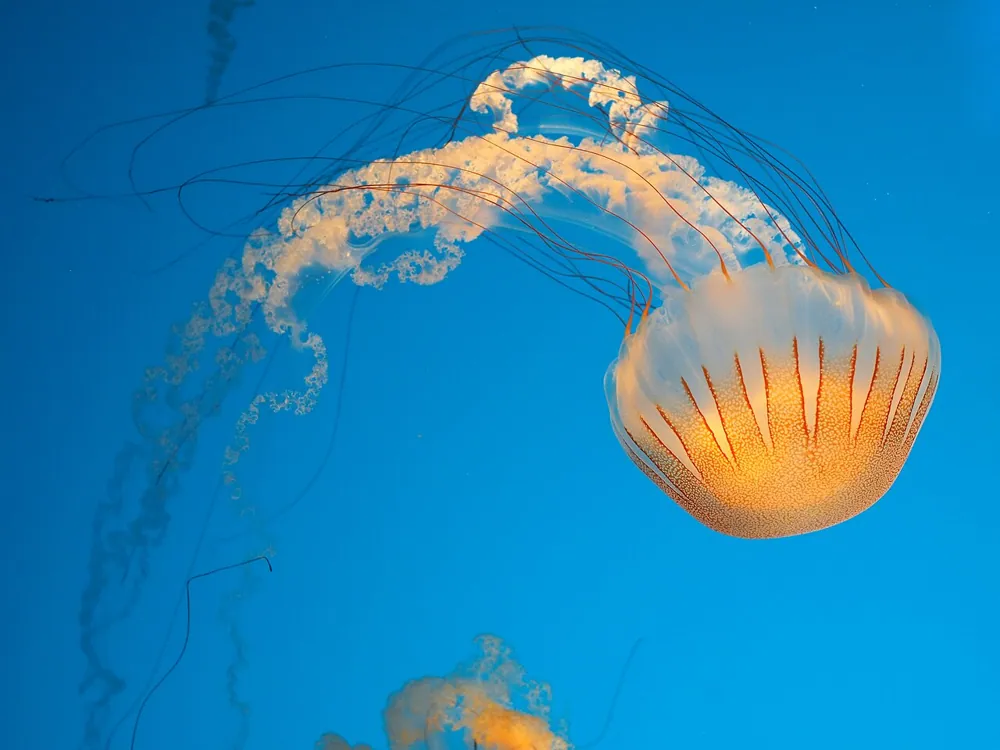
The South American sea nettle is a large jellyfish with a red-brown bell and long, spiralling arms. It drifts in the open ocean along both the Pacific and Atlantic coasts of South America. Its stinging tentacles catch the tiny animals it eats.1

 यसलाई कसरी चिन्ने
- Red-brown bell1
- Long, spiralling arms1
- Thin outer tentacles that surround inner tentacles which are often white and fluffy in appearance1
- Most mature individuals have a bell 25 to 40 cm across1
प्रायः यससँग झुक्किइन्छ: It was historically confused with C. hysoscella. That species is now known to be restricted to the northeast Atlantic, so it is not found in South American waters.1
विष शक्ति
कुनै चीजले छुँदा हजारौँ साना डस्ने कोषहरू छुट्छन्।
यो मानिसका लागि कति खतरनाक छ?
मानिसलाई खतरा: पीडादायीयसले साँच्चै दुखाउन सक्छ, तर लगभग कहिल्यै गम्भीर हुँदैन। यसले डस्यो भने
- पानीबाट बाहिर निस्क र टाँसिएका टेन्टाकल (पन्जा वा कपडाले) निकालेर फ्याँक।
- उष्ण क्षेत्रका बक्स जेलिफिसका लागि: डसेको ठाउँमा कम्तीमा ३० सेकेन्ड सिरका खन्याऊ, मद्दतका लागि बोलाऊ र सीपीआर (CPR) गर्न तयार रहू। ब्लुबोटल र धेरैजसो अरूका लागि: समुद्री पानीले पखाल, त्यसपछि दुखाइका लागि तातो पानी।
सधैँ पहिले आफ्नो आपतकालीन नम्बरमा फोन गर (112, 000, 911)। यो सामान्य प्राथमिक उपचार मार्गदर्शन हो, चिकित्सकीय सल्लाह होइन। प्राथमिक उपचारका आधारभूत कुरा
 सुरक्षित रहू
- जंगली जनावरलाई कहिल्यै नछोऊ, नसमात वा नजिस्काऊ, सानो भए पनि, र सुतेको वा मरेको जस्तो देखिए पनि।
- यसलाई ठाउँ देऊ। कुनै भेट्यौ भने शान्त रहू, बिस्तारै पछाडि हट र त्यसलाई आफ्नै बाटो जान देऊ।
- कुनैले तिमीलाई डस्यो भने: शान्त रहू, नचलीकन बस, आफ्नो आपतकालीन नम्बरमा (112, 000, 911) फोन गर वा छिटो अस्पताल पुग। त्यो कस्तो देखिन्थ्यो सम्झ, फोटोले मद्दत गर्छ।
यो तिमीलाई खोज्दै हिँडेको होइन। यसले आफ्नो विष खाना समात्न वा आफूलाई बचाउन प्रयोग गर्छ, र यो त लुक्न नै रुचाउँछ। सुरक्षित रहने बारे थप
संसारको कुन ठाउँमा?
यो कति ठूलो छ?
यो कति लामो छ?
 नाकदेखि पुच्छरसम्म लहरै राखिएका 2 वटा घरपालुवा बिरालो जत्तिकै लामो
 लहरै राखिएका 6 वटा केरा जत्तिकै लामो
 ठूलो पौडी पोखरीको लम्बाइ (५० मि.) 160 सेकेन्डमा पौडिन सक्छ
तिमीसँग तुलना गर्दा South American sea nettle कति ठूलो छ?
तिम्रो ब्राउजरमा हिसाब मात्र। केही पनि सेभ हुँदैन, कतै पठाइँदैन।
यो कति छिटो छ?

तथ्यहरू
Its bell can grow up to 1 metre across, but most adults are much smaller.1
Crab larvae may form a parasitic relationship with it, using it for food and shelter.1
A single polyp can produce between 3 and 10 young jellyfish called ephyrae in about 7 to 10 days.1
Its population has increased in recent years, which may be linked to climate change and major changes to ocean ecosystems.1
Its stinging tentacles are used to catch its prey, and the adults are eaten by sea turtles and some fish.1
भ्रम तोड्ने
भ्रम: It is the only sea nettle found in South America.
सत्य: Despite its common name, it is not the only sea nettle in the region. C. lactea is another sea nettle found there.1
विष विशेषज्ञहरूका लागि
- वैज्ञानिक नाम
- Chrysaora plocamia
- समूह
- जेलिफिस र डस्ने समुद्री जीवहरू
- परिवार
- Pelagiidae2
- क्रम
- Semaeostomeae
- महादेशहरू
- एट्लान्टिक महासागर, महासागरहरू
- बच्चाहरू
- Fertilised eggs drift in the ocean, and often attach to the arms of adults for safety. They develop into swimming larvae called planulae, which later settle and grow into polyps.1
- मानिसलाई खतरा
- 2 / 5: पीडादायी3
तथ्यहरू कहाँबाट आए
- Chrysaora plocamia (Wikipedia (CC BY-SA 4.0))
- Chrysaora plocamia (iNaturalist): नाम र वर्गीकरण।
- Venom Wiki: खतरा स्तर, सामान्य आकार र गतिको अनुमान हाम्रा आफ्नै हुन्। हामी तिनलाई कसरी निकाल्छौँ हेर: हामी खतरा कसरी मूल्यांकन गर्छौँ.
यस पृष्ठको हरेक तथ्यमा त्यसको स्रोत देखाउने नम्बर छ। हामीले केही गलत भनेका छौँ भने माफ गर, हामी जनावरका फ्यान हौँ, विज्ञान पत्रिका होइनौँ। [email protected] मा हामीलाई भन, हामी सच्याउँछौँ।
 बिच्छीलाई भोक लाग्यो! Venom Wiki एक जना मान्छेको परियोजना हो: निःशुल्क, विज्ञापन र ट्र्याकर बिना। सानो टिपले यसलाई अनलाइन राख्न मद्दत गर्छ।बिच्छीलाई खुवाऊ
उही समूहका अरू: जेलिफिस र डस्ने समुद्री जीवहरू
 Australian box jellyfishजेलिफिस र डस्ने समुद्री जीवहरूप्राणघातकनछोऊ
 Irukandji jellyfishजेलिफिस र डस्ने समुद्री जीवहरूमार्न सक्छनछोऊ
 Portuguese man o' warजेलिफिस र डस्ने समुद्री जीवहरूडाक्टर चाहिन्छनछोऊ
 Lion's mane jellyfishजेलिफिस र डस्ने समुद्री जीवहरूदुख्छ मात्रनछोऊ
 Moon jellyfishजेलिफिस र डस्ने समुद्री जीवहरूहानिरहित
 Common kingslayerजेलिफिस र डस्ने समुद्री जीवहरूमार्न सक्छनछोऊ
 Hawksbill sea turtle
 Blue sea dragon
 Greenland shark
 Common octopus
 Common stingray
 Greater weever