
 Afrika
 Azië
Azië Europa
 Zuid-Amerika
 Australië & Oceanië
 Antarctica
 Grote Oceaan
 Atlantische Oceaan
 Indische Oceaan
 Noordelijke IJszee
 Middellandse Zee
 Rode Zee
 Caribische Zee
 Koraalzee
 Zuid-Chinese Zee
 Filipijnenzee
 Andamanse Zee
 Noordzee
 Timorzee & Arafurazee
 Golf van Bengalen
 Golf van Californië
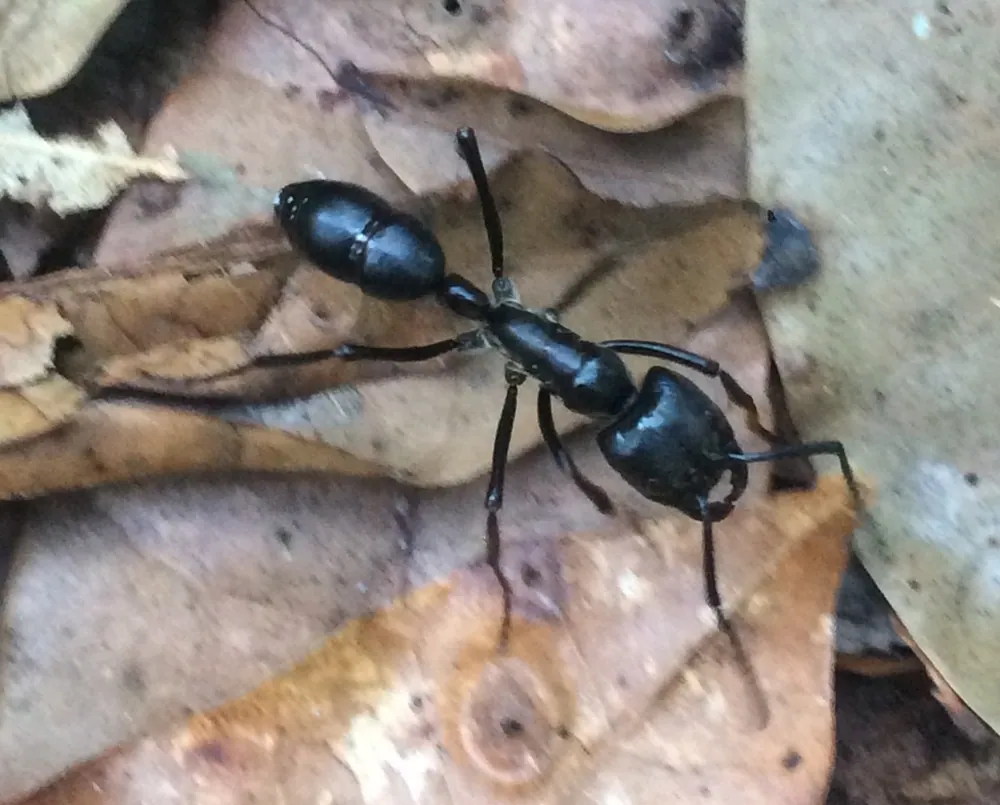
Dinosaur ant of Brazil
 Steken
The Dinosaur ant is a large ant from northeastern Brazil. It has a venomous sting that it uses to subdue big live prey and to defend its nest. Scientists are studying its venom because it may be useful for medicines.1

 Zo herken je het
- Workers have a fine, textured surface that is dull rather than shiny.1
- Workers are covered in long, hair-like bristles.1
- Males are light brown and have long, fine hairs on the second segment of their antennae.1
- Colonies are large, with an average of 80 workers and a range of 26 to 238.1
Vaak verward met: It is most often confused with Dinoponera mutica. Dinoponera quadriceps has a dull, finely textured surface, no striped throat and a petiole (the narrow waist segment) that bulges at its upper front edge. Dinoponera mutica has a rougher surface, a striped throat and a petiole with even, non-bulging corners.1
Gifkracht
Het gif komt naar buiten via een angel.
Wat doet zijn gif als het bijt of steekt?
Its sting delivers venom that causes severe pain. The pain can last up to 48 hours. The venom contains many different compounds that can have wide effects on the body.1
Hoe gevaarlijk is het voor mensen?
Gevaar voor mensen: PijnlijkHet kan echt pijn doen, maar het is bijna nooit ernstig.The sting causes severe pain lasting up to 48 hours.1
Wat doet het als het bang is?
Workers use their sting to defend the nest.1
 Als het steekt
- Was en koel de steken.
- Als de persoon moeite heeft met ademen, een opgezwollen gezicht of keel heeft, of zich flauw voelt, is het een allergisch noodgeval: bel je alarmnummer.
Bel altijd eerst je alarmnummer (112, 000, 911). Dit is algemene EHBO-informatie, geen medisch advies. EHBO-basis
 Blijf veilig
- Raak een wild dier nooit aan, vang het niet en pest het niet, ook geen kleintje, en ook niet als het lijkt te slapen of dood lijkt.
- Geef het de ruimte. Kom je er een tegen, blijf rustig, stap langzaam achteruit en laat het zijn eigen weg gaan.
- Als er een je steekt: blijf rustig, beweeg niet, bel je alarmnummer (112, 000, 911) of ga snel naar een ziekenhuis. Onthoud hoe het eruitzag, een foto helpt.
Het is niet op jou uit. Het gebruikt zijn gif om voedsel te vangen of zichzelf te beschermen, en verstopt zich veel liever. Meer over veilig blijven
Waar ter wereld?
Hoe groot is het?
Hoe lang is het?
 ongeveer zo lang als een paperclip
Hoe groot is Dinosaur ant of Brazil vergeleken met JOU?
Alleen rekenwerk in je browser. Er wordt niets opgeslagen of verstuurd.
Hoe snel is het?


Feiten
Waar de feiten vandaan komen
- Dinoponera quadriceps (Wikipedia (CC BY-SA 4.0))
- Dinoponera quadriceps (iNaturalist): namen en indeling.
- Venom Wiki: het gevarenniveau, de typische grootte en de geschatte snelheid zijn van onszelf. Zo berekenen we ze: Hoe we gevaar beoordelen.
Elk feit op deze pagina heeft een nummer dat naar de bron wijst. Hebben we iets fout? Sorry, we zijn dierenfans, geen wetenschappelijk tijdschrift. Laat het ons weten via [email protected] en we passen het aan.
 De schorpioen heeft honger! Venom Wiki is een eenmansproject: gratis, zonder reclame en zonder trackers. Een kleine fooi helpt om het online te houden.Voer de schorpioen
 Bullet ant
 Red imported fire ant
 Army ant
 Giant Amazonian ant
 Trap-jaw ant
 Black imported fire ant
 Gouden pijlgifkikker
 Terciopelo
 Brazilian wandering spider
 Eyelash viper
 Golden lancehead
 South American bushmaster