
 Afrika
 Azië
Azië Europa
 Zuid-Amerika
 Australië & Oceanië
 Antarctica
 Grote Oceaan
 Atlantische Oceaan
 Indische Oceaan
 Noordelijke IJszee
 Middellandse Zee
 Rode Zee
 Caribische Zee
 Koraalzee
 Zuid-Chinese Zee
 Filipijnenzee
 Andamanse Zee
 Noordzee
 Timorzee & Arafurazee
 Golf van Bengalen
 Golf van Californië
Eastern white-tailed spider
 Beten
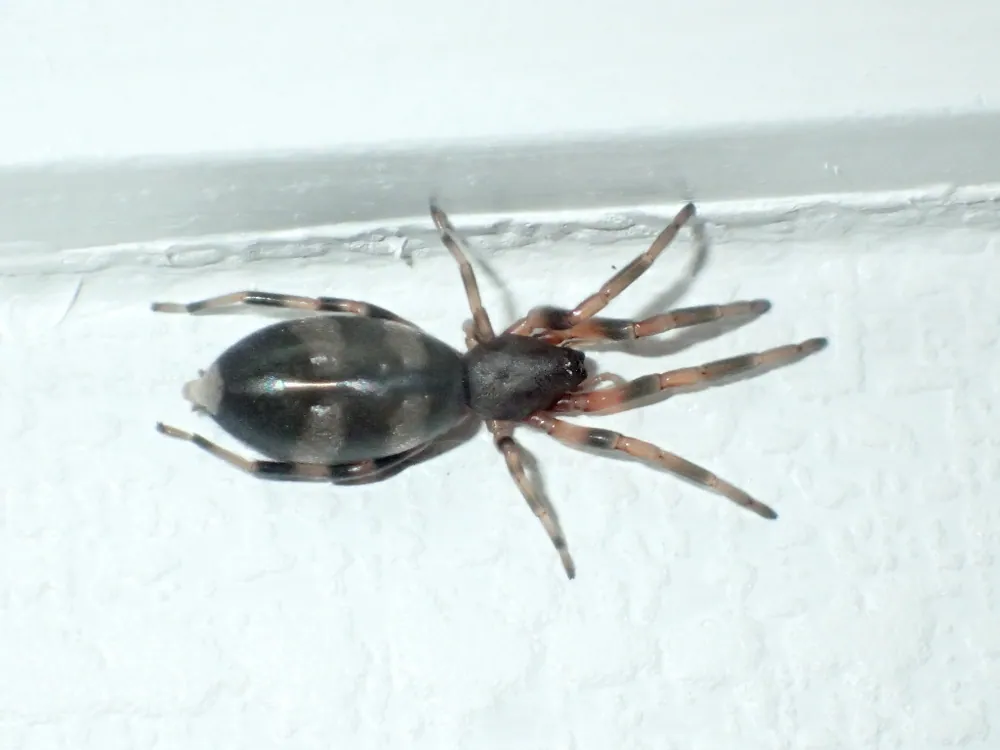
BetenThe Eastern white-tailed spider is a slender hunting spider from southern and eastern Australia. It has also spread to New Zealand. It does not spin a web. Instead, it roams, mostly at night, hunting other spiders.1

 Zo herken je het
- Slender, cigar-shaped body that is dark reddish to grey.1
- Dark orange-brown legs with bands.1
- Grey abdomen with two pairs of faint white spots.1
- Usually, but not always, a distinct white spot at the tip of the abdomen, just above the spinnerets.1
- Body length up to 18 mm, with a leg span of about 28 mm.1
Vaak verward met: Two common species, Lampona cylindrata and Lampona murina, look very similar and are not easily told apart without a microscope. The name 'white-tail' is also applied to several other spider species that have a white mark at the end of the abdomen.1
Gifkracht
Het gif komt naar buiten via de giftanden of tanden als het bijt.
Wat doet zijn gif als het bijt of steekt?
Their venom is used to subdue prey. In people, a bite usually causes a small red or discoloured bump, with pain, local swelling and itchiness. Rarely, it causes nausea, vomiting, malaise (a general feeling of being unwell) or headache. These symptoms are generally mild and resolve over time.1
Hoe gevaarlijk is het voor mensen?
Gevaar voor mensen: PijnlijkHet kan echt pijn doen, maar het is bijna nooit ernstig.Bites are reported in people, but studies found the effects are usually local and mild. A study of 130 confirmed bites found no necrotic ulcers (tissue death) and no confirmed infections. No deaths are mentioned.1
 Als het bijt
- Was de beet en leg er een coldpack op tegen de pijn. Haal medische hulp als de pijn hevig is, zich verspreidt of de persoon zich niet goed voelt.
Bel altijd eerst je alarmnummer (112, 000, 911). Dit is algemene EHBO-informatie, geen medisch advies. EHBO-basis
 Blijf veilig
- Raak een wild dier nooit aan, vang het niet en pest het niet, ook geen kleintje, en ook niet als het lijkt te slapen of dood lijkt.
- Geef het de ruimte. Kom je er een tegen, blijf rustig, stap langzaam achteruit en laat het zijn eigen weg gaan.
- Als er een je bijt: blijf rustig, beweeg niet, bel je alarmnummer (112, 000, 911) of ga snel naar een ziekenhuis. Onthoud hoe het eruitzag, een foto helpt.
Het is niet op jou uit. Het gebruikt zijn gif om voedsel te vangen of zichzelf te beschermen, en verstopt zich veel liever. Meer over veilig blijven
Waar ter wereld?
Hoe groot is het?
Hoe lang is het?
 korter dan je pinkje
Hoe groot is Eastern white-tailed spider vergeleken met JOU?
Alleen rekenwerk in je browser. Er wordt niets opgeslagen of verstuurd.
Hoe snel is het?


Feiten
The necrotic ulcers once blamed on these spiders were not confirmed. A scientific study found other causes, mostly infections.1
White-tailed spiders do not build webs. They hunt actively, often at night.1
The white tail marking remains into adulthood, while other markings fade with each moult.1
Many people think there is only one white-tailed spider species, but the two common species look so alike that more species may still be unidentified.1
Both common species have been introduced to New Zealand, where Lampona cylindrata has spread across the South Island since 1980.1
Fabeltjes-checker
Fabel: White-tailed spider bites cause flesh-eating ulcers (necrosis).
Waarheid: A study of 130 confirmed bites found no necrotic ulcers or confirmed infections. Symptoms are usually mild, with a red mark, pain, swelling and itchiness.1
Waar de feiten vandaan komen
- White-tailed spider (Wikipedia (CC BY-SA 4.0))
- Lampona murina (iNaturalist): namen en indeling.
- Venom Wiki: het gevarenniveau, de typische grootte en de geschatte snelheid zijn van onszelf. Zo berekenen we ze: Hoe we gevaar beoordelen.
Elk feit op deze pagina heeft een nummer dat naar de bron wijst. Hebben we iets fout? Sorry, we zijn dierenfans, geen wetenschappelijk tijdschrift. Laat het ons weten via [email protected] en we passen het aan.
 De schorpioen heeft honger! Venom Wiki is een eenmansproject: gratis, zonder reclame en zonder trackers. Een kleine fooi helpt om het online te houden.Voer de schorpioen
 Redback spider
 Katipo
 White-tailed spider
 Peacock spider
 Badge huntsman spider
 Black house spider
 Kusttaipan
 Gewone doodsadder
 Oostelijke bruine slang
 Inlandtaipan
 Sydneytrechterspin
 Tijgerslang