
 Afrika
 Azië
Azië Europa
 Zuid-Amerika
 Australië & Oceanië
 Antarctica
 Grote Oceaan
 Atlantische Oceaan
 Indische Oceaan
 Noordelijke IJszee
 Middellandse Zee
 Rode Zee
 Caribische Zee
 Koraalzee
 Zuid-Chinese Zee
 Filipijnenzee
 Andamanse Zee
 Noordzee
 Timorzee & Arafurazee
 Golf van Bengalen
 Golf van Californië
Northern brown snake
 Beten
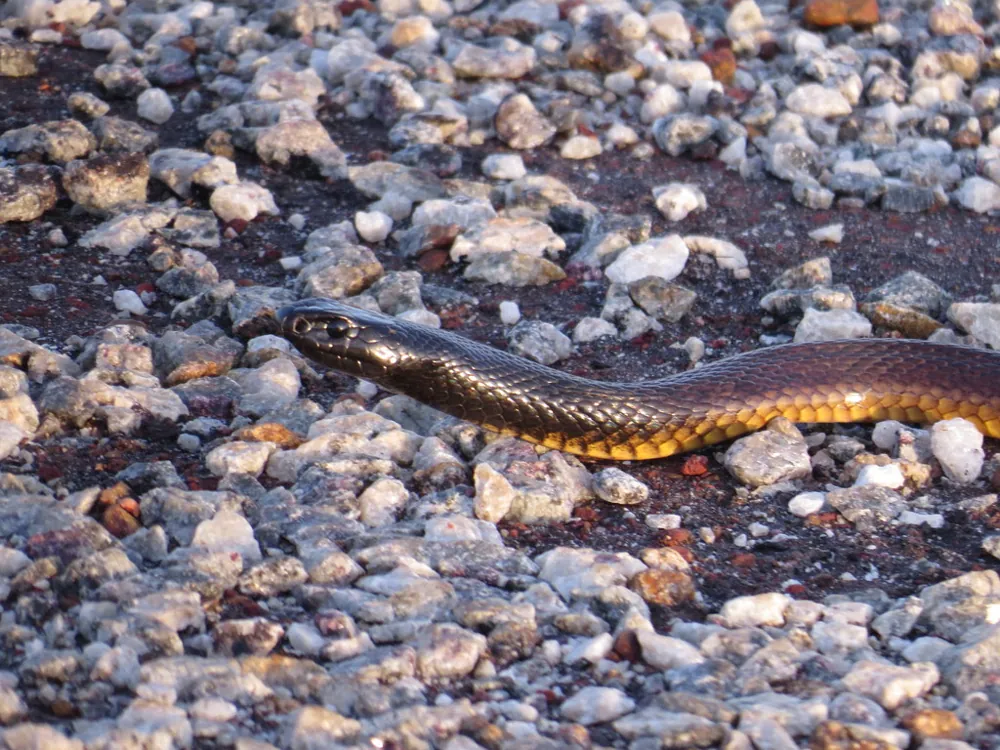
BetenThe northern brown snake is a fast, highly venomous snake found across the north of Australia. It lives in dry country, woodlands and grasslands, and sometimes near towns. It matters because its bite can be deadly, so it is important to know what it looks like and to keep your distance.1


 Zo herken je het
- Its back can be shades of orange-brown with flecks and bands, or it can be plain.1
- Its belly is cream to orange with pink blotches.1
- Some individuals have jet black heads.1
- Others have a black 'V' shape on the back of the neck, just below the head.1
- It grows up to 1.8 m in total length, including the tail.1
Vaak verward met: Some northern brown snakes have jet black heads, which can cause them to be confused with the black-headed python.1
Gifkracht
Het gif komt naar buiten via de giftanden of tanden als het bijt.
Wat doet zijn gif als het bijt of steekt?
Its venom contains neurotoxins, which attack the nerves, nephrotoxins, which damage the kidneys, and a procoagulant, which affects blood clotting. Although its venom is not the most toxic in the brown snake genus, each bite can deliver a relatively large amount, so it has a high potential to cause a deadly bite. Human symptoms include headache, nausea or vomiting, abdominal pain, severe coagulopathy (serious blood clotting problems) and sometimes kidney damage.1
Hoe gevaarlijk is het voor mensen?
Gevaar voor mensen: Heel gevaarlijkHet kan iemand doden die geen behandeling krijgt.The northern brown snake has a high potential to deliver a deadly bite. The bite is usually painless and is difficult to see because the fangs are small, so a bite can go unnoticed. In dogs and cats, paralysis is also likely to occur.1
Wat doet het als het bang is?
It usually prefers to retreat from danger, but it is very aggressive when disturbed or threatened and will defend itself if cornered.1
 Als het bijt
- Drukimmobilisatie: wikkel een stevig elastisch verband over de beet en daarna omhoog over de hele arm of het hele been, leg een spalk aan en houd de persoon helemaal stil tot er hulp komt.
- Was de beet niet: in het ziekenhuis kunnen ze het gif dat op de huid achterblijft testen om het juiste tegengif (antiserum) te kiezen.
Bel altijd eerst je alarmnummer (112, 000, 911). Dit is algemene EHBO-informatie, geen medisch advies. EHBO-basis
 Blijf veilig
- Raak een wild dier nooit aan, vang het niet en pest het niet, ook geen kleintje, en ook niet als het lijkt te slapen of dood lijkt.
- Geef het de ruimte. Kom je er een tegen, blijf rustig, stap langzaam achteruit en laat het zijn eigen weg gaan.
- Als er een je bijt: blijf rustig, beweeg niet, bel je alarmnummer (112, 000, 911) of ga snel naar een ziekenhuis. Onthoud hoe het eruitzag, een foto helpt.
Het is niet op jou uit. Het gebruikt zijn gif om voedsel te vangen of zichzelf te beschermen, en verstopt zich veel liever. Meer over veilig blijven
Waar ter wereld?
Hoe groot is het?
Hoe lang is het?
 zo lang als 4 huiskatten van neus tot staart
 zo lang als 10 bananen achter elkaar
 zou 100 meter kunnen afleggen in 48 seconden (de snelste mens doet er 9,6 over)
Hoe groot is Northern brown snake vergeleken met JOU?
Alleen rekenwerk in je browser. Er wordt niets opgeslagen of verstuurd.
Hoe snel is het?


Feiten
Although it is generally shy, it has been known to practise cannibalism, though this is not common.1
It can climb small shrubs or trees, although it is not a tree-dwelling species.1
Its name, gwardar, is an Aboriginal word meaning "go the long way around".1
It may become active at night during the warmer months, but it is otherwise active during the day and enjoys sunlight.1
Fabeltjes-checker
Fabel: Snakes like this one always attack people.
Waarheid: The northern brown snake is generally cautious and shy, and it usually retreats rather than attacks. It only defends itself strongly when it is cornered or threatened.1
Voor gifexperts
- Wetenschappelijke naam
- Pseudonaja nuchalis
- Groep
- Australische slangen
- Familie
- Elapidae2
- Orde
- Squamata
- Continenten
- Australië & Oceanië
- Baby's
- The mating season is roughly from September to November, and the female usually produces around 11 to 14 eggs, but may produce up to 38.1
- Gevaar voor mensen
- 4 / 5: Heel gevaarlijk3
Waar de feiten vandaan komen
- Pseudonaja nuchalis (Wikipedia (CC BY-SA 4.0))
- Pseudonaja nuchalis (iNaturalist): namen en indeling.
- Venom Wiki: het gevarenniveau, de typische grootte en de geschatte snelheid zijn van onszelf. Zo berekenen we ze: Hoe we gevaar beoordelen.
Elk feit op deze pagina heeft een nummer dat naar de bron wijst. Hebben we iets fout? Sorry, we zijn dierenfans, geen wetenschappelijk tijdschrift. Laat het ons weten via [email protected] en we passen het aan.
 De schorpioen heeft honger! Venom Wiki is een eenmansproject: gratis, zonder reclame en zonder trackers. Een kleine fooi helpt om het online te houden.Voer de schorpioen
Meer uit dezelfde groep: Australische slangen
 Kusttaipan
 Gewone doodsadder
 Oostelijke bruine slang
 Inlandtaipan
 Tijgerslang
 Collett's snake
Leeft ook in: Australië & Oceanië
 SydneytrechterspinVogelspinnen & trechterwebspinnenDodelijk
 Redback spiderSpinnenMoet naar de dokter
 Brown tree snakeAchtertandslangenDoet alleen pijn
 Hooded pitohuiAndere passief giftige dierenDoet alleen pijnNiet aanraken
 PlatypusGiftige zoogdierenDoet alleen pijn
 Northern tree-dwelling funnel-web spiderVogelspinnen & trechterwebspinnenDodelijk