
 Afrika
 Azië
Azië Europa
 Zuid-Amerika
 Australië & Oceanië
 Antarctica
 Grote Oceaan
 Atlantische Oceaan
 Indische Oceaan
 Noordelijke IJszee
 Middellandse Zee
 Rode Zee
 Caribische Zee
 Koraalzee
 Zuid-Chinese Zee
 Filipijnenzee
 Andamanse Zee
 Noordzee
 Timorzee & Arafurazee
 Golf van Bengalen
 Golf van Californië
Pine processionary
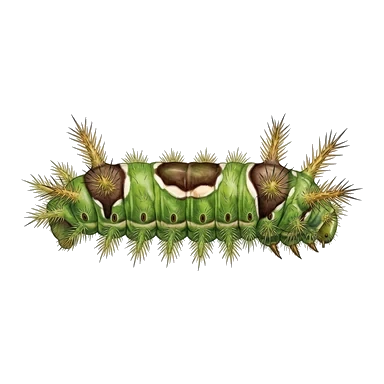 Brandharen
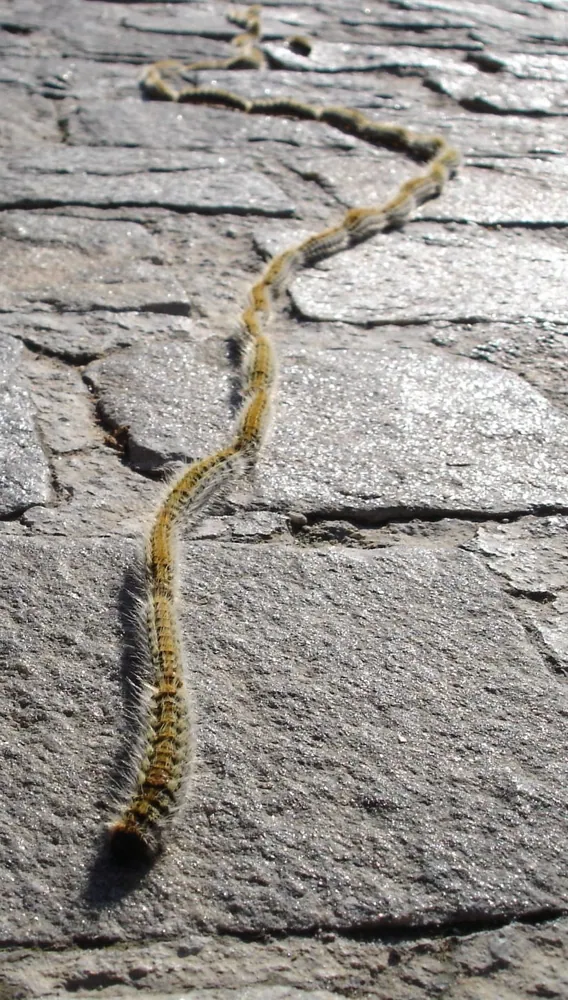
The pine processionary is a moth whose caterpillars are famous for marching in long, nose-to-tail lines through pine woods. Their hairs cause painful rashes and eye irritation, and they can strip the needles from whole trees. It lives around the Mediterranean and is spreading north.1
 Zo herken je het
- Caterpillars are orange-brown and hairy, with blue bands.1
- Large silken nests in pine trees, often with several in one tree and signs of stripped needles.1
- Caterpillars move in single-file processions, usually at night and when leaving the tree to pupate.1
- Adults have predominantly light brown forewings with brown markings and white hindwings.1
- Adult males have a crescent marking on the wings and are larger than the oak processionary.1
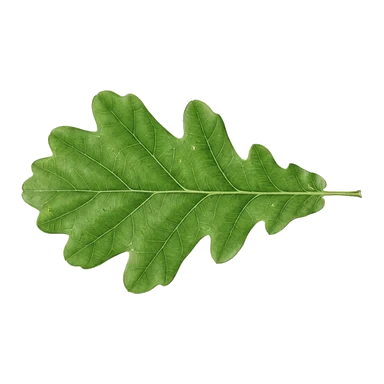
Vaak verward met: The oak processionary (Thaumetopoea processionea) is smaller as an adult, has an indistinct wing marking rather than a crescent, and lives in broad-leaved rather than coniferous forests. The pale eggar moth has no crescent marking on its wings.1
Gifkracht
Piepkleine haartjes of borstels breken af in de huid en prikken.
Wat doet zijn gif als het bijt of steekt?
The species is not venomous. Its caterpillars have hairs containing an irritant chemical called thaumetopoein, which causes skin rashes (urticaria) and eye irritation on contact. Some people may have an allergic reaction. The hairs of fifth-stage larvae can also break off and spread across nearby exposed skin.1
Hoe gevaarlijk is het voor mensen?
Gevaar voor mensen: PijnlijkHet kan echt pijn doen, maar het is bijna nooit ernstig.Simple contact with the caterpillar hairs can cause severe rashes and eye irritation in humans and other mammals. Some individuals may have an allergic reaction.1
Wat doet het als het bang is?
When stressed or threatened, fifth-stage caterpillars eject harpoon-shaped hairs that irritate any exposed skin nearby.1
 Als je zijn haren aanraakt
- Bij brandharen van rupsen: haal ze eraf met plakband en was daarna de huid. Niet wrijven.
- Bij beten: wassen en koelen. Haal medische hulp als de persoon zich niet goed voelt of makkelijk bloedt.
Bel altijd eerst je alarmnummer (112, 000, 911). Dit is algemene EHBO-informatie, geen medisch advies. EHBO-basis
 Blijf veilig
- Raak een wild dier nooit aan, vang het niet en pest het niet, ook geen kleintje, en ook niet als het lijkt te slapen of dood lijkt.
- Geef het de ruimte. Kom je er een tegen, blijf rustig, stap langzaam achteruit en laat het zijn eigen weg gaan.
- Als je zijn haren aanraakt: blijf rustig, beweeg niet, bel je alarmnummer (112, 000, 911) of ga snel naar een ziekenhuis. Onthoud hoe het eruitzag, een foto helpt.
Het is niet op jou uit. Het gebruikt zijn gif om voedsel te vangen of zichzelf te beschermen, en verstopt zich veel liever. Meer over veilig blijven
Waar ter wereld?
Hoe groot is het?
Hoe lang is het?
 ongeveer zo lang als een paperclip
 langzamer dan een tuinslak
Hoe groot is Pine processionary vergeleken met JOU?
Alleen rekenwerk in je browser. Er wordt niets opgeslagen of verstuurd.
Hoe snel is het?


Feiten
Caterpillars in a procession hold together through touch from the caterpillar in front, which takes priority over the trail pheromone or silk.1
The caterpillars are one of the few temperate-zone insects whose larvae develop through the winter, living in silk nests high in pine trees.1
Adults live for only a single day, during which they mate and lay eggs.1
The Greek physician Dioscorides described the itching caused by this caterpillar in the 1st century AD, and Pliny the Elder recorded a treatment for it.1
Outbreaks are somewhat cyclical, with a period of 7 to 9 years.1
Fabeltjes-checker
Fabel: Fabre's caterpillars marched in a circle around a flower pot only because they were trapped on its rim.
Waarheid: Young caterpillars' circular trails continue for as long as 12 hours even when they are free on a flat surface.1
Voor gifexperts
- Wetenschappelijke naam
- Thaumetopoea pityocampa
- Groep
- Rupsen & beestjes
- Familie
- Notodontidae2
- Orde
- Lepidoptera
- Continenten
- Europa, Afrika, Azië
- Baby's
- Each female lays an enormous number of eggs near the tops of pine trees, in cylindrical egg masses 4 to 5 cm long covered with scales that mimic pine shoots.1
- Gevaar voor mensen
- 2 / 5: Pijnlijk3
Waar de feiten vandaan komen
- Pine processionary (Wikipedia (CC BY-SA 4.0))
- Thaumetopoea pityocampa (iNaturalist): namen en indeling.
- Venom Wiki: het gevarenniveau, de typische grootte en de geschatte snelheid zijn van onszelf. Zo berekenen we ze: Hoe we gevaar beoordelen.
Elk feit op deze pagina heeft een nummer dat naar de bron wijst. Hebben we iets fout? Sorry, we zijn dierenfans, geen wetenschappelijk tijdschrift. Laat het ons weten via [email protected] en we passen het aan.
 De schorpioen heeft honger! Venom Wiki is een eenmansproject: gratis, zonder reclame en zonder trackers. Een kleine fooi helpt om het online te houden.Voer de schorpioen
Meer uit dezelfde groep: Rupsen & beestjes
 Oak processionaryRupsen & beestjesDoet alleen pijnNiet aanraken
 White-spotted assassin bugRupsen & beestjesDoet alleen pijn
 Common bombardier beetleRupsen & beestjesOngevaarlijk
 Asian giant water bugRupsen & beestjesDoet alleen pijn
 Blue-striped nettle grubRupsen & beestjesDoet alleen pijnNiet aanraken
 Brown-tail mothRupsen & beestjesDoet alleen pijnNiet aanraken
Leeft ook in: Europa
 Common European adderAddersMoet naar de dokter
 Spanish flyAndere passief giftige dierenMoet naar de dokterNiet aanraken
 Common waspBijen, wespen & hoornaarsDoet alleen pijn
 European hornetBijen, wespen & hoornaarsDoet alleen pijn
 Fire salamanderPijlgifkikkers, padden & salamandersDoet alleen pijnNiet aanraken
 Western honey beeBijen, wespen & hoornaarsDoet alleen pijn