
 Afrika
 Azië
Azië Europa
 Zuid-Amerika
 Australië & Oceanië
 Antarctica
 Grote Oceaan
 Atlantische Oceaan
 Indische Oceaan
 Noordelijke IJszee
 Middellandse Zee
 Rode Zee
 Caribische Zee
 Koraalzee
 Zuid-Chinese Zee
 Filipijnenzee
 Andamanse Zee
 Noordzee
 Timorzee & Arafurazee
 Golf van Bengalen
 Golf van Californië
Red-backed poison frog
 Gif in de huid
The red-backed poison frog is a tiny frog that lives high in the Amazon rainforest of Peru and Ecuador. It is moderately poisonous, and its skin poison can cause serious injury to people. Its bright red back warns predators to stay away.1



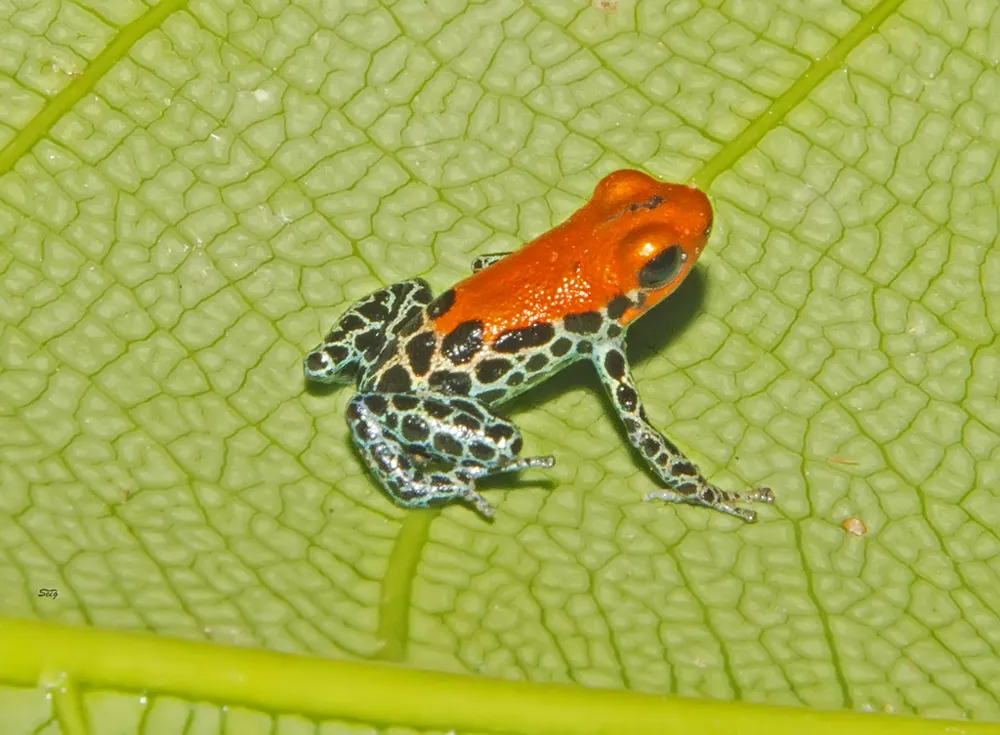
 Zo herken je het
Gifkracht
Zijn huid is giftig. Het is gevaarlijk om aan te raken, te likken of op te eten.
Wat doet zijn gif als je het aanraakt of opeet?
This frog is poisonous, not venomous, so it does not bite or sting. Its poison is stored in skin glands just beneath the outer layer of skin. It seeps through open wounds, body openings and pores. The poison can cause serious injury to humans and death in animals such as chickens.1
Hoe gevaarlijk is het voor mensen?
Gevaar voor mensen: PijnlijkHet kan echt pijn doen, maar het is bijna nooit ernstig.The poison is moderately toxic and can cause serious injury to humans.1
Wat doet het als het bang is?
When it is threatened, it shows its bright warning colours, climbs trees to escape, or uses its poison if it cannot get away.1
 Als iemand het heeft aangeraakt of gegeten
- Als iemand er een heeft aangeraakt: was de handen goed en raak de ogen of mond niet aan. Als een kind of huisdier er een heeft gelikt of opgegeten: bel het vergiftigingencentrum of je alarmnummer.
Bel altijd eerst je alarmnummer (112, 000, 911). Dit is algemene EHBO-informatie, geen medisch advies. EHBO-basis
 Blijf veilig
- Raak een wild dier nooit aan, vang het niet en pest het niet, ook geen kleintje, en ook niet als het lijkt te slapen of dood lijkt.
- Geef het de ruimte. Kom je er een tegen, blijf rustig, stap langzaam achteruit en laat het zijn eigen weg gaan.
- Als je het hebt aangeraakt of gegeten: wrijf niet in je ogen of aan je mond, was je handen en haal medische hulp.
Het is niet op jou uit. Zijn gif is er alleen zodat niets het opeet. Meer over veilig blijven
Waar ter wereld?
Hoe groot is het?
Hoe lang is het?
 korter dan je pinkje
 zou 100 meter kunnen afleggen in 110 seconden (de snelste mens doet er 9,6 over)
Hoe groot is Red-backed poison frog vergeleken met JOU?
Alleen rekenwerk in je browser. Er wordt niets opgeslagen of verstuurd.
Hoe snel is het?


Feiten
Males stick the tadpoles to their backs using a water-soluble mucus, then carry them into the canopy.1
Males place the tadpoles in tiny pools that collect in the centre of bromeliad plants. The mother then feeds them infertile eggs laid in the water.1
Once they become froglets, the young are led to an existing group, where all members accept them, though only their parents care for them.1
It is the second most poisonous frog in its genus Ranitomeya, after R. variabilis.1
Breeding gatherings take place at the end of the wet season, so the eggs are laid at the start of the next wet season, when the young have a steady supply of water.1
Deforestation for charcoal and the capture of frogs for the international pet trade are the main threats to it.1
Voor gifexperts
- Wetenschappelijke naam
- Ranitomeya reticulata
- Groep
- Pijlgifkikkers, padden & salamanders
- Familie
- Dendrobatidae2
- Orde
- Anura
- Continenten
- Zuid-Amerika
- Baby's
- Females lay eggs on the ground, and after the eggs hatch, males carry the tadpoles up into the canopy.1
- Hoe het in het wild gaat
- Least Concern1
- Gevaar voor mensen
- 2 / 5: Pijnlijk3
Waar de feiten vandaan komen
- Red-backed poison frog (Wikipedia (CC BY-SA 4.0))
- Ranitomeya reticulata (iNaturalist): namen en indeling.
- Venom Wiki: het gevarenniveau, de typische grootte en de geschatte snelheid zijn van onszelf. Zo berekenen we ze: Hoe we gevaar beoordelen.
Elk feit op deze pagina heeft een nummer dat naar de bron wijst. Hebben we iets fout? Sorry, we zijn dierenfans, geen wetenschappelijk tijdschrift. Laat het ons weten via [email protected] en we passen het aan.
 De schorpioen heeft honger! Venom Wiki is een eenmansproject: gratis, zonder reclame en zonder trackers. Een kleine fooi helpt om het online te houden.Voer de schorpioen
Meer uit dezelfde groep: Pijlgifkikkers, padden & salamanders
 Gouden pijlgifkikkerPijlgifkikkers, padden & salamandersDodelijkNiet aanraken
 Cane toadPijlgifkikkers, padden & salamandersMoet naar de dokterNiet aanraken
 Dyeing poison dart frogPijlgifkikkers, padden & salamandersDoet alleen pijnNiet aanraken
 Black-legged poison frogPijlgifkikkers, padden & salamandersKan dodenNiet aanraken
 Bruno's casque-headed frogPijlgifkikkers, padden & salamandersMoet naar de dokterNiet aanraken
 Harlequin poison frogPijlgifkikkers, padden & salamandersMoet naar de dokterNiet aanraken
 Terciopelo
 Brazilian wandering spider
 Eyelash viper
 Golden lancehead
 South American bushmaster
 Peruvian giant centipede