
 Afrika
 Azië
Azië Europa
 Zuid-Amerika
 Australië & Oceanië
 Antarctica
 Grote Oceaan
 Atlantische Oceaan
 Indische Oceaan
 Noordelijke IJszee
 Middellandse Zee
 Rode Zee
 Caribische Zee
 Koraalzee
 Zuid-Chinese Zee
 Filipijnenzee
 Andamanse Zee
 Noordzee
 Timorzee & Arafurazee
 Golf van Bengalen
 Golf van Californië
Western diamondback rattlesnake
 Beten
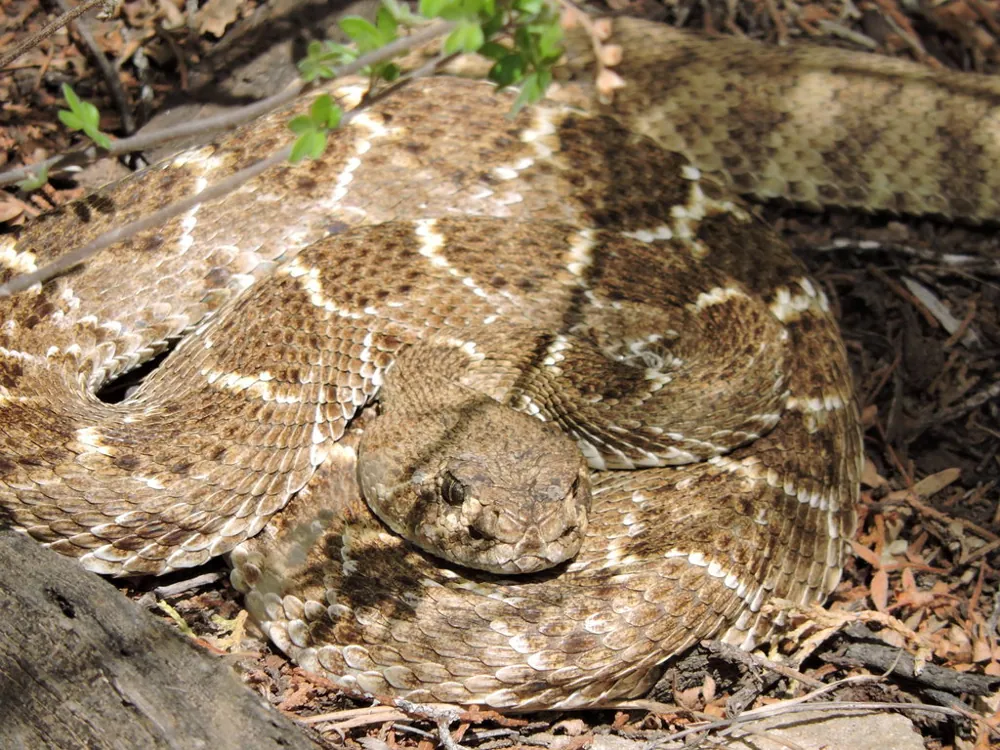
BetenThe western diamondback rattlesnake is a large, venomous pit viper that lives in the southwestern United States and the northern half of Mexico. It is thought to cause most snakebite deaths in northern Mexico and more snakebites in the United States than any other snake. Its diamond-shaped back markings and loud rattle make it easier to recognise, but it should always be given plenty of space.1



 Zo herken je het
- Usually khaki in colour, though it may also be pinkish, brick red, yellowish blonde or white.1
- A row of 23 to 45 brown or dark umber blotches runs along the back, becoming diamond-shaped towards the middle of the body.1
- The tail has two to eight black bands, usually four to six, separated by white or grey.1
- A grey or umber stripe runs diagonally from the eye across the side of the head, usually edged below by a white stripe.1
Vaak verward met: The Mojave rattlesnake also has banded tail rings, but its black rings are narrow compared with the pale ones. The timber rattlesnake has no tail rings, and the black-tailed rattlesnake has a uniform black tail or indistinct rings.1
Gifkracht
Het gif komt naar buiten via de giftanden of tanden als het bijt.
Wat doet zijn gif als het bijt of steekt?
Its venom is mainly hemotoxic, which means it mainly damages blood vessels, blood cells and the heart. It contains enzymes that break down tissue, along with cytotoxins and myotoxins that destroy cells and muscle. Local effects include pain, heavy internal bleeding, severe swelling, muscle damage, bruising, blistering and tissue death, and general effects may include headache, nausea and vomiting.1
Hoe gevaarlijk is het voor mensen?
Gevaar voor mensen: Heel gevaarlijkHet kan iemand doden die geen behandeling krijgt.It is thought to be responsible for most snakebite deaths in northern Mexico and for the greatest number of snakebites in the United States. It can deliver a large amount of venom in one bite.1
Wat doet het als het bang is?
When threatened it usually coils and rattles to warn off attackers, and it is unusually willing to stand its ground. If rattling does not work, it will strike.1
 Als het bijt
- Houd de persoon stil en rustig, houd de gebeten arm of het gebeten been op hartshoogte, doe ringen en alles wat knelt af, en ga snel naar een ziekenhuis.
Bel altijd eerst je alarmnummer (112, 000, 911). Dit is algemene EHBO-informatie, geen medisch advies. EHBO-basis
 Blijf veilig
- Raak een wild dier nooit aan, vang het niet en pest het niet, ook geen kleintje, en ook niet als het lijkt te slapen of dood lijkt.
- Geef het de ruimte. Kom je er een tegen, blijf rustig, stap langzaam achteruit en laat het zijn eigen weg gaan.
- Als er een je bijt: blijf rustig, beweeg niet, bel je alarmnummer (112, 000, 911) of ga snel naar een ziekenhuis. Onthoud hoe het eruitzag, een foto helpt.
Het is niet op jou uit. Het gebruikt zijn gif om voedsel te vangen of zichzelf te beschermen, en verstopt zich veel liever. Meer over veilig blijven
Waar ter wereld?
Hoe groot is het?
Hoe lang is het?
Hoe zwaar is het?
 zo lang als 4 huiskatten van neus tot staart
 zo lang als 12 bananen achter elkaarongeveer zo zwaar als een huiskat
 zou 100 meter kunnen afleggen in 92 seconden (de snelste mens doet er 9,6 over)
Hoe groot is Western diamondback rattlesnake vergeleken met JOU?
Alleen rekenwerk in je browser. Er wordt niets opgeslagen of verstuurd.
Hoe snel is het?


Feiten
It can go up to two years without food in the wild. In a starvation study, snakes cut their energy use by an average of 80% and still grew, as they put resources into muscle and bone.1
A juvenile was once found dead after trying to swallow a horned lizard, whose horns punctured its gullet.1
It is likely the second largest rattlesnake species, behind only its close relative the eastern diamondback rattlesnake.1
It is one of the few snake species that scavenges for food.1
Among rattlesnakes, it may be the most adaptable to towns and suburbs, and it thrives deep within developed areas.1
It is an important predator of small rodents, rabbits and birds, and it is itself eaten by coyotes, foxes, hawks and owls.1
Waar de feiten vandaan komen
- Western diamondback rattlesnake (Wikipedia (CC BY-SA 4.0))
- Crotalus atrox (iNaturalist): namen en indeling.
- Venom Wiki: het gevarenniveau, de typische grootte en de geschatte snelheid zijn van onszelf. Zo berekenen we ze: Hoe we gevaar beoordelen.
Elk feit op deze pagina heeft een nummer dat naar de bron wijst. Hebben we iets fout? Sorry, we zijn dierenfans, geen wetenschappelijk tijdschrift. Laat het ons weten via [email protected] en we passen het aan.
 De schorpioen heeft honger! Venom Wiki is een eenmansproject: gratis, zonder reclame en zonder trackers. Een kleine fooi helpt om het online te houden.Voer de schorpioen
 Eastern diamondback rattlesnake
 Timber rattlesnake
 Sidewinder
 Mojave rattlesnake
 Aruba rattlesnake
 Black-tailed rattlesnake
 Terciopelo
 Eastern coral snake
 Eyelash viper
 Arizona bark scorpion
 Brown recluse
 Cane toad