
 Afrikaa
 Eeshiyaa
 Awurooppaa
 Ameerikaa Kibbaa
 Awustiraaliyaa fi Oshiyaaniyaa
 Antaarkitikaa
 Garba Paasifikii
 Garba Atlaantikii
 Garba Hindii
 Garba Arkitikii
 Galaana Meditiraaniyaa
 Galaana Diimaa
 Galaana Kaariibiyaan
 Galaana Kooraal
 Galaana Chaayinaa Kibbaa
 Galaana Filippiinsii
 Galaana Andamaan
 Galaana Kaabaa
 Galaana Timoor fi Araafuuraa
 Galaana Bengaal
 Galaana Kaaliforniyaa
Brazilian yellow scorpion
 Iddii
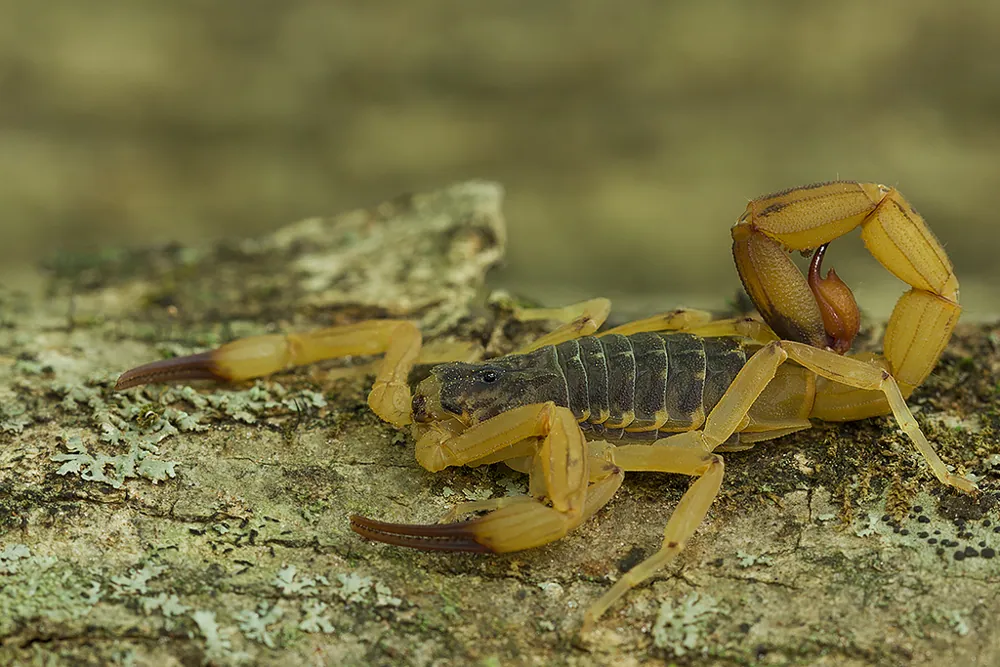
IddiiThe Brazilian yellow scorpion is a small scorpion that lives in Brazil, often in towns and cities. Its venom is extremely toxic, and it is the most dangerous scorpion in South America.1

 Akkaataa itti beekamu
- Adults are usually 5 to 7 cm long.1
- Legs and pedipalps are pale yellow, while the body and the tip of the tail are a darker yellowish brown.1
- The tail is bulbous and segmented, with prominent ridges and serrations, and is often carried curved forward over the back.1
- The tail ends in a venom-injecting barb.1
Humna summii
Summiin qeensa iddii (stinger) keessaan ba'a.
Summiin isaa (ciniinnaa ykn iddiin) maal godha?
Its venom contains an excitatory neurotoxin, which attacks the nerves that control involuntary body functions and releases adrenaline and related chemicals. Mild cases cause mainly localised pain, while more serious cases can bring fever, sweating, tremors, vomiting, agitation, a fast heartbeat and inflammation of the pancreas. Deaths can occur within 1 to 6 hours, or 12 to 14 hours, depending on age, health and the amount of venom injected.1
Namootaaf hammam balaa qaba?
Balaa namootaaf: Baay'ee balaa qabaNama yaalii hin arganne ajjeesuu danda'a.It is responsible for more medically significant accidents than any other scorpion in Brazil, and most of the country's fatal scorpion cases. Mortality rates are 1.0 to 2.0% among children and elderly people. In a nationwide study from 2000 to 2012, Brazil recorded 482,616 scorpion accidents and 728 deaths, and this species was believed to cause most of those deaths.1
Yeroo sodaatu maal godha?
It uses its tail barb to deliver defensive strikes.1
 Yoo idde
- Bakka iddame kiisii cabbiitiin qabbaneessi, namichas sochii malee tursiisi. Dafii gargaarsa yaalaa argadhu, keessumaa ijoolleef: iskoorpiyoonota tokko tokko ijoollee ni ajjeesu.
Yeroo hunda dursa lakkoofsa balaa tasaa kee bilbili (112, 000, 911). Kun qajeelfama gargaarsa jalqabaa waliigalaa ti, gorsa yaalaa miti. Bu'uura gargaarsa jalqabaa
 Nageenyaan turi
- Bineensa bosonaa gonkumaa hin tuqin, hin qabin, hin tuttuqin, xiqqaa ta'us, rafe ykn du'e fakkaatus.
- Iddoo itti kenni. Yoo tokko wajjin wal argite, tasgabbaa'i, suuta duubatti deebi'iitii karaa isaa akka deemu dhiisi.
- Yoo tokko si idde: tasgabbaa'i, sochii malee turi, lakkoofsa balaa tasaa kee (112, 000, 911) bilbili ykn dafii hospitaala ga'i. Maal akka fakkaatu yaadadhu, suuraan ni gargaara.
Si miidhuuf si hin barbaadu. Summii isaa nyaata qabachuuf ykn of eeguuf fayyadama, dhokachuu immoo baay'ee filata. Waa'ee nageenyaa dabalataan
Addunyaa keessaa eessatti?
Hammam guddaa dha?
Dheerinni isaa hammam?
 akka bilookii taphaa 2 tarree tokkoon dheerata
 meetira 100 sekoondii 260 keessatti fiiguu danda'a (namni hundaa caalaa ariifatu 9,6 barbaada)
Brazilian yellow scorpion SI wajjin yoo wal bira qabamu hammam guddaa dha?
Herrega qofa barsiisaa kee keessatti. Homtuu hin olkaa'amu, eessayyuu hin ergamu.
Hammam ariifata?


Dhugaawwan
Reported scorpion stings in Brazil rose from 12,000 in 2000 to 140,000 by 2018.1
It has a low metabolic rate, so it can survive for months without eating.1
Scorpion numbers have grown in Brazilian cities, helped by plenty of cockroaches to eat and few predators.1
Its venom varies by region. Scorpions from Distrito Federal have an LD50 of 51.6 μg/kg, compared with 26 μg/kg for those from Minas Gerais. LD50 is the dose that kills half of the animals tested.1
Its tail is bulbous and segmented, with ridges and serrations, and it often curls forward over its back.1
Dhugaawwan eessaa dhufu
- Tityus serrulatus (Wikipedia (CC BY-SA 4.0))
- Tityus serrulatus (iNaturalist): maqaa fi ramaddii.
- Venom Wiki: sadarkaan balaa, guddinni idilee fi tilmaamni ariitii kan keenya. Akkamitti akka hojjennu ilaali: Balaa akkamitti madaalla.
Dhugaan fuula kana irra jiru hundi lakkoofsa madda isaatti si qajeelchu qaba. Yoo waan tokko dogoggorre, dhiifama, nuti jaallattoota bineensotaa ti malee joornaalii saayinsii miti. [email protected] irratti nutti himi, ni sirreessina.
 Iskoorpiyooniin beela'eera! Venom Wiki pirojektii nama tokkoo ti: bilisa, beeksisa fi hordoftuu malee. Gumaachi xiqqaan interneetii irratti akka turu gargaara.Iskoorpiyoonii nyaachisi
Garee wal fakkaataa irraa dabalataan: Iskoorpiyoonota
 Amazonian black scorpionIskoorpiyoonotaNi ajjeesuu danda'a
 Caracas scorpionIskoorpiyoonotaNi ajjeesuu danda'a
 Panamanian black scorpionIskoorpiyoonotaNi ajjeesuu danda'a
 Zulia scorpionIskoorpiyoonotaNi ajjeesuu danda'a
 Amazon forest scorpionIskoorpiyoonotaDoktora barbaada
 Argentine striped scorpionIskoorpiyoonotaDoktora barbaada
Akkasumas kan jiraatu: Ameerikaa Kibbaa
 Golden poison frogRaacha summaa'aa, raacha lafaa fi newtNama ajjeesaHin tuqin
 TerciopeloBofoota pit viperNama ajjeesa
 Brazilian wandering spiderSardiidotaNi ajjeesuu danda'a
 Eyelash viperBofoota pit viperNi ajjeesuu danda'a
 Golden lanceheadBofoota pit viperNi ajjeesuu danda'a
 South American bushmasterBofoota pit viperNi ajjeesuu danda'a