
 ଆଫ୍ରିକା
 ଏସିଆ
ଏସିଆ ୟୁରୋପ
ୟୁରୋପ ଦକ୍ଷିଣ ଆମେରିକା
 ଅଷ୍ଟ୍ରେଲିଆ ଓ ଓସେନିଆ
 ଆଣ୍ଟାର୍କଟିକା
 ପ୍ରଶାନ୍ତ ମହାସାଗର
 ଆଟଲାଣ୍ଟିକ ମହାସାଗର
 ଭାରତ ମହାସାଗର
 ଆର୍କଟିକ ମହାସାଗର
 ଭୂମଧ୍ୟ ସାଗର
 ଲୋହିତ ସାଗର
 କାରିବିଆନ ସାଗର
 କୋରାଲ ସାଗର
 ଦକ୍ଷିଣ ଚୀନ ସାଗର
 ଫିଲିପାଇନ ସାଗର
 ଆଣ୍ଡାମାନ ସାଗର
 ଉତ୍ତର ସାଗର
 ତିମୋର ଓ ଆରାଫୁରା ସାଗର
 ବଙ୍ଗୋପସାଗର
 କାଲିଫର୍ନିଆ ଉପସାଗର
Katipo
 କାମୁଡ଼ା
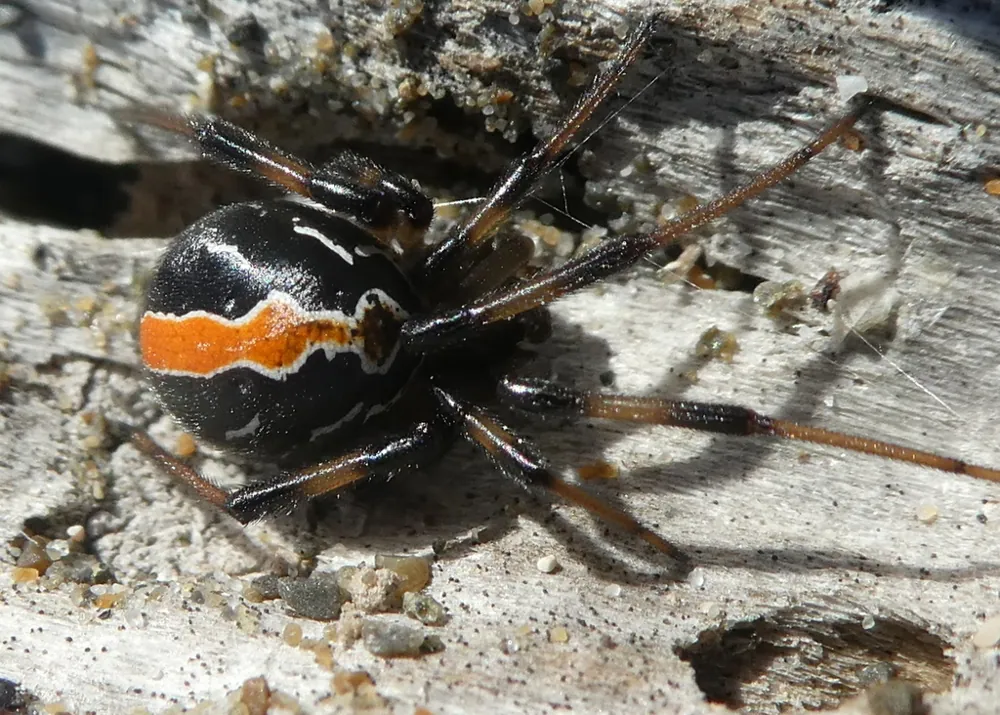
The katipō is a cobweb spider found only in New Zealand, where it lives in coastal sand dunes. It is closely related to the Australian redback spider. Its bite is venomous to people, but bites are rare.1
 ଏହାକୁ କିପରି ଚିହ୍ନିବ
- Adult females have a body length of 8–10 mm (about 0.3–0.4 in).1
- The red katipō, found in the South Island and lower North Island, has a large black, shiny abdomen with a white-bordered orange or red stripe on top, and a red hourglass-shaped marking underneath.1
- The black katipō, found in the upper North Island, has no upper red or orange stripe and is somewhat lighter in colour.1
- Males are 4–5 mm long, white with black stripes and red hourglass-shaped markings.1
ପ୍ରାୟତଃ ଏହା ସହ ଭ୍ରମ ହୁଏ: Steatoda species, which share the same habitat, are very similar and are called "false katipō" in New Zealand. The katipō has a less shiny, more tapered abdomen, and its side eyes are further apart. It is also similar to the redback, but the katipō has only short hair-like spines on its abdomen, while the redback has a mix of long and short ones.1
ବିଷ ଶକ୍ତି
କାମୁଡ଼ିବା ବେଳେ ଏହାର ବିଷଦାନ୍ତ ବା ଦାନ୍ତ ଦେଇ ବିଷ ବାହାରେ।
ଏହାର ବିଷ କ'ଣ କରେ?
The bite can cause latrodectism, a toxic syndrome that affects the nerves and body. Symptoms include extreme pain and, potentially, high blood pressure (hypertension) or seizures.1
ଏହା ମଣିଷ ପାଇଁ କେତେ ବିପଜ୍ଜନକ?
ମଣିଷ ପାଇଁ ବିପଦ: ଗୁରୁତରଏହା କାମୁଡ଼ିଲେ ଡାକ୍ତର ଦେଖାଇବା ଦରକାର। ମୃତ୍ୟୁ ଅତି କ୍ୱଚିତ୍ ହୁଏ।Katipō are venomous to humans, but bites are described as rare. Serious symptoms are possible, including extreme pain, high blood pressure and seizures.1
 ଭଲ ଖବର: ଡାକ୍ତରଙ୍କ ପାଖରେ ଏହା ପାଇଁ ଔଷଧ (ଆଣ୍ଟିଭେନମ) ବା ଚିକିତ୍ସା ଅଛି।1
 ଯଦି ଏହା କାମୁଡ଼େ
- କାମୁଡ଼ା ଜାଗା ଧୁଅ ଏବଂ ଯନ୍ତ୍ରଣା ପାଇଁ ସେଥିରେ ଆଇସ ପ୍ୟାକ ରଖ। ଯନ୍ତ୍ରଣା ବେଶି ହେଲେ, ବ୍ୟାପିଲେ ବା ବ୍ୟକ୍ତିଙ୍କୁ ଅସୁସ୍ଥ ଲାଗିଲେ ଡାକ୍ତରୀ ସହାୟତା ନିଅ।
ସବୁବେଳେ ପ୍ରଥମେ ତୁମ ଜରୁରୀକାଳୀନ ନମ୍ବରକୁ ଫୋନ କର (112, 000, 911)। ଏହା ସାଧାରଣ ପ୍ରାଥମିକ ଚିକିତ୍ସା ମାର୍ଗଦର୍ଶନ, ଡାକ୍ତରୀ ପରାମର୍ଶ ନୁହେଁ। ପ୍ରାଥମିକ ଚିକିତ୍ସାର ମୂଳ କଥା
 ସୁରକ୍ଷିତ ରୁହ
- କୌଣସି ବନ୍ୟ ପ୍ରାଣୀକୁ କେବେ ବି ଛୁଅଁ ନାହିଁ, ଧର ନାହିଁ ବା ଚିଡ଼ାଅ ନାହିଁ, ଛୋଟ ହେଲେ ବି, ଏବଂ ଶୋଇଥିବା ବା ମରିଥିବା ପରି ଦେଖାଗଲେ ବି।
- ଏହାକୁ ଜାଗା ଦିଅ। ଯଦି ଦେଖାହୁଏ, ଶାନ୍ତ ରୁହ, ଧୀରେ ପଛକୁ ଘୁଞ୍ଚ ଏବଂ ତାକୁ ତା' ବାଟରେ ଯିବାକୁ ଦିଅ।
- ଯଦି କୌଣସିଟି ତୁମକୁ କାମୁଡ଼େ: ଶାନ୍ତ ରୁହ, ସ୍ଥିର ରୁହ, ତୁମ ଜରୁରୀକାଳୀନ ନମ୍ବରକୁ (112, 000, 911) ଫୋନ କର ବା ଶୀଘ୍ର ଡାକ୍ତରଖାନାରେ ପହଞ୍ଚ। ଏହା କିପରି ଦେଖାଯାଉଥିଲା ମନେ ରଖ, ଗୋଟିଏ ଫଟୋ ସାହାଯ୍ୟ କରେ।
ଏହା ତୁମ ପଛରେ ପଡ଼ିନାହିଁ। ଏହା ନିଜ ବିଷକୁ ଖାଦ୍ୟ ଧରିବା ବା ନିଜକୁ ରକ୍ଷା କରିବା ପାଇଁ ବ୍ୟବହାର କରେ, ଏବଂ ବରଂ ଲୁଚିବାକୁ ହିଁ ବେଶି ପସନ୍ଦ କରେ। ସୁରକ୍ଷିତ ରହିବା ବିଷୟରେ ଅଧିକ
ଏହା କେତେ ବଡ଼?
ଏହା କେତେ ଲମ୍ବା?
 ତୁମ ନଖ ଉପରେ ବସିପାରିବା ଭଳି ଛୋଟ
ତୁମ ତୁଳନାରେ Katipo କେତେ ବଡ଼?
କେବଳ ତୁମ ବ୍ରାଉଜରରେ ହିସାବ। କିଛି ସେଭ ହୁଏ ନାହିଁ ବା କେଉଁଠିକୁ ପଠାଯାଏ ନାହିଁ।
ଏହା କେତେ ଦ୍ରୁତ?


ତଥ୍ୟ
In one 24-hour study of young spiders, 28% left the web by ballooning, carried by air currents.1
Katipō is one of the few Māori words that refers to a specific species of spider.1
The female does not usually eat the male after mating, unlike some other widow spiders.1
Females cover their egg sacs with silk and sand, which partly hides them in the web.1
The katipō is found only in New Zealand.1
ଭ୍ରମ ଭାଙ୍ଗିବା
ଭ୍ରମ: The katipō is just a form of the redback spider.
ସତ: The katipō is genetically and physically distinct from the redback, even though the two are closely related. It was once thought to be a subspecies of the redback.1
ବିଷ ବିଶେଷଜ୍ଞଙ୍କ ପାଇଁ
- ବୈଜ୍ଞାନିକ ନାମ
- Latrodectus katipo
- ଗୋଷ୍ଠୀ
- ବୁଢ଼ିଆଣୀ
- ପରିବାର
- Theridiidae2
- ବର୍ଗ
- Araneae
- ମହାଦେଶଗୁଡ଼ିକ
- ଅଷ୍ଟ୍ରେଲିଆ ଓ ଓସେନିଆ
- ଛୁଆ
- The female lays five or six egg sacs in November or December, with about 70 to 90 eggs in each. The young hatch after 20–25 days and leave the egg sac in January and February.1
- ପ୍ରକୃତିରେ ଏହାର ଅବସ୍ଥା କେମିତି
- In serious decline (New Zealand Threat Classification System)1
- ମଣିଷ ପାଇଁ ବିପଦ
- 3 / 5: ଗୁରୁତର3
ତଥ୍ୟ କେଉଁଠୁ ଆସେ
- Katipō (Wikipedia (CC BY-SA 4.0))
- Latrodectus katipo (iNaturalist): ନାମ ଓ ବର୍ଗୀକରଣ।
- Venom Wiki: ବିପଦ ସ୍ତର, ସାଧାରଣ ଆକାର ଓ ବେଗ ଅନୁମାନ ଆମର ନିଜସ୍ୱ। ଦେଖ ଆମେ ସେଗୁଡ଼ିକୁ କିପରି ହିସାବ କରୁ: ଆମେ ବିପଦ କିପରି ମାପୁ.
ଏହି ପୃଷ୍ଠାର ପ୍ରତ୍ୟେକ ତଥ୍ୟ ସହ ଏକ ନମ୍ବର ଅଛି ଯାହା ତା'ର ଉତ୍ସକୁ ଦର୍ଶାଏ। ଯଦି ଆମେ କିଛି ଭୁଲ କରିଛୁ, କ୍ଷମା କରିବ, ଆମେ ପ୍ରାଣୀପ୍ରେମୀ, ବିଜ୍ଞାନ ପତ୍ରିକା ନୁହେଁ। [email protected] ରେ ଆମକୁ ଜଣାଅ, ଆମେ ଠିକ୍ କରିଦେବୁ।
 ବିଛାକୁ ଭୋକ ଲାଗିଛି! Venom Wiki ଜଣେ ବ୍ୟକ୍ତିଙ୍କ ପ୍ରକଳ୍ପ: ମାଗଣା, ବିଜ୍ଞାପନ ଓ ଟ୍ରାକର ବିନା। ଏକ ଛୋଟ ଟିପ ଏହାକୁ ଅନଲାଇନ ରଖିବାରେ ସାହାଯ୍ୟ କରେ।ବିଛାକୁ ଖାଇବାକୁ ଦିଅ
 Redback spider
 White-tailed spider
 Peacock spider
 Badge huntsman spider
 Black house spider
 Eastern white-tailed spider
 Coastal taipan
 Common death adder
 Eastern brown snake
 Inland taipan
 Sydney funnel-web spider
 Tiger snake