
 Afryka
 Azja
Azja Europa
 Ameryka Południowa
 Australia i Oceania
 Antarktyda
 Ocean Spokojny
 Ocean Atlantycki
 Ocean Indyjski
 Ocean Arktyczny
 Morze Śródziemne
 Morze Czerwone
 Morze Karaibskie
 Morze Koralowe
 Morze Południowochińskie
 Morze Filipińskie
 Morze Andamańskie
 Morze Północne
 Morze Timor i Morze Arafura
 Zatoka Bengalska
 Zatoka Kalifornijska
Black long-spined urchin
 Jadowite kolce
The black long-spined urchin is a sea urchin with very long, hollow spines. It lives on coral reefs, sand flats and seagrass beds across the Indo-Pacific, and it is one of the most widespread sea urchins in that region. Its spines can deliver a mild venom, so it is best to watch where you put your feet.1


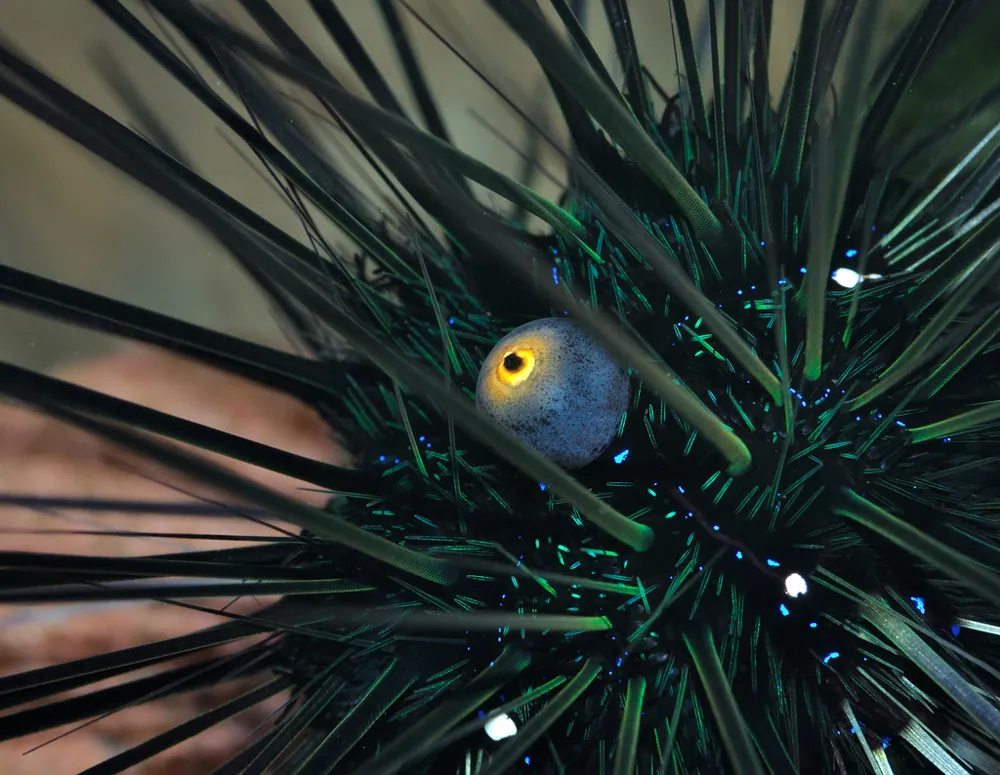
 Jak je rozpoznać
- Black, near-spherical body (test) with extremely long, narrow, hollow spines, often black but sometimes brown-banded1
- Five white spots on the body, which separate it from other Diadema species1
- A bright orange ring around the periproctal cone (the 'anal cone'), which is often mistaken for an eye1
- Bluish spots on the genital plates and a line of blue spots along the body1
- Adults are no more than 70 mm across the body and about 40 mm high1
Często mylone z: Other Diadema species are similar in shape and spines, but they lack the five white spots that mark this species. Its orange ring and blue spots also help to tell it apart.1
Siła jadu
Jad jest w ostrych kolcach. Nadepnięcie albo chwycenie go boli.
Jak działa jego jad?
The spines are hollow and contain a mild venom. The toxin mostly causes swelling and pain, which spreads gradually over several hours. The venom is not fatal to humans. The spines themselves are a bigger problem, because they are brittle and needle-like, break off in flesh and are difficult to remove.1
Jak bardzo jest niebezpieczne dla ludzi?
Zagrożenie dla ludzi: BolesneMoże naprawdę boleć, ale prawie nigdy nie jest groźne.The venom is only mild, and the species is not considered a serious threat to humans. Stepping on it can cause painful stings.1
Co robi, gdy się boi?
When threatened by a sudden impact or by spines snapping, it rapidly flips its body over and 'runs' on the tips of its longest spines.1
 Jeśli wbiją się w ciebie jego kolce
- Włóż zranione miejsce do gorącej wody, tak gorącej, jak poszkodowany wytrzyma bez poparzenia, i szukaj pomocy medycznej, żeby usunąć kolce. Nie wydłubuj ich samodzielnie.
Zawsze najpierw dzwoń na numer alarmowy (112, 000, 911). To ogólne wskazówki pierwszej pomocy, a nie porada medyczna. Podstawy pierwszej pomocy
 Uważaj na siebie
- Nigdy nie dotykaj, nie łap ani nie drażnij dzikiego zwierzęcia, nawet małego, i nawet jeśli wygląda, jakby spało albo było martwe.
- Zostaw mu miejsce. Jeśli je spotkasz, zachowaj spokój, powoli się wycofaj i pozwól mu odejść.
- Jeśli wbiją się w ciebie jego kolce: zachowaj spokój, nie ruszaj się, zadzwoń na numer alarmowy (112, 000, 911) albo jak najszybciej dotrzyj do szpitala. Zapamiętaj, jak wyglądało, zdjęcie pomaga.
Nie poluje na ciebie. Używa jadu, żeby złapać jedzenie albo się bronić, i dużo bardziej woli się schować. Więcej o bezpieczeństwie
Gdzie na świecie?
Jakie jest duże?
Jakie jest długie?
Ile waży?

 długie jak 2 klocków ułożonych w rzędzie
 wolniejsze niż ślimak winniczek
Black long-spined urchin: jak duże jest w porównaniu z TOBĄ?
Zwykła matematyka w twojej przeglądarce. Nic nie jest zapisywane ani nigdzie wysyłane.
Jak szybkie jest?

Fakty
It can move 760 mm in just 7 seconds by rolling and walking on the tips of its spines.1
It has no eye, but it has a diffuse light-sensing system that lets it detect light levels and the size and colour of objects.1
In 2006, living specimens were found off Turkey, making it the first invasive Erythrean sea urchin recorded in the Mediterranean.1
Goose barnacles of the genus Microlepas are known to live on it as parasites.1
It is considered one of the oldest living species in its genus, Diadema.1
Pogromca mitów
Mit: Black long-spined urchins are deadly and their stings can kill people.
Prawda: Their venom is mild and is not fatal to humans. The main problems are pain, swelling and spines that break off in the skin.1
Dla znawców jadu
- Nazwa naukowa
- Diadema setosum
- Grupa
- Jeżowce, rozgwiazdy i robaki
- Rodzina
- Diadematidae2
- Kolejność
- Diadematoida
- Kontynenty
- Ocean Indyjski, Ocean Spokojny, Morze Czerwone, Morze Koralowe, Morze Filipińskie, Morze Arabskie i Zatoka Perska, Morze Timor i Morze Arafura, Zatoka Bengalska, Oceany
- Młode
- It is a broadcast spawner, releasing eggs and sperm into the water. Spawning happens seasonally or year-round depending on the location, and in some places it follows the full moon.1
- Zagrożenie dla ludzi
- 2 / 5: Bolesne3
Skąd pochodzą fakty
- Diadema setosum (Wikipedia (CC BY-SA 4.0))
- Diadema setosum (iNaturalist): nazwy i klasyfikacja.
- Venom Wiki: poziom zagrożenia, typowy rozmiar i szacowana prędkość to nasze własne oceny. Zobacz, jak je ustalamy: Jak oceniamy zagrożenie.
Każdy fakt na tej stronie ma numer, który wskazuje jego źródło. Jeśli coś pomyliliśmy, przepraszamy, jesteśmy fanami zwierząt, a nie czasopismem naukowym. Napisz do nas na [email protected], a poprawimy to.
 Skorpion jest głodny! Venom Wiki to projekt jednej osoby: darmowy, bez reklam i bez śledzenia. Mały napiwek pomaga utrzymać go w sieci.Nakarm skorpiona
Więcej z tej samej grupy: Jeżowce, rozgwiazdy i robaki
 Crown-of-thorns starfishJeżowce, rozgwiazdy i robakiWymaga lekarzaNie dotykaj
 Flower urchinJeżowce, rozgwiazdy i robakiMoże zabić
 Fire urchinJeżowce, rozgwiazdy i robakiWymaga lekarzaNie dotykaj
 Bearded firewormJeżowce, rozgwiazdy i robakiTylko boliNie dotykaj
 BloodwormJeżowce, rozgwiazdy i robakiTylko boli
 Bobbit wormJeżowce, rozgwiazdy i robakiTylko boli
Żyje też w: Ocean Indyjski
 Kostkowiec australijskiMeduzy i parzące stworzenia morskieŚmiertelnie groźneNie dotykaj
 Stożek geograficznyStożki i ośmiorniceŚmiertelnie groźne
 Ośmiornica błękitnopierścieniowa większaStożki i ośmiorniceŚmiertelnie groźne
 Ośmiornica błękitnopierścieniowa południowaStożki i ośmiorniceŚmiertelnie groźne
 Hawksbill sea turtleInne trujące zwierzętaMoże zabić
 Irukandji jellyfishMeduzy i parzące stworzenia morskieMoże zabićNie dotykaj