
 Afryka
 Azja
Azja Europa
 Ameryka Południowa
 Australia i Oceania
 Antarktyda
 Ocean Spokojny
 Ocean Atlantycki
 Ocean Indyjski
 Ocean Arktyczny
 Morze Śródziemne
 Morze Czerwone
 Morze Karaibskie
 Morze Koralowe
 Morze Południowochińskie
 Morze Filipińskie
 Morze Andamańskie
 Morze Północne
 Morze Timor i Morze Arafura
 Zatoka Bengalska
 Zatoka Kalifornijska
Blue blubber jellyfish
 Parzące czułki
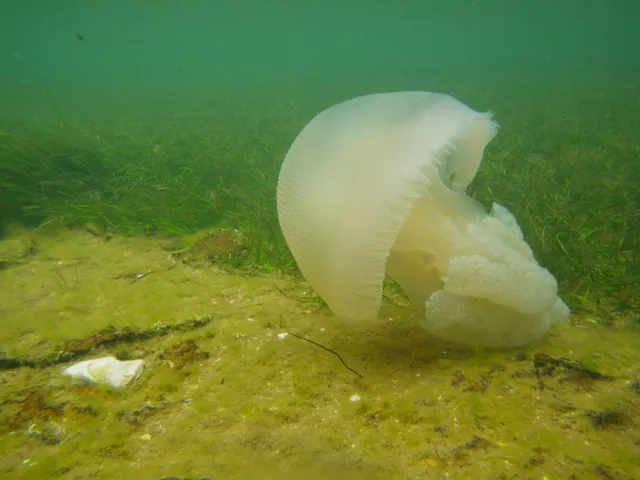
The blue blubber jellyfish is a large, rounded jellyfish that lives along the coast of Eastern Australia. It is blue to purple and pulses slowly as it swims. Its arms carry stings, and it can form huge blooms in estuaries and shallow bays.1


 Jak je rozpoznać
- Colour ranges from light blue to dark blue or purple.1
- Large, rounded bell, about 25 to 30 cm across.1
- The bell pulses in a rapid, staccato rhythm.1
- Found along the Eastern Australian coast, often in large numbers.1
Często mylone z: Two forms are recognised on the Eastern Australian coast. Catostylus mosaicus mosaicus, found in New South Wales and southern Queensland, has small or no papillae (small projections) and a larger bell. Catostylus mosaicus conservitus, found in the Bass Strait, has clear papillae, is blue or white, and has a smaller bell.1
Siła jadu
Tysiące maleńkich komórek parzydełkowych wystrzeliwuje, gdy coś ich dotknie.
Jak działa jego jad?
Its arms carry stinging cells and can produce a mild but irritating sting. The sting is described as mild, and no further effects on the body are described.1
Jak bardzo jest niebezpieczne dla ludzi?
Zagrożenie dla ludzi: BolesneMoże naprawdę boleć, ale prawie nigdy nie jest groźne.Its sting is described as mild but irritating. The main problem is the large blooms, which can interrupt recreation in coastal areas.1
Co robi, gdy się boi?
Its stinging cells on the arms are used to defend it from threats.1
 Jeśli użądli
- Wyjdź z wody i zdejmij pozostałe czułki (w rękawiczkach albo przez materiał).
- Przy tropikalnych kostkowcach: polewaj miejsca poparzenia octem przez co najmniej 30 sekund, wezwij pomoc i przygotuj się do RKO. Przy żeglarzach portugalskich i większości innych: spłucz wodą morską, a potem przyłóż gorącą wodę na ból.
Zawsze najpierw dzwoń na numer alarmowy (112, 000, 911). To ogólne wskazówki pierwszej pomocy, a nie porada medyczna. Podstawy pierwszej pomocy
 Uważaj na siebie
- Nigdy nie dotykaj, nie łap ani nie drażnij dzikiego zwierzęcia, nawet małego, i nawet jeśli wygląda, jakby spało albo było martwe.
- Zostaw mu miejsce. Jeśli je spotkasz, zachowaj spokój, powoli się wycofaj i pozwól mu odejść.
- Jeśli cię użądli: zachowaj spokój, nie ruszaj się, zadzwoń na numer alarmowy (112, 000, 911) albo jak najszybciej dotrzyj do szpitala. Zapamiętaj, jak wyglądało, zdjęcie pomaga.
Nie poluje na ciebie. Używa jadu, żeby złapać jedzenie albo się bronić, i dużo bardziej woli się schować. Więcej o bezpieczeństwie
Gdzie na świecie?
Jakie jest duże?
Jakie jest długie?
 długie jak 9 klocków ułożonych w rzędzie
Blue blubber jellyfish: jak duże jest w porównaniu z TOBĄ?
Zwykła matematyka w twojej przeglądarce. Nic nie jest zapisywane ani nigdzie wysyłane.
Jak szybkie jest?


Fakty
Its stinging venom is being studied for possible anticancer effects against lung cancer cells in laboratory research.1
It is harvested for food and is considered a delicacy in some countries, including China and Japan.1
A small copepod lives on its oral arms and is thought to feed on mucus the jellyfish produces.1
Blooms can be very dense, and they can take food away from other animals such as fish.1
Sea turtles and jellyfish-eating fish, including tuna, butterfish, sunfish and spiny dogfish, prey on it.1
It has a partnership with photosynthetic algae, though it has less of these algae than many other jellyfish.1
Dla znawców jadu
- Nazwa naukowa
- Catostylus mosaicus
- Grupa
- Meduzy i parzące stworzenia morskie
- Rodzina
- Catostylidae2
- Kolejność
- Rhizostomeae
- Kontynenty
- Ocean Indyjski, Ocean Spokojny, Morze Koralowe, Oceany
- Młode
- Fertilised eggs develop into free-swimming planula larvae, which settle on the seabed and grow into a polyp stage. The polyp then produces young jellyfish (ephyrae), which mature into the free-swimming medusa.1
- Zagrożenie dla ludzi
- 2 / 5: Bolesne3
Skąd pochodzą fakty
- Jelly blubber (Wikipedia (CC BY-SA 4.0))
- Catostylus mosaicus (iNaturalist): nazwy i klasyfikacja.
- Venom Wiki: poziom zagrożenia, typowy rozmiar i szacowana prędkość to nasze własne oceny. Zobacz, jak je ustalamy: Jak oceniamy zagrożenie.
Każdy fakt na tej stronie ma numer, który wskazuje jego źródło. Jeśli coś pomyliliśmy, przepraszamy, jesteśmy fanami zwierząt, a nie czasopismem naukowym. Napisz do nas na [email protected], a poprawimy to.
 Skorpion jest głodny! Venom Wiki to projekt jednej osoby: darmowy, bez reklam i bez śledzenia. Mały napiwek pomaga utrzymać go w sieci.Nakarm skorpiona
Więcej z tej samej grupy: Meduzy i parzące stworzenia morskie
 Kostkowiec australijskiMeduzy i parzące stworzenia morskieŚmiertelnie groźneNie dotykaj
 Irukandji jellyfishMeduzy i parzące stworzenia morskieMoże zabićNie dotykaj
 Portuguese man o' warMeduzy i parzące stworzenia morskieWymaga lekarzaNie dotykaj
 Lion's mane jellyfishMeduzy i parzące stworzenia morskieTylko boliNie dotykaj
 Moon jellyfishMeduzy i parzące stworzenia morskieNieszkodliwe
 Common kingslayerMeduzy i parzące stworzenia morskieMoże zabićNie dotykaj
Żyje też w: Ocean Indyjski
 Stożek geograficznyStożki i ośmiorniceŚmiertelnie groźne
 Ośmiornica błękitnopierścieniowa większaStożki i ośmiorniceŚmiertelnie groźne
 Ośmiornica błękitnopierścieniowa południowaStożki i ośmiorniceŚmiertelnie groźne
 Hawksbill sea turtleInne trujące zwierzętaMoże zabić
 Reef stonefishJadowite rybyMoże zabićNie dotykaj
 Crown-of-thorns starfishJeżowce, rozgwiazdy i robakiWymaga lekarzaNie dotykaj